
新型脂质制剂提高辅酶Q10生物利用度:临床前评估及1期药代动力学试验
Novel Lipid-Based Formulation to Enhance Coenzyme Q10 Bioavailability: Preclinical Assessment and Phase 1 Pharmacokinetic Trial.
作者信息
Fratter Andrea, Colletti Alessandro, Cravotto Giancarlo, Pellizzato Marzia, Papetti Adele, Pellicorio Vanessa, Bolego Chiara, Simiele Marco, D'Avolio Antonio, Cignarella Andrea
机构信息
Department of Pharmaceutical and Pharmacological Sciences (DSFarm), University of Padova, 35129 Padua, Italy.
Italian Society of Nutraceutical Formulators (SIFNut), 31100 Treviso, Italy.
出版信息
Pharmaceutics. 2025 Mar 25;17(4):414. doi: 10.3390/pharmaceutics17040414.
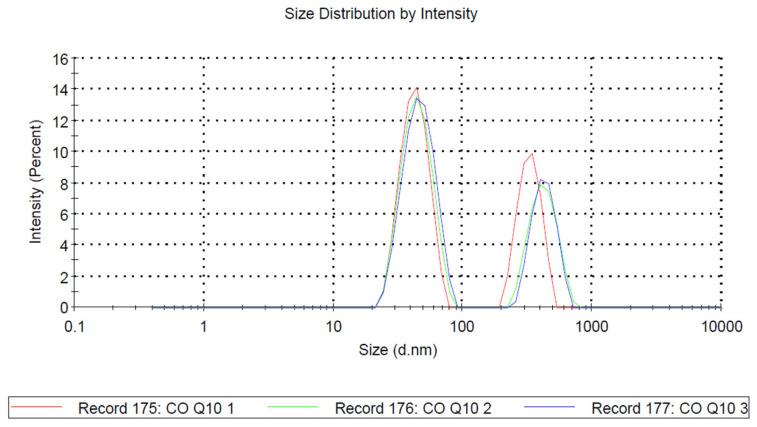
Nutraceuticals represent a strategy for maintaining health and constitute a brilliant market in Italy and across Europe. However, the absence of strict regulations regarding formulation requirements highlights a critical issue: their poor bioavailability. An example is coenzyme Q10 (CoQ10), a quinone known for its potential as a mitochondrial protective agent but characterized by low intestinal absorption. CoQ10 is a hydrophobic molecule with high molecular weight and poor water solubility, factors that significantly limit its intestinal bioaccessibility and, consequently, its oral bioavailability. : In this context, the present study describes a novel formulation designed to enhance CoQ10 bioaccessibility through in situ emulsification upon contact with gastroenteric fluids. This technology, termed Lipid-Based Auto-Emulsifying Drug Delivery System (LiBADDS), is unique because it combines a medium-chain triglyceride (MCT), a long-chain fatty acid, conjugated linoleic acid (CLA) with a high HLB solubilizer, Polysorbate 80 (PS80), and a sodium octenyl succinate starch derivative (SOS), which can create a nanometric emulsion simply by aqueous dispersion and upon contact with gastrointestinal fluids. This phenomenon promotes the prompt dispersion of CoQ10 and its rapid translocation into the serosal compartment of the intestinal epithelium. Its efficacy was evaluated in vitro through the Caco-2 cellular model and in vivo through a crossover study on healthy volunteers, measuring pharmacokinetic parameters such as AUC, C, T, ΔAUC, and ΔC. Overall, LiBADDS demonstrated a significant improvement in both the bioaccessibility and bioavailability of CoQ10 compared to the unformulated substance. LiBADDS showed to be a promising tool to improve CoQ10 bioavailability by enhancing its bioaccessibility.
营养保健品是一种维持健康的策略,在意大利乃至整个欧洲都构成了一个辉煌的市场。然而,缺乏关于配方要求的严格规定凸显了一个关键问题:它们的生物利用度较差。辅酶Q10(CoQ10)就是一个例子,它是一种醌类化合物,因其具有线粒体保护剂的潜力而闻名,但肠道吸收率较低。CoQ10是一种疏水性分子,分子量高且水溶性差,这些因素显著限制了其肠道生物可及性,进而限制了其口服生物利用度。在这种背景下,本研究描述了一种新型配方,旨在通过与胃肠液接触时原位乳化来提高CoQ10的生物可及性。这种技术被称为基于脂质的自乳化药物递送系统(LiBADDS),它很独特,因为它将中链甘油三酯(MCT)、长链脂肪酸共轭亚油酸(CLA)与高HLB增溶剂聚山梨酯80(PS80)和辛烯基琥珀酸淀粉钠衍生物(SOS)结合在一起,这些物质仅通过水分散并与胃肠液接触就能形成纳米乳液。这种现象促进了CoQ10的迅速分散及其快速转运到肠上皮的浆膜腔室。通过Caco-2细胞模型在体外评估了其疗效,并通过对健康志愿者的交叉研究在体内进行了评估,测量了药代动力学参数,如AUC、C、T、ΔAUC和ΔC。总体而言,与未配制的物质相比,LiBADDS在CoQ10的生物可及性和生物利用度方面都有显著提高。LiBADDS被证明是一种通过提高CoQ10的生物可及性来改善其生物利用度的有前景的工具。



 Zotero 插件