
16型人乳头瘤病毒刺激依赖WAVE1和WAVE2的肌动蛋白突起以实现内吞进入。
Human Papillomavirus Type 16 Stimulates WAVE1- and WAVE2-Dependent Actin Protrusions for Endocytic Entry.
作者信息
Fernandez Daniel J, Cheng Stephanie, Prins Ruben, Hamm-Alvarez Sarah F, Kast W Martin
机构信息
Department of Molecular Microbiology and Immunology, University of Southern California, Los Angeles, CA 90033, USA.
Norris Comprehensive Cancer Center, University of Southern California, Los Angeles, CA 90033, USA.
出版信息
Viruses. 2025 Apr 8;17(4):542. doi: 10.3390/v17040542.
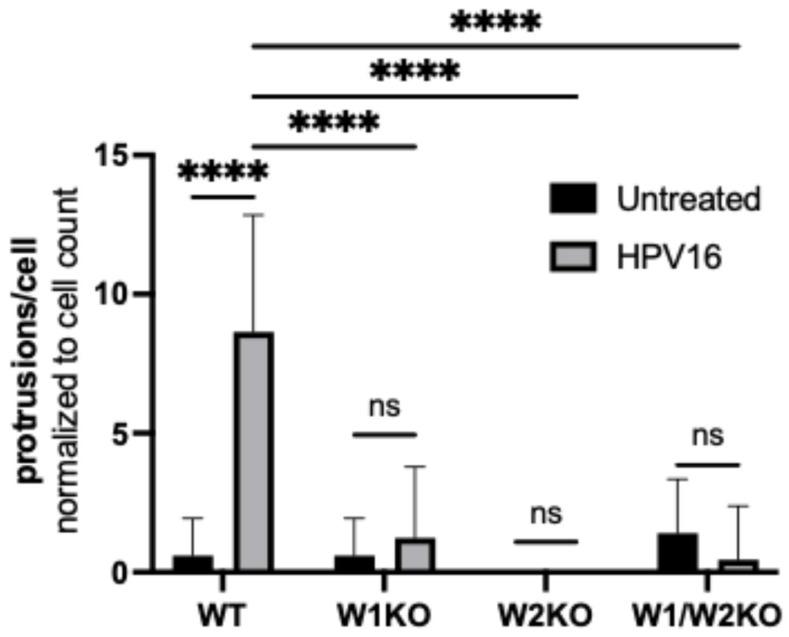
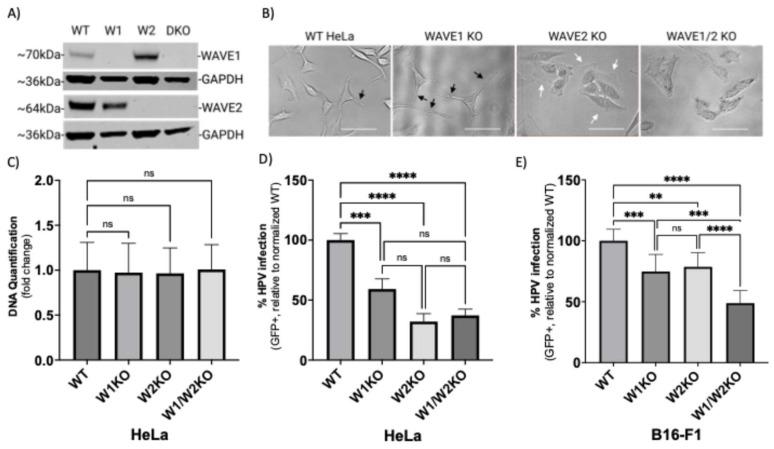
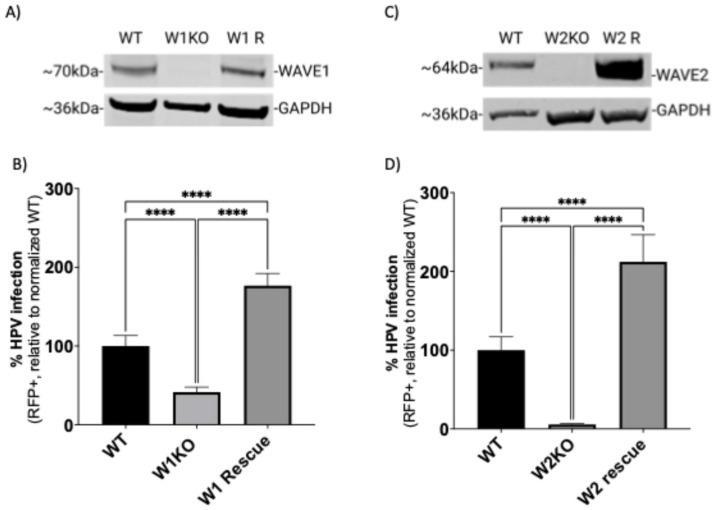
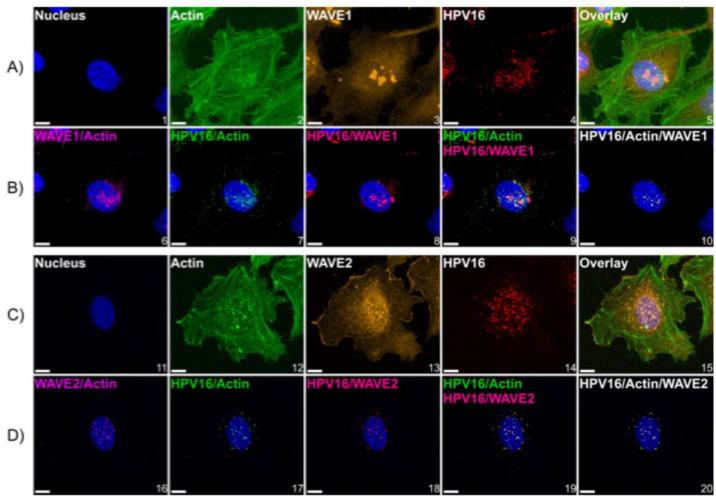
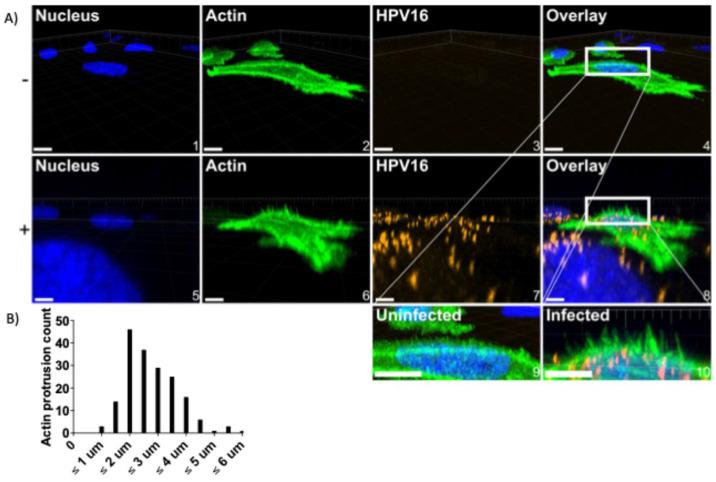
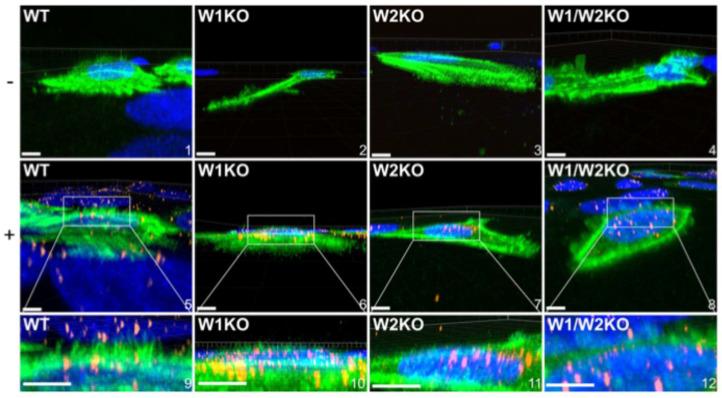
Human papillomavirus type 16 (HPV16) is an etiological agent of human cancers that requires endocytosis to initiate infection. HPV16 entry into epithelial cells occurs through a non-canonical endocytic pathway that is actin-driven, but it is not well understood how HPV16-cell surface interactions trigger actin reorganization in a way that facilitates entry. This study provides evidence that Wiskott-Aldrich syndrome protein family verprolin-homologous proteins 1 and 2 (WAVE1 and WAVE2) are molecular mediators of actin protrusions that occur at the cellular surface upon HPV addition to cells, and that this stimulation is a key step prior to endocytosis and intracellular trafficking. We demonstrate through post-transcriptional gene silencing and genome editing that WAVE1 and WAVE2 are critical for efficient HPV16 infection, and that restoration of each in knockout cells rescues HPV16 infection. Cells lacking WAVE1, WAVE2, or both internalize HPV16 at a significantly reduced rate. Microscopic analysis of fluorescently labeled cells revealed that HPV16, WAVE1, WAVE2, and actin are all colocalized at the cellular dorsal surface within a timeframe that precedes endocytosis. Within that same timeframe, we also found that HPV16-treated cells express cellular dorsal surface filopodia, which does not occur in cells lacking WAVE1 and WAVE2. Taken together, this study provides evidence that WAVE1 and WAVE2 mediate a key step prior to HPV entry into cells that involves actin reorganization in the form of cellular dorsal surface protrusions.
16型人乳头瘤病毒(HPV16)是引发人类癌症的病原体,其感染起始需要内吞作用。HPV16进入上皮细胞是通过一种由肌动蛋白驱动的非经典内吞途径实现的,但目前尚不清楚HPV16与细胞表面的相互作用是如何以促进病毒进入的方式触发肌动蛋白重组的。本研究提供了证据表明,威斯科特-奥尔德里奇综合征蛋白家族维普洛林同源蛋白1和2(WAVE1和WAVE2)是肌动蛋白突起的分子介质,当向细胞中添加HPV后,这些突起会出现在细胞表面,并且这种刺激是内吞作用和细胞内运输之前的关键步骤。我们通过转录后基因沉默和基因组编辑证明,WAVE1和WAVE2对HPV16的有效感染至关重要,并且在基因敲除细胞中恢复这两种蛋白中的任何一种都能挽救HPV16感染。缺乏WAVE1、WAVE2或两者的细胞以显著降低的速率内化HPV16。对荧光标记细胞的显微镜分析显示,HPV16、WAVE1、WAVE2和肌动蛋白在内吞作用之前的一个时间范围内都共定位于细胞背表面。在同一时间范围内,我们还发现经HPV16处理的细胞表达细胞背表面丝状伪足,而在缺乏WAVE1和WAVE2的细胞中则不会出现这种情况。综上所述,本研究提供了证据表明,WAVE1和WAVE2介导了HPV进入细胞之前的一个关键步骤,该步骤涉及以细胞背表面突起形式的肌动蛋白重组。


 Zotero 插件