
颗粒物中的重金属——趋势及对环境的影响
Heavy Metals in Particulate Matter-Trends and Impacts on Environment.
作者信息
Matei Ecaterina, Râpă Maria, Mateș Ileana Mariana, Popescu Anca-Florentina, Bădiceanu Alexandra, Balint Alexandru Ioan, Covaliu-Mierlă Cristina Ileana
机构信息
Department of Metallic Material Processing and Environment Engineering, Faculty of Materials Science and Engineering, National University of Science and Technology Politehnica Bucharest, 313 Splaiul Independentei, 060042 Bucharest, Romania.
Central Military Emergency University Hospital "Dr. Carol Davila", 88 Vulcănescu, 010825 Bucharest, Romania.
出版信息
Molecules. 2025 Mar 25;30(7):1455. doi: 10.3390/molecules30071455.
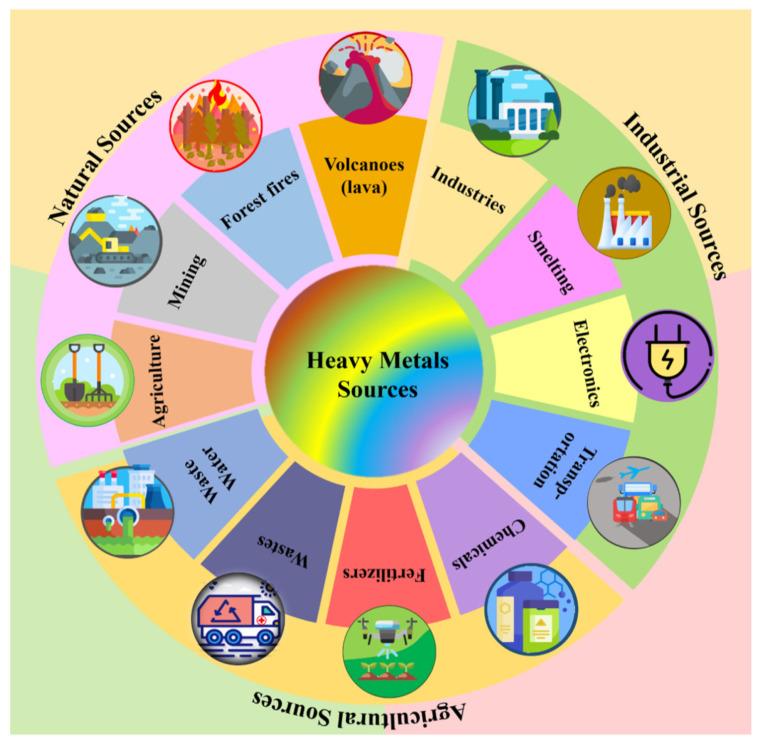
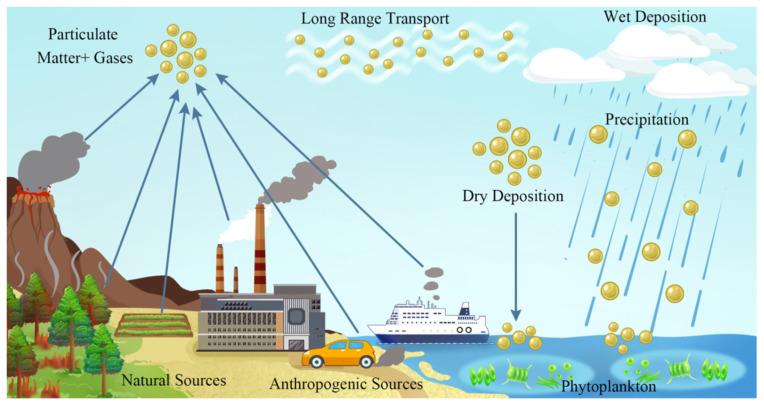
Heavy metals represent a class of pollutants detected at concentrations lower than 10 ppm in different matrices that are intensively monitored due to having a major impact on human health. Industrial activities including mining, agriculture, and transport, determine their presence in different environments. Corrosion phenomena of various installations, volcanic eruptions, or atmospheric deposition on the soil surface and in water can contaminate the respective environments. Atmospheric pollutants in the form of suspended dust particles with diameters below 10 microns are predominantly composed of different metallic species from Cd, Cr, Cu, Ni, etc. This paper presents a review of the main sources and types of heavy metals present in the atmosphere in the composition of particulate matter (PM), highlighting the main mechanisms of occurrence and detection techniques, including the impact on bio-geo-chemical processes in the soil and food chain, in close correlation with their impact on environment and human health. The purpose of this review is to highlight the current level of knowledge regarding the global situation of heavy metals in PM and to identify gaps as targets for future research.
重金属是一类在不同基质中检测到的浓度低于10 ppm的污染物,由于对人类健康有重大影响,因此受到密切监测。包括采矿、农业和运输在内的工业活动决定了它们在不同环境中的存在。各种设施的腐蚀现象、火山爆发或土壤表面和水中的大气沉降会污染各自的环境。直径小于10微米的悬浮尘埃颗粒形式的大气污染物主要由镉、铬、铜、镍等不同金属物种组成。本文综述了大气中颗粒物(PM)成分中重金属的主要来源和类型,重点介绍了其主要产生机制和检测技术,包括对土壤和食物链中生物地球化学过程的影响,并紧密关联其对环境和人类健康的影响。本综述的目的是突出关于PM中重金属全球状况的当前知识水平,并确定差距作为未来研究的目标。
 Zotero 插件