
三维碳晶体:理论预测与实验制备
3D carbon crystals: theoretical prediction and experimental preparation.
作者信息
Zhang Yanbo, Pan Fei, Ni Kun, Zhu Yanwu
机构信息
Hefei National Research Center for Physical Sciences at the Microscale, University of Science and Technology of China, Hefei 230026, China.
Department of Materials Science and Engineering, School of Chemistry and Materials Science, University of Science and Technology of China, Hefei 230026, China.
出版信息
Natl Sci Rev. 2025 Mar 29;12(5):nwaf125. doi: 10.1093/nsr/nwaf125. eCollection 2025 May.
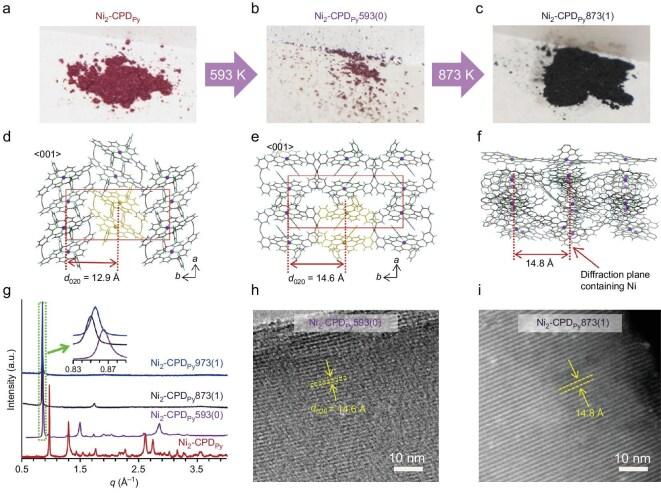
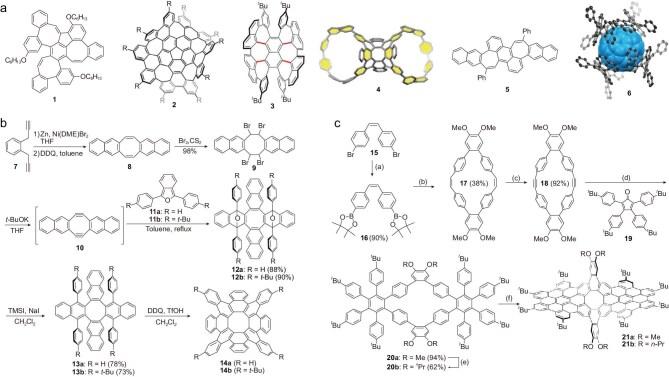
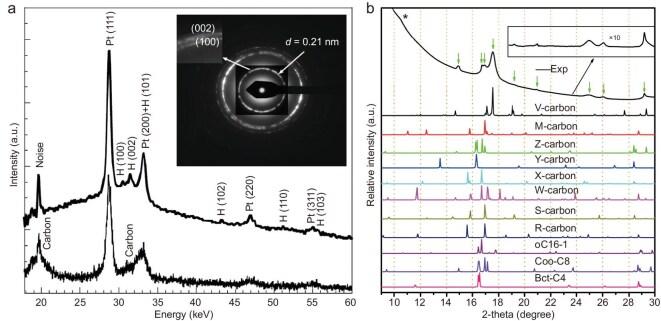
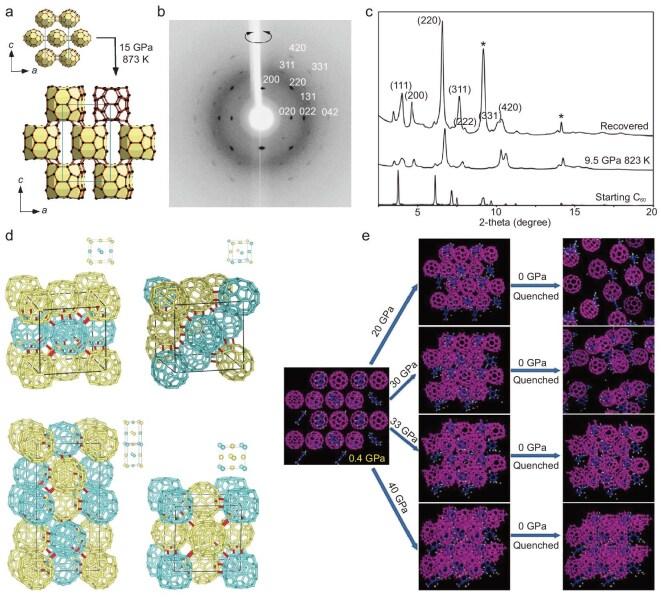
or hybridization of carbon atoms results in a linear, triangular or tetrahedral configuration of bonding geometry, respectively. By combining different hybridizations in one structure, a variety of 3D carbon allotropes with periodic crystal structures can be obtained with potential novel properties and applications. With the rapid development of computational capability in recent years, a large number of new 3D carbon structures have been proposed with their properties predicted; the development of new experimental techniques has also led to the successful experimental preparation of several carbon crystals. Observing the rapid advancement of 3D carbons subsequent to the breakthroughs in 2D graphene, this paper reviews the recent progress in constructing carbon crystals by summarizing the structural design and specifically highlighting the preparation using template carbonization, organic synthesis, high-pressure processing and charge injection.
碳原子的杂化分别导致键合几何结构呈线性、三角形或四面体构型。通过在一种结构中组合不同的杂化方式,可以获得具有周期性晶体结构的各种三维碳同素异形体,它们具有潜在的新颖性质和应用。近年来,随着计算能力的快速发展,人们提出了大量新的三维碳结构并预测了它们的性质;新实验技术的发展也使得几种碳晶体得以成功制备。鉴于二维石墨烯取得突破后三维碳材料的快速发展,本文通过总结结构设计并特别强调使用模板碳化、有机合成、高压处理和电荷注入的制备方法,综述了构建碳晶体的最新进展。


 Zotero 插件