
作为潜伏逆转剂的HIV反式激活转录蛋白:扭转病毒持续存在的局面。
HIV Tat as a latency reversing agent: turning the tables on viral persistence.
作者信息
Fisher Bridget M, Cevaal Paula M, Roche Michael, Lewin Sharon R
机构信息
Department of Infectious Diseases, The University of Melbourne at The Peter Doherty Institute for Infection and Immunity, Melbourne, VIC, Australia.
ATRACT Research Centre, Infectious and Inflammatory Diseases Theme, School of Health and Biomedical Sciences, RMIT University, Melbourne, VIC, Australia.
出版信息
Front Immunol. 2025 Apr 11;16:1571151. doi: 10.3389/fimmu.2025.1571151. eCollection 2025.
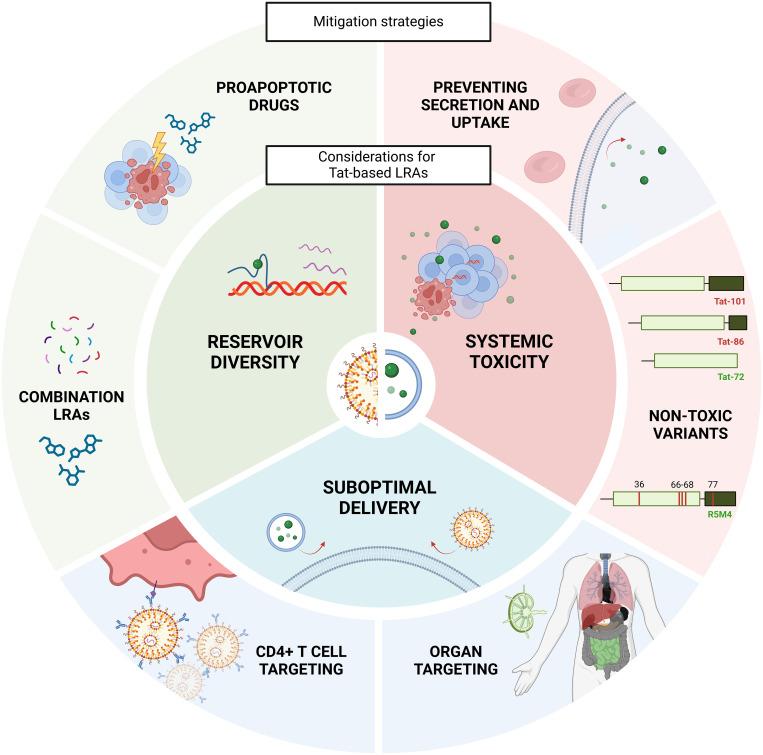
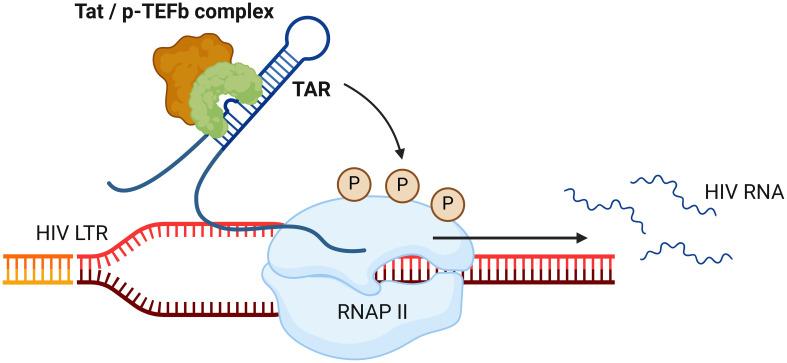
The 'shock and kill' approach to an HIV cure involves the use of latency reversing agents (LRAs) to reactivate latent HIV, with the aim to induce death of infected cells through virus induced cytolysis or immune mediated clearance. Most LRAs tested to date have been unable to overcome the blocks to transcription elongation and splicing that persist in resting CD4+ T cells. Furthermore, most LRAs target host factors and therefore have associated toxicities. Therefore, there remains a high need for HIV-specific LRAs that can also potently upregulate expression of multiply-spliced HIV RNA and viral protein. The HIV Transactivator of Transcription (Tat) protein plays an important role in viral replication - amplifying transcription from the viral promoter - but it is present at low to negligible levels in latently infected cells. As such, it has been hypothesized that providing Tat in could result in efficient HIV reactivation from latency. Recent studies exploring different types of Tat-based LRAs have used different nanoparticles for Tat delivery and describe potent, HIV-specific induction of multiply-spliced HIV RNA and protein However, there are several potential challenges to using Tat as a therapeutic, including the ability of Tat to cause systemic toxicities , limited delivery of Tat to the HIV reservoir due to poor uptake of nucleic acid by resting cells, and challenges in activating truly transcriptionally silent viruses. Identifying ways to mitigate these challenges will be critical to developing effective Tat-based LRA approaches towards an HIV cure.
治疗艾滋病的“激活并清除”方法涉及使用潜伏逆转剂(LRA)来重新激活潜伏的艾滋病毒,目的是通过病毒诱导的细胞溶解或免疫介导的清除作用诱导受感染细胞死亡。迄今为止测试的大多数LRA都无法克服静止CD4 + T细胞中持续存在的转录延伸和剪接障碍。此外,大多数LRA靶向宿主因子,因此具有相关毒性。因此,仍然非常需要能够有效上调多重剪接的HIV RNA和病毒蛋白表达的HIV特异性LRA。HIV转录反式激活因子(Tat)蛋白在病毒复制中起重要作用——从病毒启动子放大转录——但在潜伏感染细胞中的水平很低甚至可以忽略不计。因此,有人推测提供Tat可能会导致潜伏的HIV有效重新激活。最近探索不同类型基于Tat的LRA的研究使用了不同的纳米颗粒来递送Tat,并描述了对多重剪接的HIV RNA和蛋白的有效、HIV特异性诱导。然而,将Tat用作治疗方法存在几个潜在挑战,包括Tat引起全身毒性的能力、由于静止细胞对核酸的摄取不良导致Tat向HIV储存库的递送受限,以及激活真正转录沉默病毒的挑战。确定减轻这些挑战的方法对于开发有效的基于Tat的LRA治疗艾滋病方法至关重要。

 Zotero 插件