
视网膜缺血性血管周围病变(RIPLs)作为系统性血管疾病的潜在生物标志物:文献综述
Retinal Ischemic Perivascular Lesions (RIPLs) as Potential Biomarkers for Systemic Vascular Diseases: A Narrative Review of the Literature.
作者信息
Limoli Celeste, Khalid Hagar, Wagner Siegfried K, Huemer Josef
机构信息
Moorfields Eye Hospital NHS Foundation Trust, 162 City Road, London, UK.
UCL Institute of Ophthalmology, London, UK.
出版信息
Ophthalmol Ther. 2025 Jun;14(6):1183-1197. doi: 10.1007/s40123-025-01148-5. Epub 2025 Apr 28.
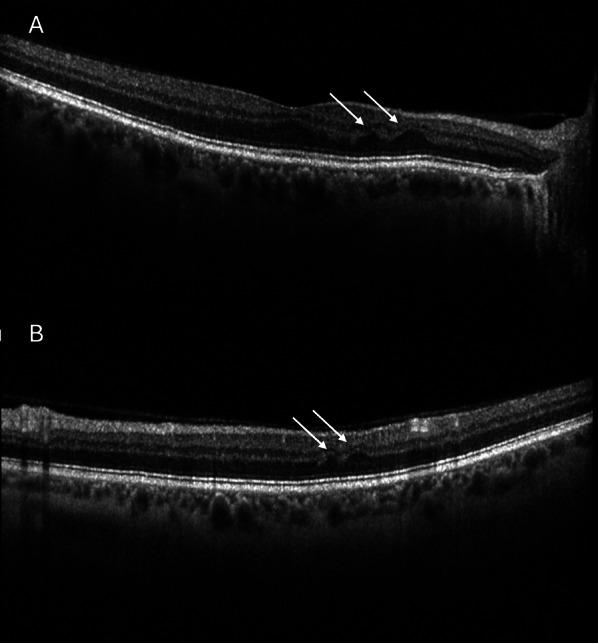
Retinal ischemic perivascular lesions (RIPLs) are characteristic focal thinning of the inner nuclear layer, with an upward expansion of the outer nuclear layer identified by spectral domain optical coherence tomography (SD-OCT), causing a focal irregular appearance of the middle retina. RIPLs result from retinal hypoperfusion in the deep capillary plexus, as a legacy of paracentral acute middle maculopathy, representing permanent anatomical markers of prior ischemic events. Although frequently found incidentally during routine eye examinations, RIPLs may provide insights into subclinical vascular damage that underpins various cardio- and cerebrovascular diseases. The aim of this narrative review is to summarize the relationships of RIPLs with retinal and systemic vascular diseases, including arterial hypertension, coronary artery disease, carotid artery stenosis, atrial fibrillation, stroke, sickle cell disease, and diabetes mellitus. Cardiovascular and metabolic diseases, which are the leading causes of morbidity and mortality worldwide, often remain asymptomatic for years despite early structural changes until severe adverse events occur. Noninvasive retinal biomarkers such as RIPLs, which are readily and noninvasively detected through SD-OCT scans, could help in the early detection and stratification of patients at risk for cardiovascular diseases, facilitate timely medical interventions and lifestyle changes, and ultimately improve disease prevention in a "personalized medicine" approach. While further research is needed to establish the prevalence of RIPLs in the general population and their full clinical significance, advances in ophthalmic imaging technologies combined with rapid progress in artificial intelligence applications in medical research could accelerate the development of RIPLs in retinal imaging-based oculomics.
视网膜缺血性血管周围病变(RIPLs)是内核层特征性的局灶性变薄,通过光谱域光学相干断层扫描(SD-OCT)可发现外核层向上扩展,导致视网膜中层出现局灶性不规则外观。RIPLs是由深层毛细血管丛视网膜灌注不足引起的,是中心旁急性黄斑病变的遗留表现,代表先前缺血事件的永久性解剖学标志。尽管RIPLs在常规眼部检查中经常偶然发现,但它们可能为各种心血管和脑血管疾病潜在的亚临床血管损伤提供见解。本叙述性综述的目的是总结RIPLs与视网膜和全身血管疾病的关系,包括动脉高血压、冠状动脉疾病、颈动脉狭窄、心房颤动、中风、镰状细胞病和糖尿病。心血管和代谢疾病是全球发病和死亡的主要原因,尽管早期结构发生改变,但在严重不良事件发生之前,这些疾病往往多年无症状。像RIPLs这样的非侵入性视网膜生物标志物可通过SD-OCT扫描轻松、无创地检测到,有助于早期发现和分层心血管疾病风险患者,促进及时的医疗干预和生活方式改变,并最终以“个性化医疗”方法改善疾病预防。虽然需要进一步研究以确定RIPLs在普通人群中的患病率及其全部临床意义,但眼科成像技术的进步与医学研究中人工智能应用的快速发展相结合,可能会加速基于视网膜成像的眼组学中RIPLs的发展。
 Zotero 插件