
新冠疫情出现后空气污染物对流感流行影响的探索:基于中国江苏省(2020 - 2024年)
Exploration of the impact of air pollutants on the influenza epidemic after the emergence of COVID-19: based on Jiangsu Province, China (2020-2024).
作者信息
Zheng Chengxi, Jiang Xin, Yin Yi, Dai Qigang, Tang Shuhan, Hu Jianli, Bao Changjun, Yang Haitao, Peng Zhihang
机构信息
School of Public Health, Nanjing Medical University, Nanjing, China.
Department of Acute Infectious Diseases Control and Prevention, Jiangsu Provincial Center for Disease Control and Prevention, Nanjing, China.
出版信息
Front Public Health. 2025 Apr 14;13:1555430. doi: 10.3389/fpubh.2025.1555430. eCollection 2025.
BACKGROUND
Non-pharmaceutical interventions (NPIs) during the COVID-19 pandemic altered influenza transmission patterns, yet the age-specific effects of air pollutants on influenza dynamics remain unclear.
METHODS
Utilizing influenza surveillance data of Jiangsu Province from 2020 to 2024, we integrated generalized additive quasi-Poisson regression model and distributed lag non-linear models (DLNM) to quantify lagged effects and exposure-response relationships between air pollutants (NO, SO, PM) and influenza risk across young, middle-aged, and older adult groups. Meteorological factors, including temperature and humidity, as well as the implementation stages of NPIs, were controlled in the model to isolate the impact of pollutants on influenza transmission.
RESULTS
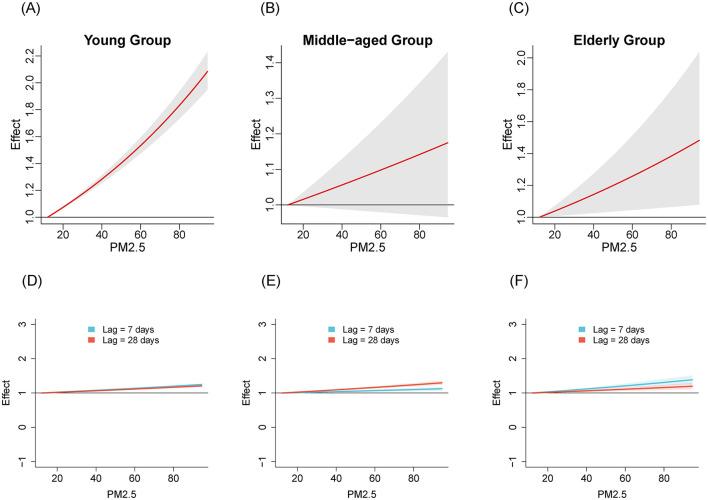
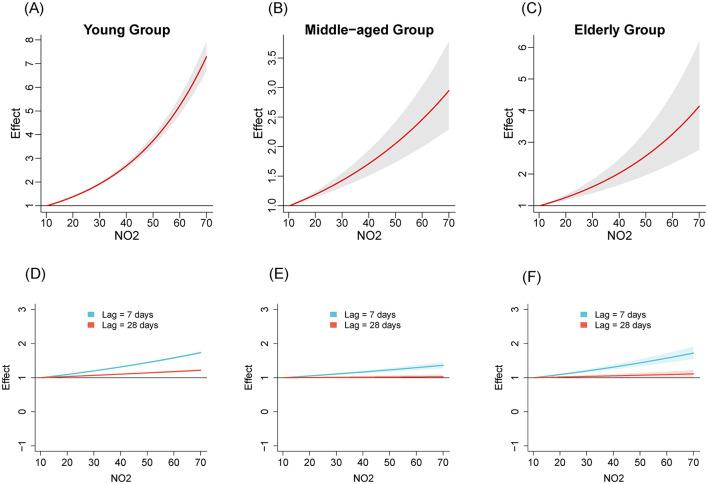
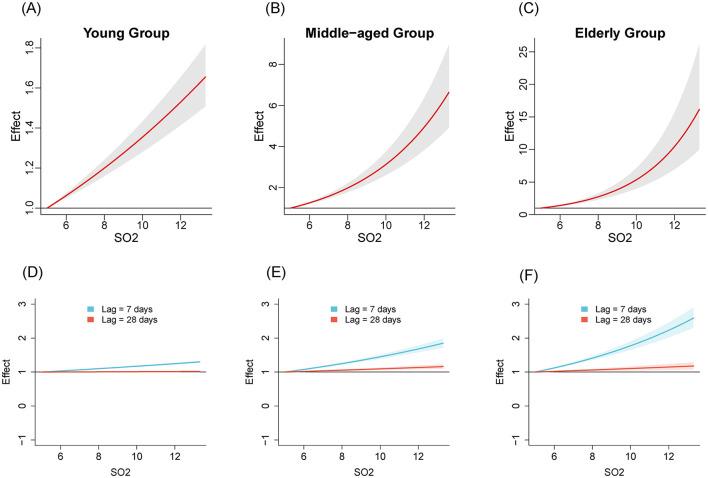
The NO and SO both showed significant positive effects in all age groups. The effect of NO is most significant in the young group (RR = 5.02, 95% CI: 4.69-5.37), while SO exhibited the most pronounced effects in middle-aged and older adult groups (RR = 4.22, 95% CI: 3.36-5.30; RR = 8.31, 95% CI: 5.77-11.96, respectively). PM elevated risks in young (RR = 1.99, 95% CI: 1.87-2.12) and older adult (RR = 1.45, 95% CI: 1.07-1.94) groups. Interactions between meteorological factors (temperature, humidity) and pollutants were statistically insignificant.
CONCLUSIONS
Air pollutant impacts on influenza transmission are age-dependent: NO dominates in younger populations, whereas SO disproportionately affects older adults. These findings highlight age-related vulnerability to air pollution and the need for targeted public health strategies for different population subgroups.
背景
新冠疫情期间的非药物干预措施(NPIs)改变了流感传播模式,但空气污染物对流感动态的年龄特异性影响仍不清楚。
方法
利用江苏省2020年至2024年的流感监测数据,我们整合了广义相加拟泊松回归模型和分布滞后非线性模型(DLNM),以量化空气污染物(NO、SO、PM)与青年、中年和老年人群流感风险之间的滞后效应和暴露-反应关系。模型中控制了包括温度和湿度在内的气象因素以及NPIs的实施阶段,以分离污染物对流感传播的影响。
结果
NO和SO在所有年龄组中均显示出显著的正向影响。NO对青年组的影响最为显著(RR = 5.02,95% CI:4.69 - 5.37),而SO对中年和老年组的影响最为明显(RR分别为4.22,95% CI:3.36 - 5.30;RR = 8.31,95% CI:5.77 - 11.96)。PM增加了青年组(RR = 1.99,95% CI:1.87 - 2.12)和老年组(RR = 1.45,95% CI:1.07 - 1.94)的风险。气象因素(温度、湿度)与污染物之间的相互作用在统计学上不显著。
结论
空气污染物对流感传播的影响具有年龄依赖性:NO在年轻人群中占主导,而SO对老年人的影响尤为突出。这些发现凸显了不同年龄人群对空气污染的易感性差异,以及针对不同人群亚组制定有针对性的公共卫生策略的必要性。
 Zotero 插件