
甘露糖基转移酶PimE对分枝杆菌糖脂生物合成的机制研究
Mechanistic studies of mycobacterial glycolipid biosynthesis by the mannosyltransferase PimE.
作者信息
Liu Yaqi, Brown Chelsea M, Borges Nuno, Nobre Rodrigo N, Erramilli Satchal, Belcher Dufrisne Meagan, Kloss Brian, Giacometti Sabrina, Esteves Ana M, Timóteo Cristina G, Tokarz Piotr, Cater Rosemary J, Lowary Todd L, Morita Yasu S, Kossiakoff Anthony A, Santos Helena, Stansfeld Phillip J, Nygaard Rie, Mancia Filippo
机构信息
Department of Physiology and Cellular Biophysics, Columbia University Irving Medical Center, New York, NY, USA.
School of Life Sciences and Department of Chemistry, University of Warwick, Coventry, UK.
出版信息
Nat Commun. 2025 Apr 29;16(1):3974. doi: 10.1038/s41467-025-57843-1.
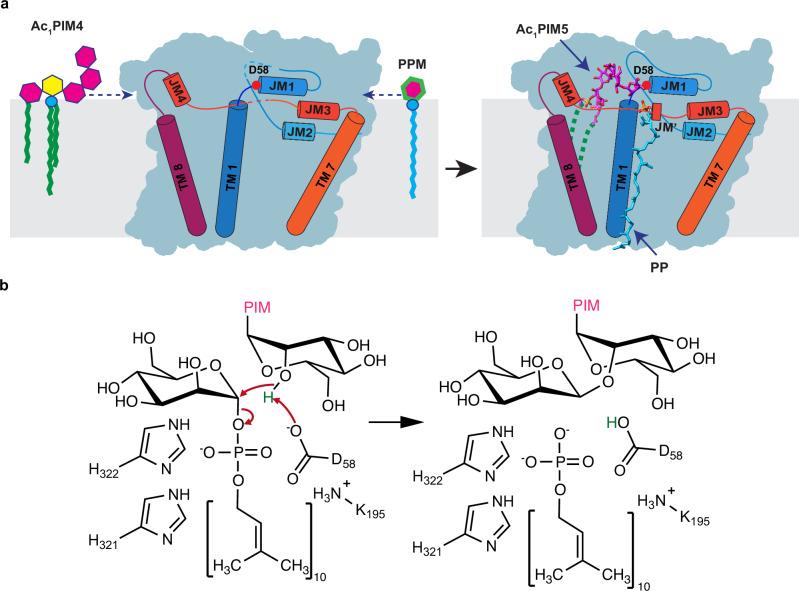
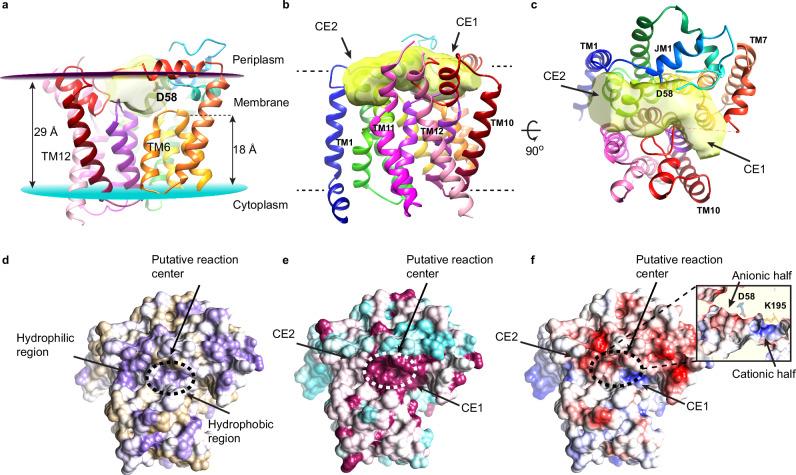
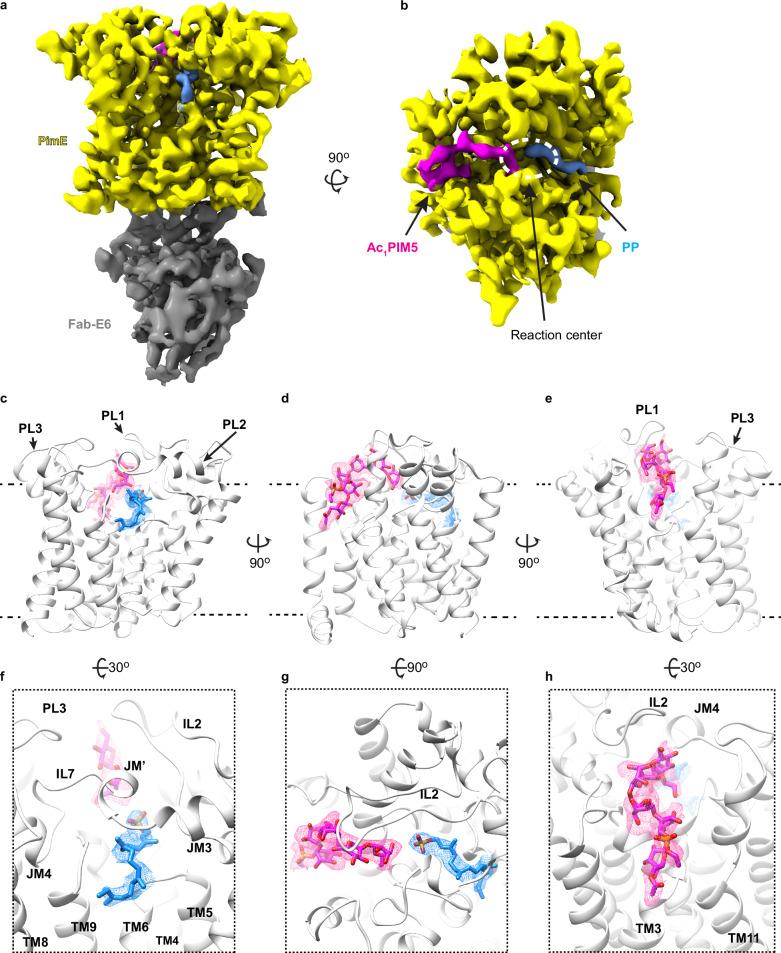
Tuberculosis (TB), a leading cause of death among infectious diseases globally, is caused by Mycobacterium tuberculosis (Mtb). The pathogenicity of Mtb is largely attributed to its complex cell envelope, which includes a class of glycolipids called phosphatidyl-myo-inositol mannosides (PIMs). These glycolipids maintain the integrity of the cell envelope, regulate permeability, and mediate host-pathogen interactions. PIMs comprise a phosphatidyl-myo-inositol core decorated with one to six mannose residues and up to four acyl chains. The mannosyltransferase PimE catalyzes the transfer of the fifth PIM mannose residue from a polyprenyl phosphate-mannose (PPM) donor. This step contributes to the proper assembly and function of the mycobacterial cell envelope; however, the structural basis for substrate recognition and the catalytic mechanism of PimE remain poorly understood. Here, we present the cryo-electron microscopy (cryo-EM) structures of PimE from Mycobacterium abscessus in its apo and product-bound form. The structures reveal a distinctive binding cavity that accommodates both donor and acceptor substrates/products. Key residues involved in substrate coordination and catalysis were identified and validated via in vitro assays and in vivo complementation, while molecular dynamics simulations delineated access pathways and binding dynamics. Our integrated approach provides comprehensive insights into PimE function and informs potential strategies for anti-TB therapeutics.
结核病(TB)是全球传染病致死的主要原因之一,由结核分枝杆菌(Mtb)引起。Mtb的致病性在很大程度上归因于其复杂的细胞包膜,其中包括一类称为磷脂酰 - 肌醇甘露糖苷(PIMs)的糖脂。这些糖脂维持细胞包膜的完整性,调节通透性,并介导宿主 - 病原体相互作用。PIMs由一个磷脂酰 - 肌醇核心组成,该核心装饰有一到六个甘露糖残基和多达四个酰基链。甘露糖基转移酶PimE催化第五个PIM甘露糖残基从聚异戊二烯磷酸甘露糖(PPM)供体转移。这一步骤有助于分枝杆菌细胞包膜的正确组装和功能;然而,底物识别的结构基础和PimE的催化机制仍知之甚少。在这里,我们展示了脓肿分枝杆菌中PimE的无配体形式和结合产物形式的冷冻电子显微镜(cryo-EM)结构。这些结构揭示了一个独特的结合腔,可容纳供体和受体底物/产物。通过体外测定和体内互补鉴定并验证了参与底物配位和催化的关键残基,而分子动力学模拟描绘了进入途径和结合动力学。我们的综合方法为PimE功能提供了全面的见解,并为抗结核治疗的潜在策略提供了依据。


 Zotero 插件