
印度癌症筛查计划的实施现状:政策与实践综述
Current Status of Implementation of Cancer Screening Programme in India: A Review of Policies and Practice.
作者信息
Oswal Kunal, Gaurav Kumar, Pradhan Akash, Ramachandran Venkataramanan, Sebastian Paul, Basu Partha
机构信息
Lead- Screening and Early Detection, Karkinos Healthcare private Limited, 2 Ex- Public Health Lead- Tata Trusts Cancer Care Foundation, India.
Ex- Public Health Lead, Tata Cancer Care Foundation, India.
出版信息
Asian Pac J Cancer Prev. 2025 Apr 1;26(4):1117-1128. doi: 10.31557/APJCP.2025.26.4.1117.
INTRODUCTION
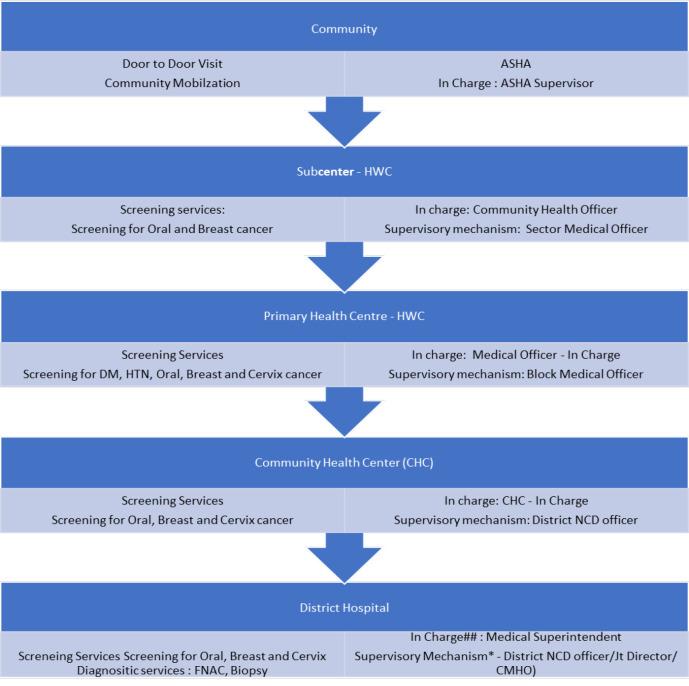
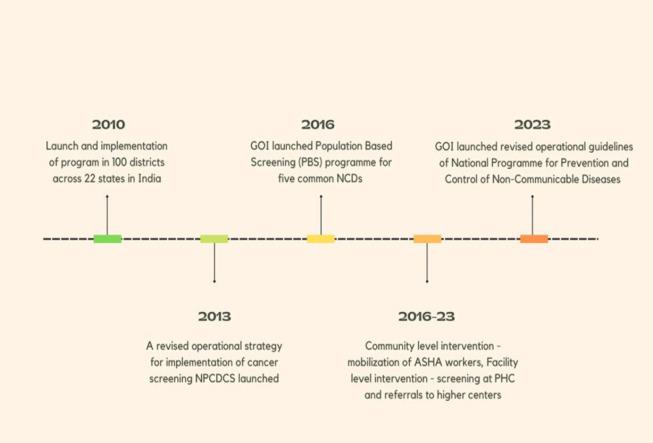
Cancer is becoming a leading cause of death and disability across the globe and India too has a high burden of disease with poor outcomes. The national cancer screening program has been rolled out since 2010 but has not yielded the desired results so far. The objective of the present review is to perform an analysis of the strengths and weaknesses of the cancer screening component of the National Program - Non Communicable Disease (NP-NCD) program based on a scoping review of policies, organization, and status of implementation of the program at the primary and secondary levels and also on observations from field experience of the program managers and other health professionals from selected states in India.
METHODS
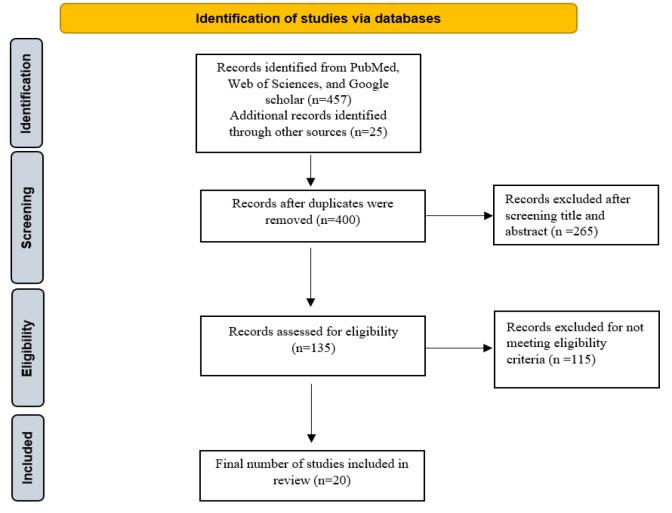
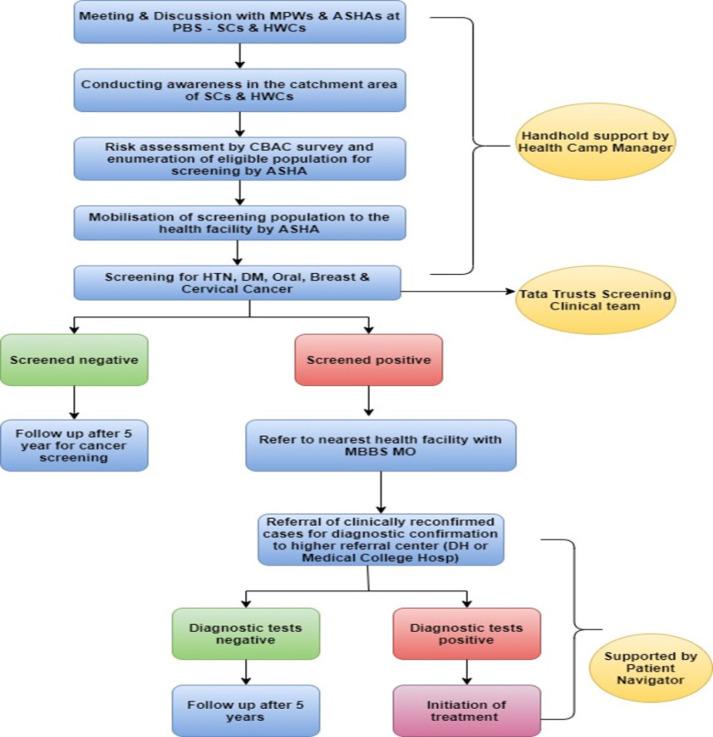
A mixed methodology was used to document the status of the implementation of the ongoing cancer screening program in India. The methodology included a literature review, observation of the frontline health professionals and an in-depth discussion with those in managerial capacity at the health facilities or the screening program.
RESULTS
Cancer screening is a complex public health initiative requiring a highly organized framework for effective implementation. Although India has implemented a comprehensive Non-Communicable Disease (NCD) screening program since 2010, the results have been minimal. The latest National Family Health Survey (NHFS 2019-21) reported that among the female population aged 30 to 49 years, only 1.9% and 0.9% were ever screened for cervical cancer and breast cancer respectively. The proportion of 30-49 year-old males reported to be ever screened for oral cancer was only 1.2%. Tamil Nadu and Kerala showed significantly better screening participation compared to other states in the country.
CONCLUSION
Cancer screening is a complex public health initiative requiring a highly organized framework for effective implementation. The Ayushman Bharat comprehensive primary healthcare service package and plan to deliver cancer screening through the Health and Wellness centers (AB-HWCs) is a good opportunity to revamp the program.
引言
癌症正成为全球主要的死亡和致残原因,印度的疾病负担也很重,治疗效果不佳。国家癌症筛查计划自2010年起实施,但迄今尚未取得预期效果。本综述的目的是基于对该计划在初级和二级层面的政策、组织及实施状况的范围综述,以及来自印度部分邦的项目经理和其他卫生专业人员的实地经验观察,对国家非传染性疾病计划(NP-NCD)中的癌症筛查部分的优缺点进行分析。
方法
采用混合方法记录印度现行癌症筛查计划的实施状况。该方法包括文献综述、对一线卫生专业人员的观察以及与卫生设施或筛查计划管理人员的深入讨论。
结果
癌症筛查是一项复杂的公共卫生举措,需要高度有组织的框架才能有效实施。尽管印度自2010年起实施了全面的非传染性疾病筛查计划,但成效甚微。最新的全国家庭健康调查(NHFS 2019-21)报告称,在30至49岁的女性人群中,分别只有1.9%和0.9%的人曾接受过宫颈癌和乳腺癌筛查。报告显示,30至49岁男性中曾接受过口腔癌筛查的比例仅为1.2%。与该国其他邦相比,泰米尔纳德邦和喀拉拉邦的筛查参与率明显更高。
结论
癌症筛查是一项复杂的公共卫生举措,需要高度有组织的框架才能有效实施。阿育吠陀·巴拉特综合初级医疗服务包以及通过健康与 wellness 中心提供癌症筛查的计划(AB-HWCs)是改进该计划的一个好机会。
 Zotero 插件