
经TMTP1修饰的纳米载体通过引发细胞焦亡增强宫颈癌免疫治疗效果。
TMTP1-modified nanocarrier boosts cervical cancer immunotherapy by eliciting pyroptosis.
作者信息
Xu Hanjie, Zhang Danya, Zhang Yu, Chen Yuxin, Sun Yue, Li Jie, Tan Songwei, Zhou Ying, Wei Rui, Li Fei, Xi Ling
机构信息
Department of Obstetrics and Gynecology, National Clinical Research Center for Obstetrics and Gynecology, Tongji Hospital, Tongji Medical College, Huazhong University of Science and Technology, Wuhan, Hubei, 430030, China.
Key Laboratory of Cancer Invasion and Metastasis (Ministry of Education), Hubei Key Laboratory of Tumor Invasion and Metastasis, Tongji Hospital, Tongji Medical College, Huazhong University of Science and Technology, Wuhan, Hubei, 430030, China.
出版信息
Theranostics. 2025 Apr 13;15(11):5420-5439. doi: 10.7150/thno.108357. eCollection 2025.
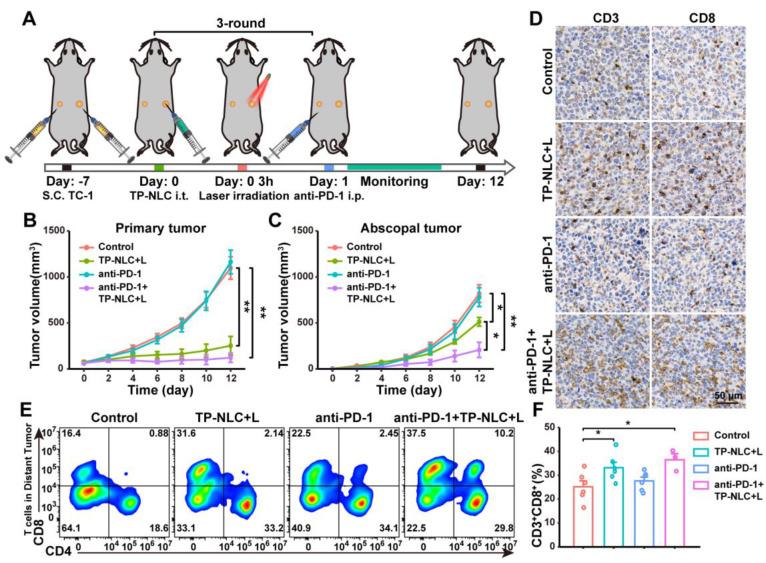
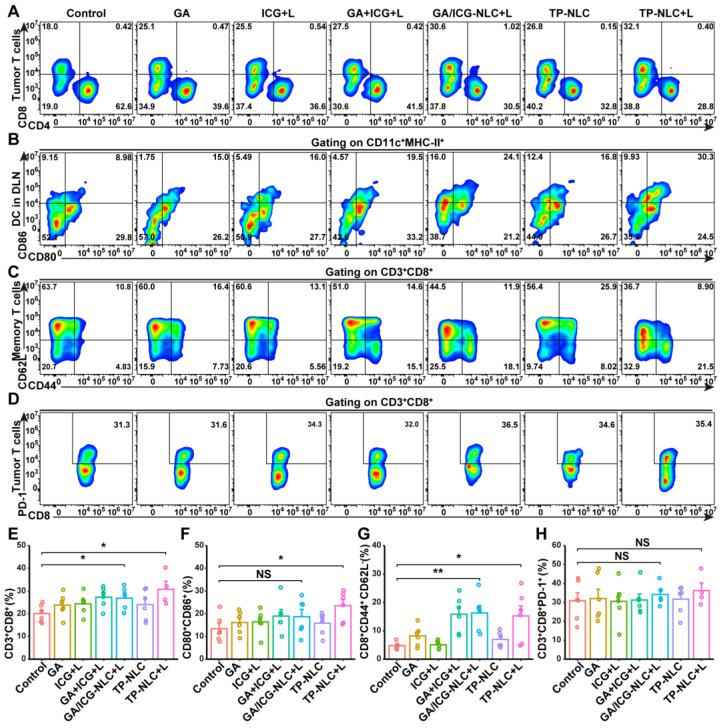
Pyroptosis, an emerging form of programmed cell death, facilitates the release of tumor antigens and inflammatory factors, which can be leveraged to enhance the efficacy of immune checkpoint blockade (ICB) therapy. However, achieving high-efficiency induction of pyroptosis in cancer cells while minimizing toxicity remains a significant challenge. In this study, we designed a tumor-targeting peptide TMTP1-modified nanostructured lipid carrier (referred to as TP-NLC) with high loading capacities for gambogic acid (GA) and indocyanine green (ICG). The TMTP1, identified by our research team for its tumor-targeting capabilities, was conjugated to the nanocarrier surface using "click chemistry" to improve the drug delivery efficiency to tumor tissues. The TP-NLC nanocarrier was thoroughly characterized with respect to its morphological attributes, photostability, tumor-targeting capabilities, ability to induce pyroptosis, reactive oxygen species (ROS)-responsive behavior, and anti-tumor efficacy both and . GA encapsulated within the TP-NLC nanocarrier, induced pyroptosis in tumor cells, and enhanced the efficacy of ICG-induced pyroptosis under laser irradiation by disrupting intracellular antioxidant systems, realizing that the combination of GA and ICG synergistically induced caspase-3/GSDME-mediated pyroptosis in a ROS-dependent manner. Tumor cells of pyroptosis released cellular contents and tumor antigens, which subsequently promoted the maturation of dendritic cells (DCs), enhanced intratumoral infiltration of CD8 T cells, initiated systemic antitumor immune response, and augmented the efficiency of PD-1 blockade against both primary and metastatic tumors. The combination of GA and ICG therapy utilizing the constructed nanocarriers presents an attractive therapeutic strategy to trigger pyroptosis and potentiate PD-1 blockade therapy for cervical cancer chemo-immunotherapy.
细胞焦亡是一种新出现的程序性细胞死亡形式,它能促进肿瘤抗原和炎症因子的释放,可借此提高免疫检查点阻断(ICB)疗法的疗效。然而,在使癌细胞高效发生细胞焦亡的同时将毒性降至最低仍是一项重大挑战。在本研究中,我们设计了一种由肿瘤靶向肽TMTP1修饰的纳米结构脂质载体(称为TP-NLC),其对藤黄酸(GA)和吲哚菁绿(ICG)具有高负载能力。我们的研究团队鉴定出具有肿瘤靶向能力的TMTP1,利用“点击化学”将其偶联到纳米载体表面,以提高药物向肿瘤组织的递送效率。对TP-NLC纳米载体的形态属性、光稳定性、肿瘤靶向能力、诱导细胞焦亡的能力、活性氧(ROS)响应行为以及体内外抗肿瘤疗效进行了全面表征。封装在TP-NLC纳米载体内的GA通过破坏细胞内抗氧化系统诱导肿瘤细胞发生细胞焦亡,并增强激光照射下ICG诱导细胞焦亡的效果,实现GA和ICG协同以ROS依赖的方式诱导caspase-3/GSDME介导的细胞焦亡。发生细胞焦亡的肿瘤细胞释放细胞内容物和肿瘤抗原,随后促进树突状细胞(DC)成熟,增强CD8 T细胞的肿瘤内浸润,引发全身抗肿瘤免疫反应,并提高PD-1阻断对原发性和转移性肿瘤的疗效。利用构建的纳米载体进行GA和ICG联合治疗为触发细胞焦亡和增强PD-1阻断疗法用于宫颈癌化学免疫治疗提供了一种有吸引力的治疗策略。



 Zotero 插件