
宜昌橙的WRKY27模块通过调节亚精胺含量提高耐寒性。
WRKY27- module of Ichang papeda () promotes cold tolerance by modulating spermidine content.
作者信息
Qu Jing, Xiao Peng, Wang Yilei, Wang Yue, Xiao Wei, Zhang Yu, Xu Xiaoyong, Liu Ji-Hong
机构信息
National Key Laboratory for Germplasm Innovation & Utilization of Horticultural Crops, College of Horticulture and Forestry Sciences, Huazhong Agricultural University, No.1, Shizishan Street, Hongshan District, Wuhan 430070, China.
Hubei Key Laboratory of Germplasm Innovation and Utilization of Fruit Trees, Institute of Fruit and Tea, Hubei Academy of Agricultural Science, No.10, Nanhu Avenue, Hongshan District, Wuhan 430070, China.
出版信息
Hortic Res. 2025 Mar 4;12(6):uhaf065. doi: 10.1093/hr/uhaf065. eCollection 2025 Jun.
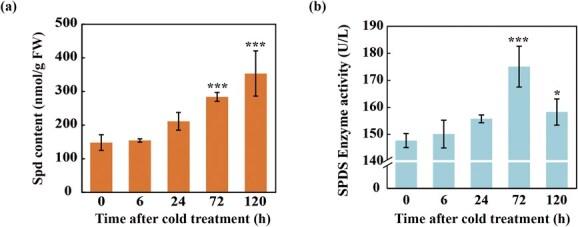
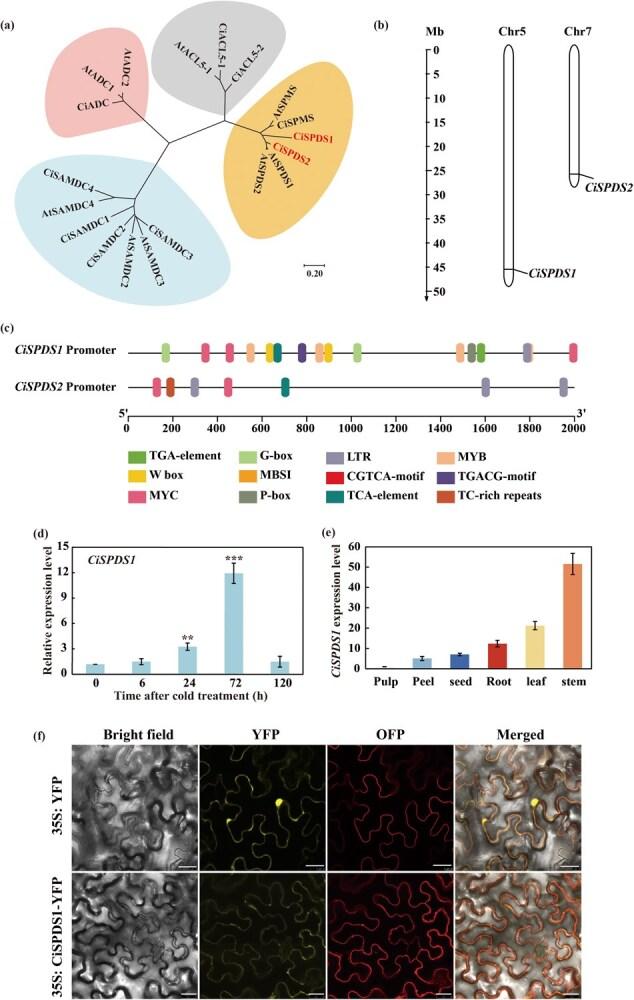
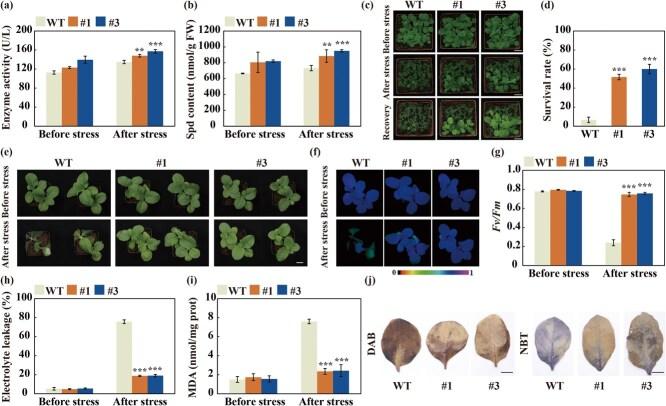
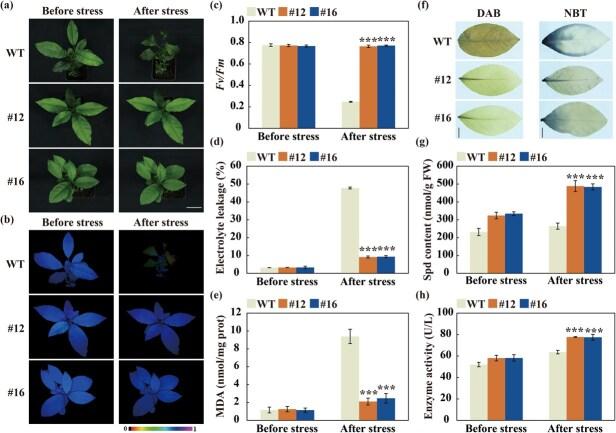
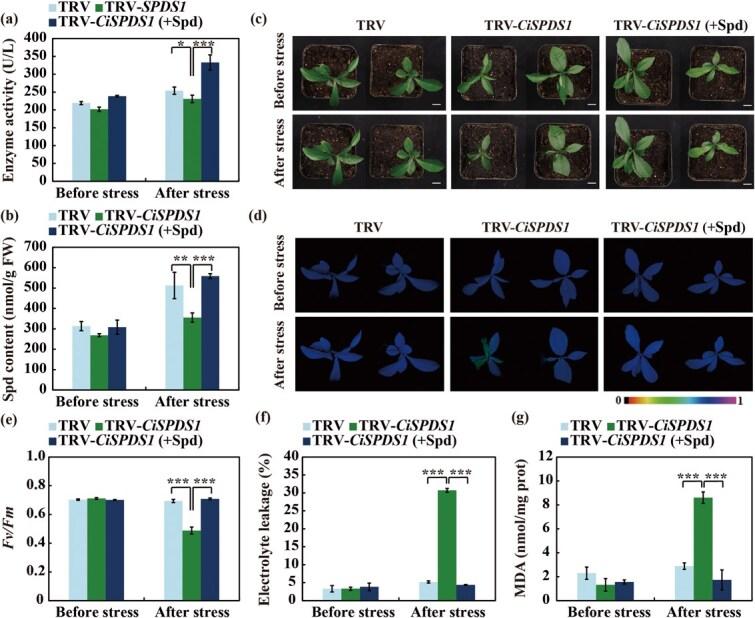
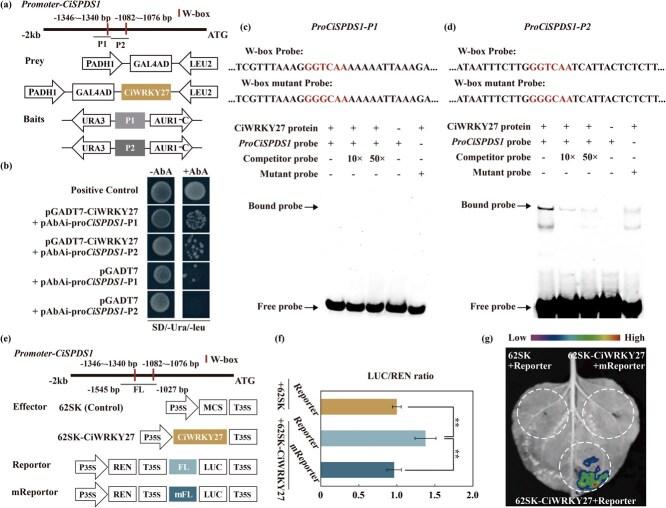
Spermidine (Spd) is one of the predominant polyamines in higher plants and plays a crucial role in combating various abiotic stresses. However, the molecular functions and underlying regulatory mechanisms associated with plant Spd synthase (SPDS) genes in cold tolerance remain poorly understood. In this study, cold treatment markedly induced Spd accumulation and enhanced SPDS activity in Ichang papeda (), a cold-hardy plant in genus. Exogenous Spd supply led to dramatically improved cold tolerance. Two SPDS genes ( and ) were identified in Ichang papeda, but only was substantially upregulated by cold. Overexpressing of in both tobacco () and lemon (), a cold-sensitive species, promoted Spd synthesis and enhanced cold tolerance in the transgenic plants. In contrast, knockdown of in Ichang papeda by virus-induced gene silencing (VIGS) repressed Spd synthesis and greatly impaired the cold tolerance, which was restored by exogenous replenishment of Spd. In addition, we demonstrated that WRKY27 of Ichang papeda (CiWRKY27) directly bound to and activated the promoter through interacting with a W-box -acting element. Meanwhile, VIGS-mediated silencing of resulted in marked reduction of transcript levels and Spd contents and significantly impaired the cold tolerance in Ichang papeda. Taken together, this study illustrated the role of in cold tolerance and identified it as a direct target of CiWRKY27. These findings provide insight into the regulatory mechanism by which the molecular module CiWRKY27- regulates Spd accumulation for modulation of cold tolerance.
亚精胺(Spd)是高等植物中主要的多胺之一,在抵御各种非生物胁迫中起关键作用。然而,与植物亚精胺合酶(SPDS)基因相关的分子功能及其在耐寒性方面的潜在调控机制仍知之甚少。在本研究中,冷处理显著诱导了耐寒植物宜昌橙中亚精胺的积累并增强了SPDS活性。外源供应亚精胺可显著提高耐寒性。在宜昌橙中鉴定出两个SPDS基因( 和 ),但只有 在冷处理下显著上调。在烟草( )和冷敏感植物柠檬( )中过表达 均促进了转基因植物中亚精胺的合成并增强了耐寒性。相反,通过病毒诱导基因沉默(VIGS)敲除宜昌橙中的 会抑制亚精胺的合成并严重损害耐寒性,而外源补充亚精胺可恢复耐寒性。此外,我们证明了宜昌橙中的WRKY27(CiWRKY27)通过与W盒作用元件相互作用直接结合并激活 启动子。同时,VIGS介导的 沉默导致 转录水平和亚精胺含量显著降低,并严重损害了宜昌橙的耐寒性。综上所述,本研究阐明了 在耐寒性中的作用,并确定其为CiWRKY27的直接靶标。这些发现为分子模块CiWRKY27 - 调控亚精胺积累以调节耐寒性的调控机制提供了见解。


 Zotero 插件