
噪声性直流电前庭刺激下的静态平衡控制特性
Properties of standing balance control under noisy galvanic vestibular stimulation.
作者信息
Sonobe Motomichi, Mitsutake Tsubasa
机构信息
Department of Intelligent Mechanical Systems Engineering, Kochi University of Technology, Kochi, Japan.
Clinical Research Center, Saga University Hospital, Saga, Japan.
出版信息
Front Neurol. 2025 Apr 15;16:1500308. doi: 10.3389/fneur.2025.1500308. eCollection 2025.
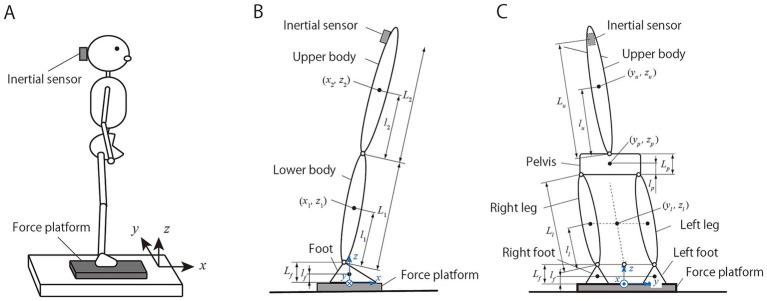
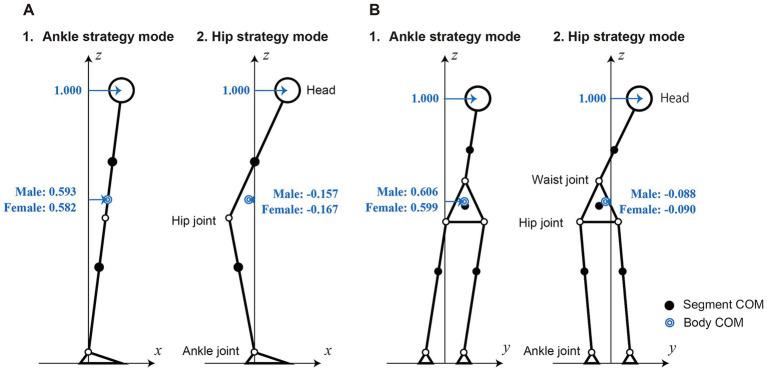
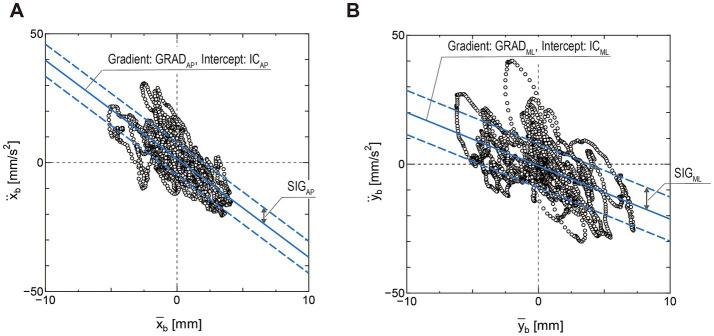
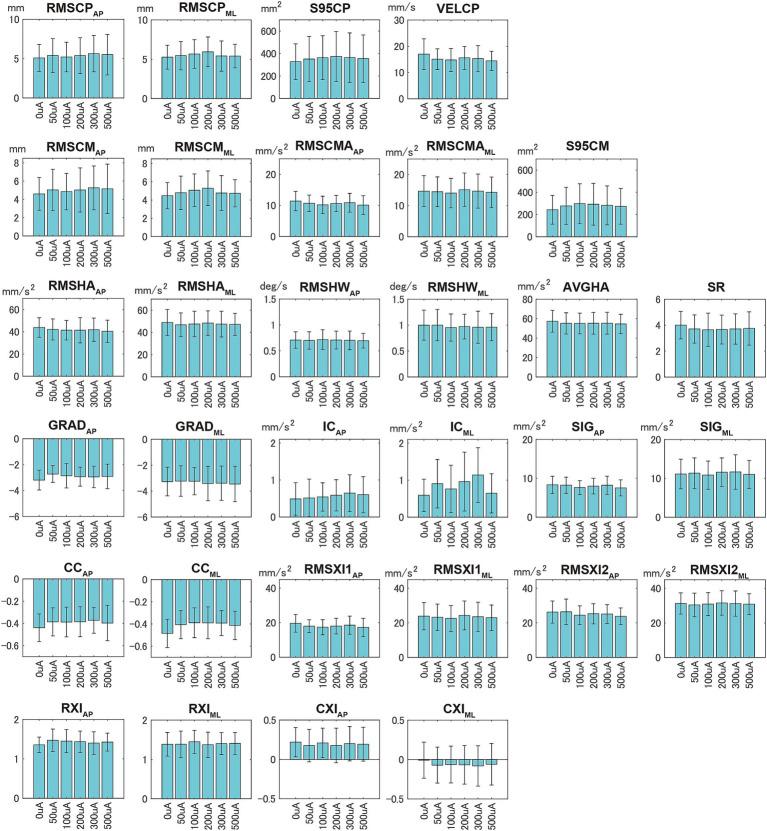
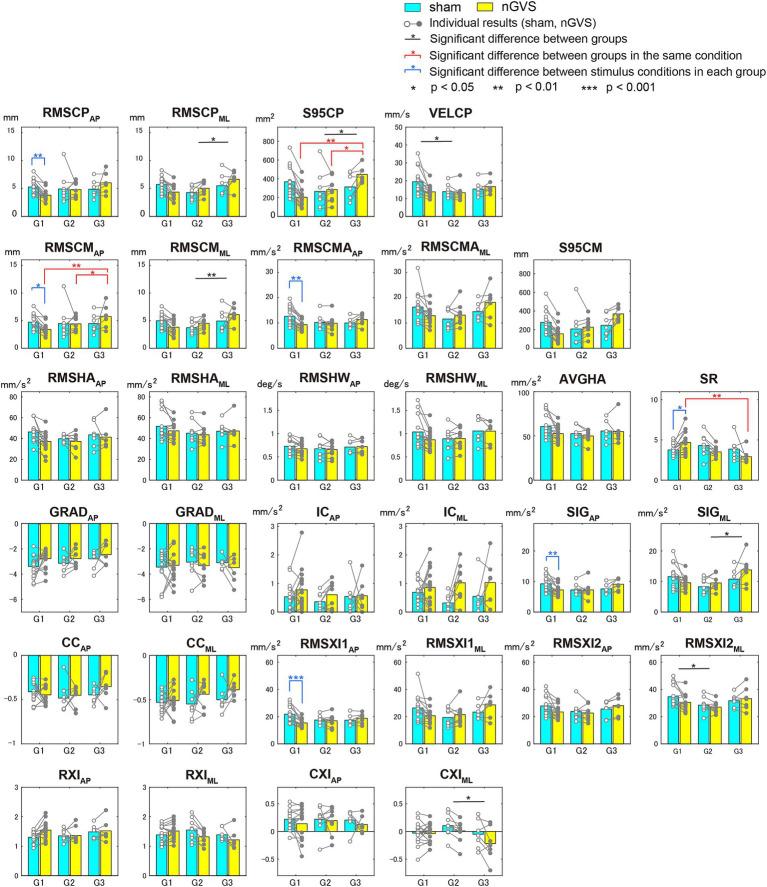
Vestibular sensation contributes to balance control during standing as well as somatosensation and vision. Previous studies have indicated that noisy galvanic vestibular stimulation (nGVS) activates vestibular function and improves standing balance in many subjects. However, the mechanism for improving balance control with the addition of nGVS remains unclear. This study aimed to clarify the balance control mechanism improved by nGVS using detailed motion data during quiet standing. Thirty-two young healthy subjects performed quiet standing tests for 40 s with their eyes closed under sham and optimal intensity stimulation. Detailed data consisting of the center of mass (COM) displacement and acceleration of the body, head acceleration, and lower and upper body accelerations were obtained from measurements using a force platform and a head inertial sensor based on the equations of motion of rigid body models. In addition, our study discusses the contributions of joint strategies for COM control and head acceleration control. The contributions of the ankle and hip strategies were calculated from the COM accelerations of the lower and upper bodies. The results indicated that the more effective group of nGVS suppressed head acceleration using the ankle strategy in the anteroposterior direction. This implies that acceleration feedback from vestibular function affects the quality of the ankle joint strategy control. The findings of this study could contribute to the evaluation of vestibular sensory weighting during standing and development of intervention methods for vestibular function using nGVS.
前庭感觉有助于站立时的平衡控制,以及躯体感觉和视觉。先前的研究表明,噪声性电刺激前庭(nGVS)可激活前庭功能,并改善许多受试者的站立平衡。然而,添加nGVS改善平衡控制的机制仍不清楚。本研究旨在利用安静站立时的详细运动数据阐明nGVS改善平衡控制的机制。32名年轻健康受试者在假刺激和最佳强度刺激下闭眼进行40秒的安静站立测试。基于刚体模型的运动方程,使用力平台和头部惯性传感器进行测量,获得了包括质心(COM)位移、身体加速度、头部加速度以及上下半身加速度的详细数据。此外,我们的研究讨论了联合策略对COM控制和头部加速度控制的贡献。根据上下半身的COM加速度计算脚踝和髋关节策略的贡献。结果表明,nGVS更有效的组在前向后方向上使用脚踝策略抑制头部加速度。这意味着前庭功能的加速度反馈会影响踝关节策略控制的质量。本研究结果有助于评估站立时的前庭感觉权重,以及开发使用nGVS的前庭功能干预方法。

 Zotero 插件