
使用多化学物质暴露模型研究坦桑尼亚西北部手工小规模金矿开采区产前铅、汞、镉和砷暴露对儿童神经发育的影响。
Effects of prenatal lead, mercury, cadmium, and arsenic exposure on children's neurodevelopment in an artisanal small-scale gold mining area in Northwestern Tanzania using a multi-chemical exposure model.
作者信息
Nyanza Elias C, Mhana Raphael J, Asori Moses, Thomas Deborah S K, Kisoka Agapiti P
机构信息
Department of Environmental, Occupational, and Research GIS, School of Public Health, Catholic University of Health and Allied Sciences, Mwanza, Tanzania.
Reproductive and Child Health Unit, Mwanza Regional Health Services, Mwanza, Tanzania.
出版信息
PLOS Glob Public Health. 2025 Apr 30;5(4):e0004577. doi: 10.1371/journal.pgph.0004577. eCollection 2025.
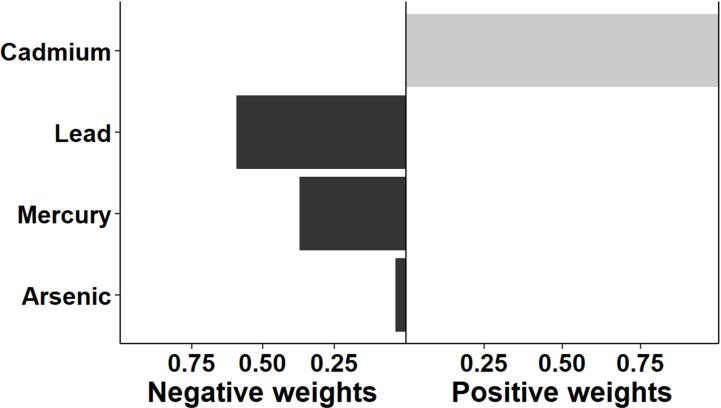
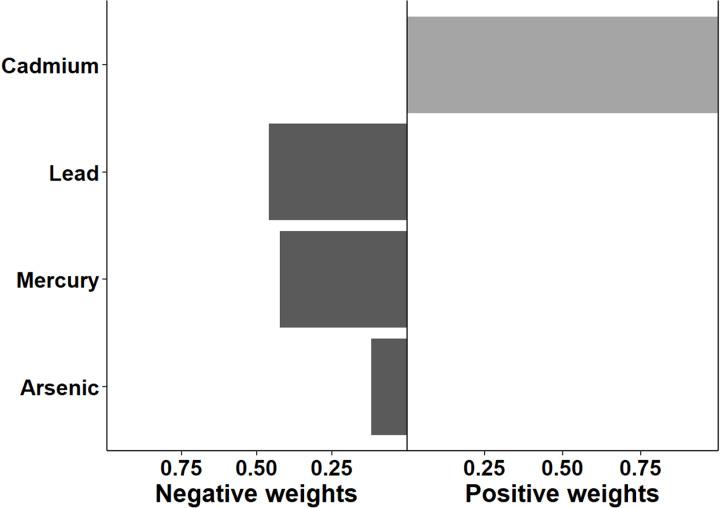
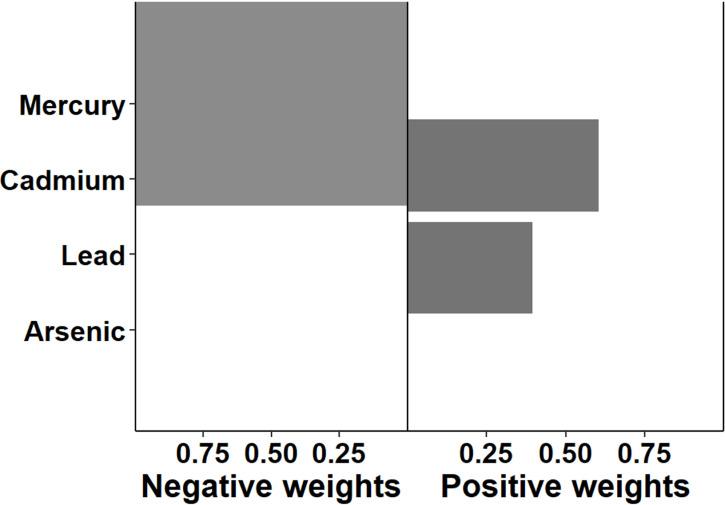
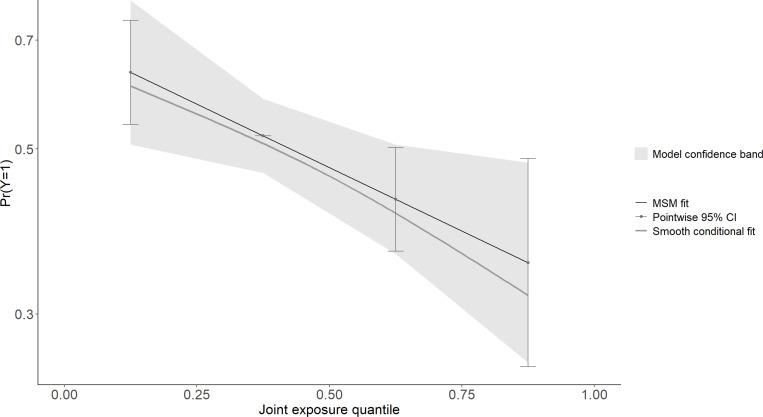
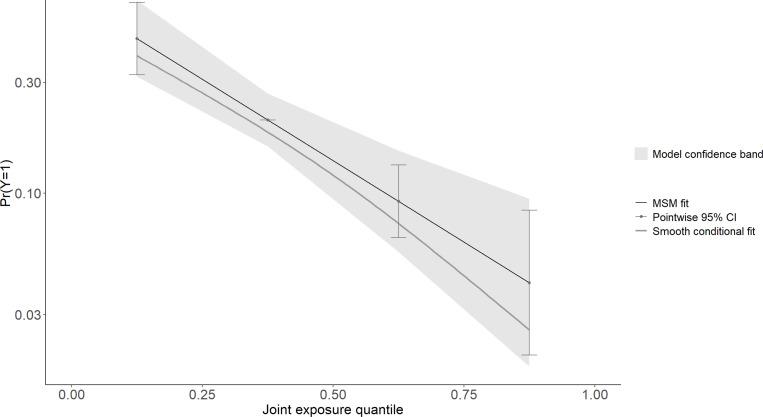
An estimated 250 million children under five fail to reach their cognitive development potential in Africa. Growing evidence suggests reduced neurodevelopments for children from environmental exposures, yet research on this topic in Sub-Saharan Africa remains limited. This study examined the effects of multi-chemical prenatal exposure to heavy metals on developmental milestones for children aged 3-4 in artisanal and small gold mining areas in northwestern Tanzania. This longitudinal follow-up study of children whose mothers were enrolled in the Tanzania Mining and Health Cohort in Geita District in 2015 were assessed at 3-4 years of age for the current study between June 2019 - June 2020. Developmental outcomes (cognitive, social, motor, and language skills) were assessed using the Malawi Developmental Assessment Tool (MDAT). A quantile g-computation model evaluated the linkage between multi-chemical exposures and developmental milestones. Of the 310 children in the follow-up, a majority had at least one form of developmental impairment (50.7%; n = 157) across four domains: gross motor (20.3%), fine motor (23.9%), language (28.3%), and social skill (16.2%). Increased Pb, Hg, Cd, and As exposure jointly reduced gross motor by 17.78% (aPR = 0.822; 95% CI: 0.6994, 0.966). Joint exposure to these heavy metals decreased language ability by 55.36% (aPR = 0.446; 95% CI: 0.313, 0.636) and decreased general developmental milestones by 13.36% (aPR = 0.866; 95% CI: 0.747,1.005). However, the combined effect on the fine motor (aPR = 0.943; 95% CI: 0.754, 1.180) and social skills 6.71% (aPR = 1.067; 95% CI: 0.694, 1.641) were not statistically significant. Exposure to heavy metals while in utero reduced children neurodevelopmental milestones at 3-4 years of age. The cumulative impact of Pb, Hg, Cd, and As was significant for gross motor, language ability, and general impairment. The independent effects of Pb and Hg were amplified beyond what would be expected under the additive assumption with Cd and As, suggesting synergistic effects.
据估计,非洲有2.5亿五岁以下儿童未能发挥其认知发展潜力。越来越多的证据表明,环境暴露会使儿童的神经发育减缓,但撒哈拉以南非洲地区关于这一主题的研究仍然有限。本研究调查了在坦桑尼亚西北部手工和小规模金矿开采地区,多种化学物质产前暴露于重金属对3至4岁儿童发育里程碑的影响。这项针对2015年其母亲被纳入盖塔区坦桑尼亚采矿与健康队列的儿童的纵向随访研究,在2019年6月至2020年6月期间对3至4岁的儿童进行了当前研究评估。使用马拉维发育评估工具(MDAT)评估发育结果(认知、社交、运动和语言技能)。分位数g计算模型评估了多种化学物质暴露与发育里程碑之间的联系。在随访的310名儿童中,大多数儿童在四个领域至少有一种发育障碍形式(50.7%;n = 157):大运动(20.3%)精细运动(23.9%)、语言(28.3%)和社交技能(16.2%)。铅、汞、镉和砷暴露增加共同使大运动能力降低了17.78%(aPR = 0.822;95%CI:0.6994,0.966)。这些重金属的联合暴露使语言能力降低了55.36%(aPR = 0.446;95%CI:0.313,0.636),并使总体发育里程碑降低了13.36%(aPR = 0.866;95%CI:0.747,1.005)。然而,对精细运动(aPR = 0.943;95%CI:0.754,1.180)和社交技能(aPR = 1.067;95%CI:0.694,1.641)的综合影响在统计学上不显著。子宫内暴露于重金属会降低儿童3至4岁时的神经发育里程碑。铅、汞、镉和砷的累积影响在大运动、语言能力和总体障碍方面具有显著性。铅和汞的独立影响超出了与镉和砷相加假设下的预期,表明存在协同效应。






 Zotero 插件