
可溶性肿瘤抑制因子2(sST2)作为急性心力衰竭和脓毒症的诊断及预后标志物:一项对比分析
Soluble Suppression of Tumorigenicity 2 (sST2) as a Diagnostic and Prognostic Marker in Acute Heart Failure and Sepsis: A Comparative Analysis.
作者信息
Davini Flavio, Fogolari Marta, D'Avanzo Giorgio, Ristori Maria Vittoria, Nucciarelli Serena, Bani Lucrezia, Cristiano Antonio, De Cesaris Marina, Spoto Silvia, Angeletti Silvia
机构信息
Research Unit of Clinical Laboratory Science, Department of Medicine and Surgery, Università Campus Bio-Medico di Roma, Via Alvaro del Portillo, 21, 00128 Roma, Italy.
Operative Research Unit of Laboratory, Fondazione Policlinico Universitario Campus Bio-Medico, Via Alvaro del Portillo, 200, 00128 Rome, Italy.
出版信息
Diagnostics (Basel). 2025 Apr 16;15(8):1010. doi: 10.3390/diagnostics15081010.
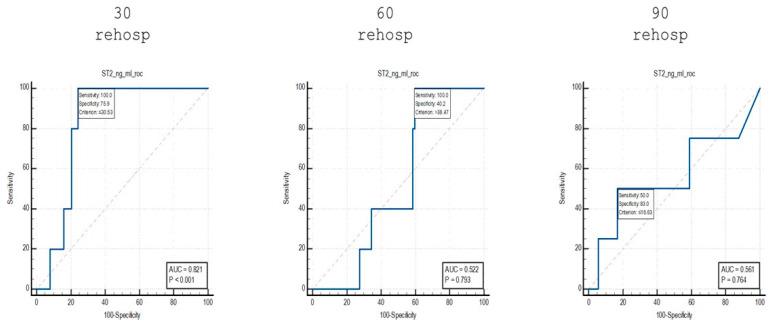
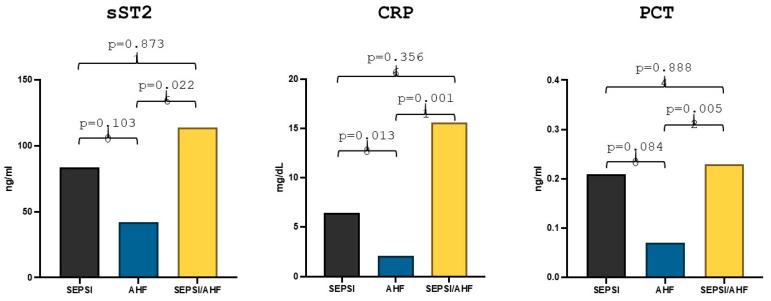
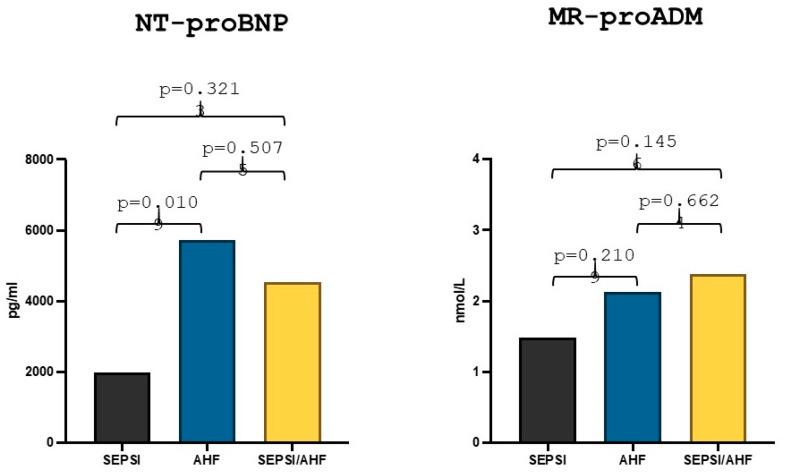
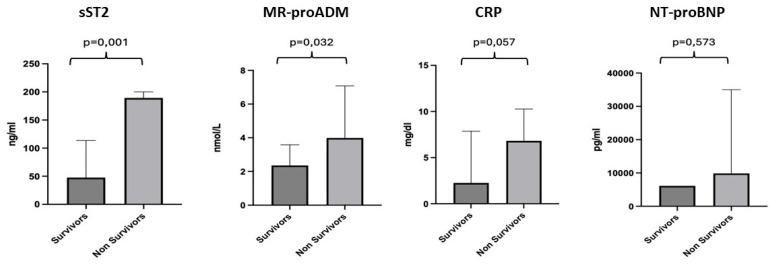
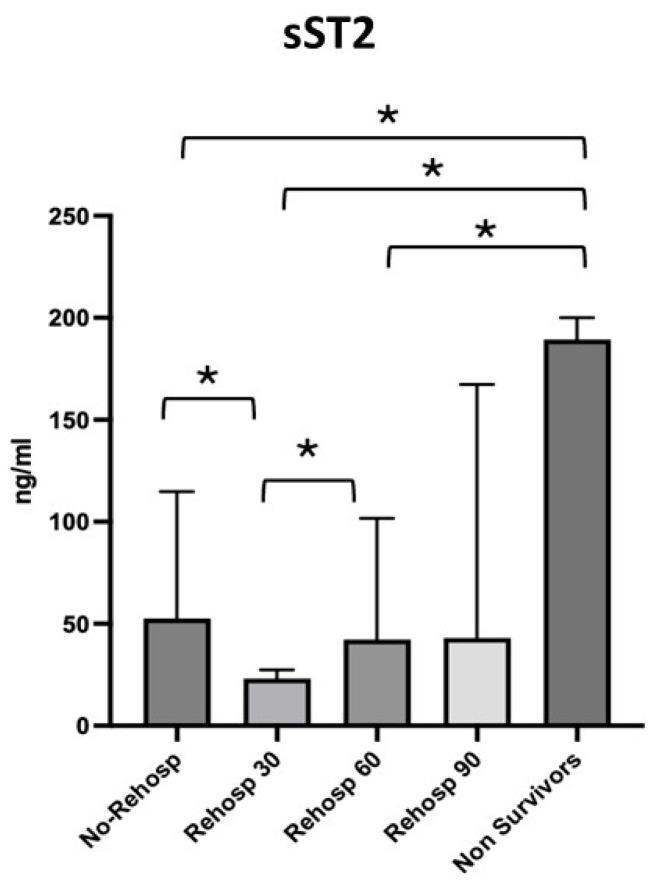
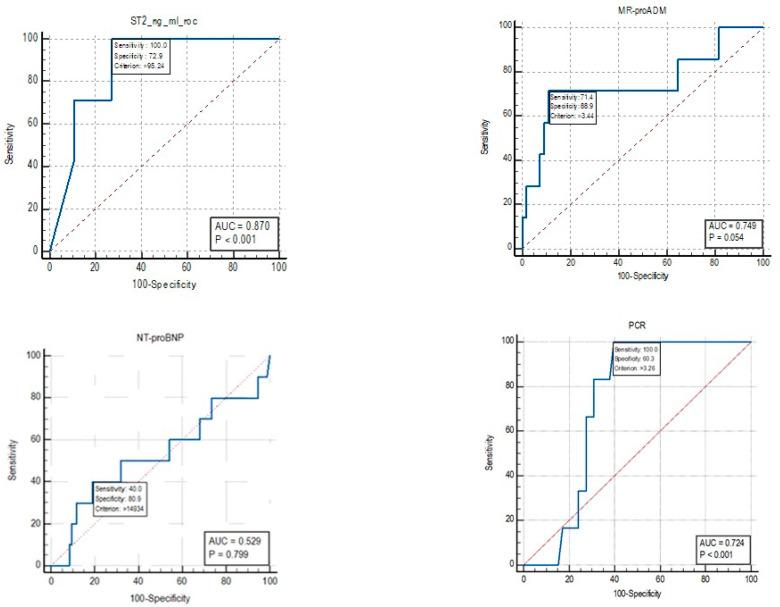
Suppression of Tumorigenicity 2 (ST2), a member of the interleukin-1 receptor family, plays a crucial role in immune regulation. Elevated sST2 levels are associated with poor prognosis in various inflammatory and cardiovascular diseases, including acute heart failure (AHF), sepsis and transplant rejection. This study aimed to evaluate the diagnostic and prognostic accuracy of sST2, along with other biomarkers, such as high-sensitivity C-reactive protein (hs-CRP), N-terminal pro-B-type natriuretic peptide (NT-proBNP), procalcitonin (PCT) and mid-regional pro-adrenomedullin (MR-proADM), in patients with AHF, sepsis and AHF/sepsis overlap. A cohort of 74 patients was analyzed, and comparison statistics revealed that sST2 levels were significantly higher in the AHF/sepsis group (113.88 ng/mL) compared to the AHF group (42.24 ng/mL, = 0.024), while no significant difference was observed between sepsis and AHF groups ( = 0.10). Other biomarkers, including hs-CRP and PCT, showed significant differences between the AHF and AHF/sepsis groups. ROC curve analysis identified sST2 as a strong predictor of mortality and readmission, with high AUC values for 30-day readmission (0.821) and mortality (0.87). These findings suggest that combining biomarkers, including sST2, could improve the early diagnosis, risk stratification and management of critically ill patients with overlapping AHF and sepsis. Further studies with larger populations are needed to validate these findings and explore the potential of integrating these biomarkers into clinical practice.
肿瘤抑制因子2(ST2)是白细胞介素-1受体家族的成员,在免疫调节中起关键作用。可溶性ST2(sST2)水平升高与多种炎症和心血管疾病的不良预后相关,包括急性心力衰竭(AHF)、脓毒症和移植排斥反应。本研究旨在评估sST2以及其他生物标志物,如高敏C反应蛋白(hs-CRP)、N末端B型利钠肽原(NT-proBNP)、降钙素原(PCT)和中段肾上腺髓质素(MR-proADM)在AHF、脓毒症及AHF/脓毒症重叠患者中的诊断和预后准确性。分析了74例患者的队列,比较统计显示,AHF/脓毒症组的sST2水平(113.88 ng/mL)显著高于AHF组(42.24 ng/mL,P = 0.024),而脓毒症组和AHF组之间未观察到显著差异(P = 0.10)。包括hs-CRP和PCT在内的其他生物标志物在AHF组和AHF/脓毒症组之间显示出显著差异。ROC曲线分析确定sST2是死亡率和再入院的有力预测指标,30天再入院(0.821)和死亡率(0.87)的AUC值较高。这些发现表明,联合包括sST2在内的生物标志物可以改善AHF和脓毒症重叠的危重症患者的早期诊断、风险分层和管理。需要进行更大规模人群的进一步研究来验证这些发现,并探索将这些生物标志物整合到临床实践中的潜力。
 Zotero 插件