
从N端到C端的肽合成,堪称可持续生产的未来。
N- to C-Peptide Synthesis, Arguably the Future for Sustainable Production.
作者信息
Ghosh Kinshuk, Lubell William D
机构信息
Département de Chimie, Université de Montréal, Québec, Canada.
出版信息
J Pept Sci. 2025 Jun;31(6):e70019. doi: 10.1002/psc.70019.
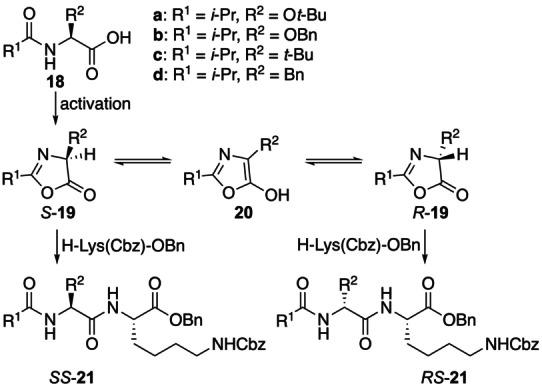
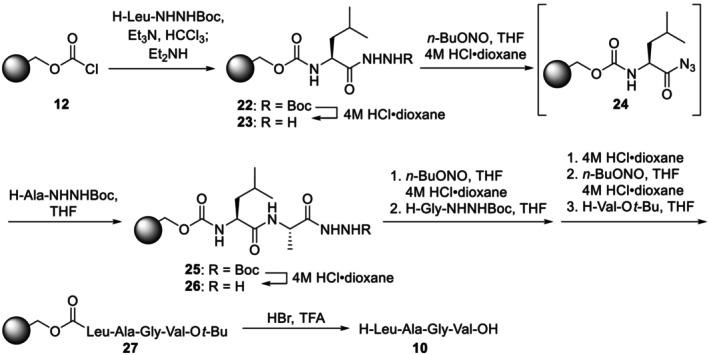
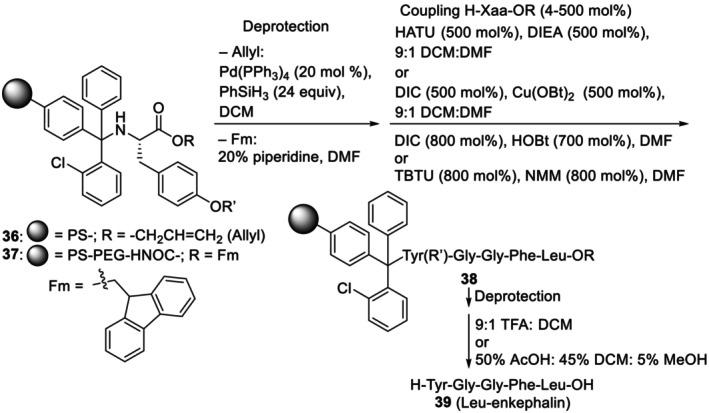
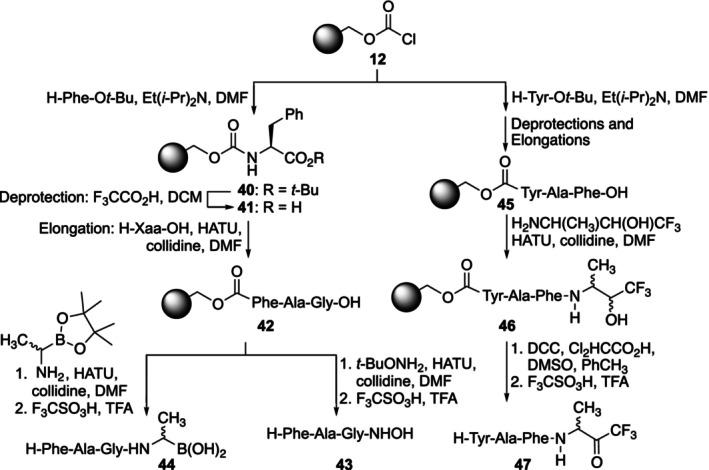
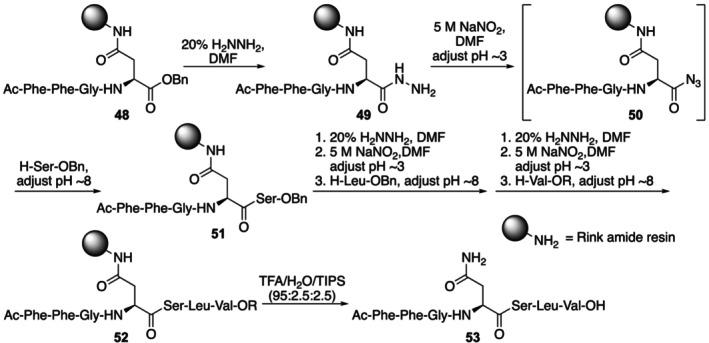
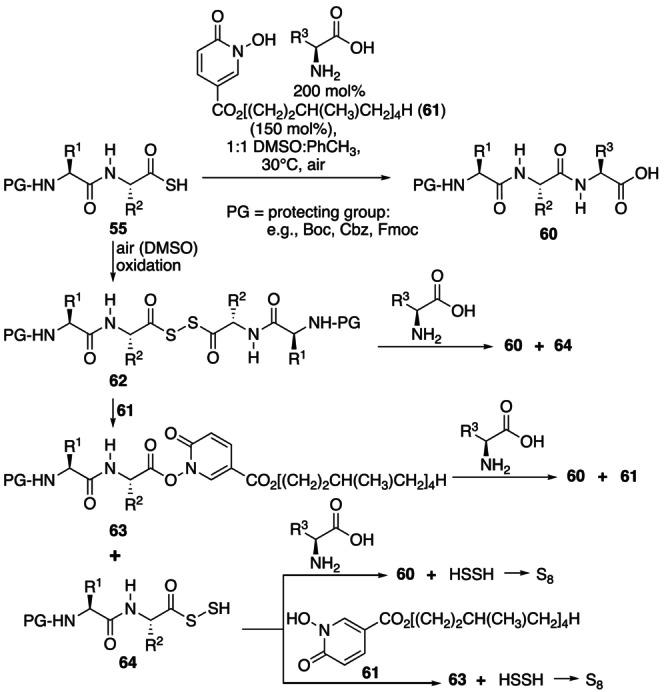
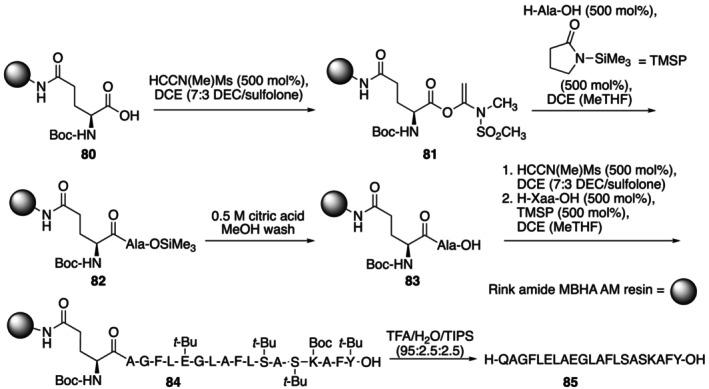
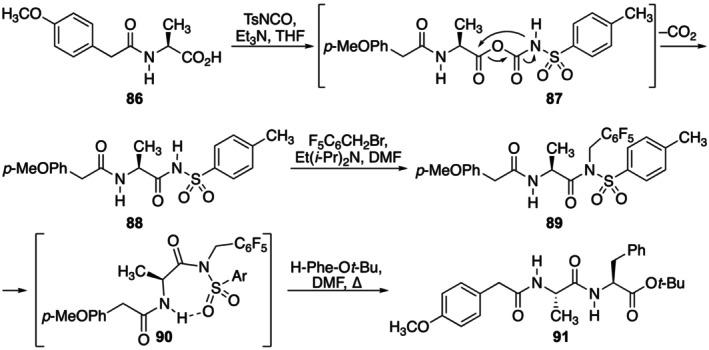
A revolution in peptide production arrived from the innovation of carboxylate to amine C- to N-direction solid-phase synthesis. This cornerstone of modern peptide science has enabled multiple academic and industrial applications; however, the process of C- to N-solid phase peptide synthesis (C-N-SPPS) has extreme process mass intensity and poor atom economy. Notably, C-N-SPPS relies upon the use of atom-intensive protecting groups, such as the fluorenylmethyloxycarbonyl (Fmoc) protection and wasteful excess of protected amino acids and coupling agents. On the other hand, peptide synthesis in the amine to carboxylate N- to C-direction offers potential to minimize protection and may arguably enable more efficient means for manufacturing peptides. For example, efficient amide bond formation in the N- to C-direction has been accomplished using methods employing thioesters, vinyl esters, and transamidation to achieve peptide synthesis with minimal epimerization. This review aims to provide an overview of N- to C-peptide synthesis indicating advantages in taking this avenue for sustainable peptide production.
从羧基到氨基的C到N方向的固相合成创新带来了肽生产的一场革命。现代肽科学的这一基石已经实现了多种学术和工业应用;然而,C到N固相肽合成(C-N-SPPS)过程具有极高的过程质量强度和较差的原子经济性。值得注意的是,C-N-SPPS依赖于使用原子密集型保护基团,如芴甲氧羰基(Fmoc)保护以及过量使用受保护的氨基酸和偶联剂。另一方面,从氨基到羧基的N到C方向的肽合成具有减少保护的潜力,并且可以说能够实现更高效的肽制造方法。例如,使用硫酯、乙烯基酯和转酰胺化等方法在N到C方向上实现了高效的酰胺键形成,从而以最小的差向异构化实现肽合成。本综述旨在概述N到C肽合成,指出采用这条途径进行可持续肽生产的优势。






 Zotero 插件