
从尖吻鲈分离的嗜水气单胞菌盐度诱导的毒力改变:转录组分析和表型特征的见解
Salinity-induced virulence alteration of Aeromonas hydrophila isolated from Scatophagus argus: insights from transcriptomic profiling and phenotypic characterization.
作者信息
Sun Yuan, Hao Lingyun, Liang Jianbing, Ye Shiyang, Su Maoliang
机构信息
Shenzhen Key Laboratory of Marine Bioresource & Eco-Environmental Science, College of Life Sciences and Oceanography, Shenzhen University, Shenzhen, 518060, China.
Key Laboratory of Optoelectronic Devices and Systems of Ministry of Education and Guangdong Province, College of Physics and Optoelectronic Engineering, Shenzhen University, Shenzhen, 518060, China.
出版信息
BMC Microbiol. 2025 May 2;25(1):266. doi: 10.1186/s12866-025-03977-7.
BACKGROUND
The emerging foodborne pathogen, Aeromonas hydrophila, co-infects humans and animals, especially fish, threatening aquacultural production and public health. Previously, we found that Scatophagus argus, a widely cultivated fish species with high economic value, exhibited enhanced growth but increased susceptibility to A. hydrophila infection under freshwater conditions compared to seawater conditions. However, the exact mechanisms involved remain unclear.
RESULTS
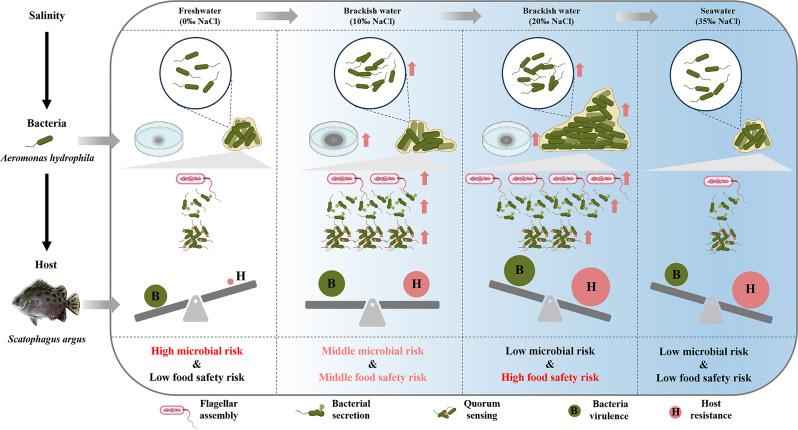
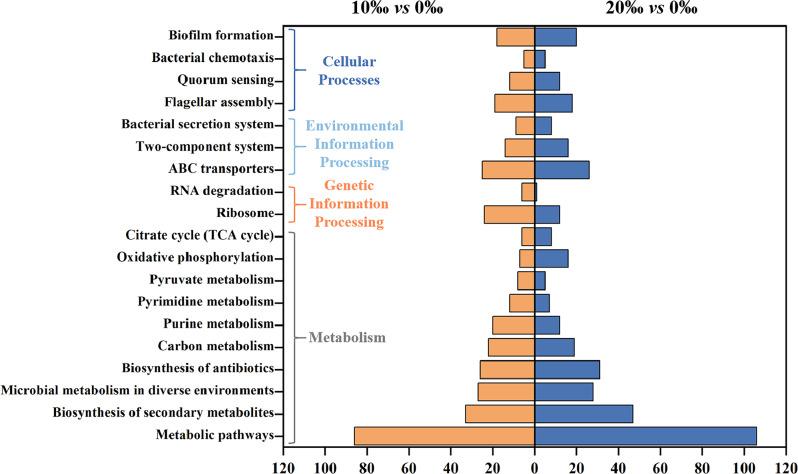
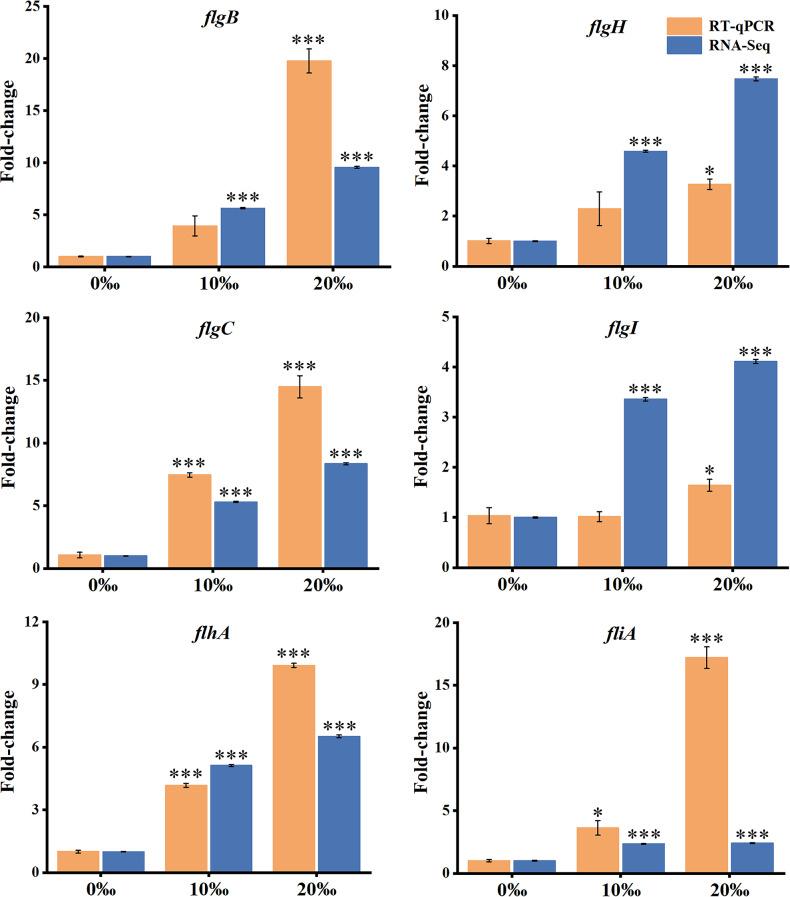
Our study demonstrated that the enhanced virulence of A. hydrophila 201416, isolated from S. argus, in response to increasing salinity was associated with altered quorum sensing-related gene expression and regulated behaviors. Results from virulence assays incorporating phenotypic characterization indicated that elevated salinity levels (from 0 to 35‰) significantly hindered Ah201416 infection of S. argus. This trend correlated with increased biofilm mass and swimming motility, yet was inversely related to bacterial growth. RNA-sequencing and quantitative reverse transcriptional PCR analysis confirmed significant upregulation of genes related to flagellar assembly (flgB, flgH, flgC, flgI, flhA, and fliA), bacterial secretion (HlyD and Ahh1), and quorum sensing (AhyR, LuxO, and LuxE) of Ah201416 in response to elevated salinity. These findings suggested that increased salinity not only enhanced the virulence of Ah201416 but also bolstered the resistance of S. argus, thereby mitigating its susceptibility.
CONCLUSIONS
This study provides deeper insights into the microbial risks associated with A. hydrophila in aquacultural production, which is critical to developing effective prevention and control strategies and ensuring a safe seafood supply.
CLINICAL TRIAL NUMBER
Not applicable.
背景
新出现的食源性病原体嗜水气单胞菌可同时感染人类和动物,尤其是鱼类,威胁水产养殖生产和公共卫生。此前,我们发现,作为一种广泛养殖且具有高经济价值的鱼类,与海水条件相比,淡水条件下的细鳞斜颌鲴生长加快,但对嗜水气单胞菌感染的易感性增加。然而,其中的确切机制仍不清楚。
结果
我们的研究表明,从细鳞斜颌鲴分离出的嗜水气单胞菌201416,其毒力增强与群体感应相关基因表达的改变和行为调控有关,这是对盐度增加的反应。结合表型特征的毒力试验结果表明,盐度升高(从0到35‰)显著阻碍了嗜水气单胞菌201416对细鳞斜颌鲴的感染。这一趋势与生物膜量增加和游动能力增强相关,但与细菌生长呈负相关。RNA测序和定量逆转录PCR分析证实,随着盐度升高,嗜水气单胞菌201416中与鞭毛组装(flgB、flgH、flgC、flgI、flhA和fliA)、细菌分泌(HlyD和Ahh1)以及群体感应(AhyR、LuxO和LuxE)相关的基因显著上调。这些发现表明,盐度增加不仅增强了嗜水气单胞菌201416的毒力,还增强了细鳞斜颌鲴的抵抗力,从而降低了其易感性。
结论
本研究为水产养殖生产中与嗜水气单胞菌相关的微生物风险提供了更深入的见解,这对于制定有效的预防和控制策略以及确保安全的海鲜供应至关重要。
临床试验编号
不适用。




 Zotero 插件