
GD2嵌合抗原受体自然杀伤细胞92(GD2-CAR NK-92)对神经母细胞瘤细胞的活性不受TIGIT基因敲除的影响。
GD2-CAR NK-92 cell activity against neuroblastoma cells is insusceptible to TIGIT knockout.
作者信息
Jünemann Wiebke, Bley Isabelle, Rekowski Laura, Klokow Marianne, Herppich Susanne, Müller Ingo, Cornils Kerstin
机构信息
Children's Cancer Centre Research Institute Hamburg, Hamburg, Germany.
Division of Paediatric Stem Cell Transplantation and Immunology, Department of Paediatric Haematology and Oncology, University Medical Centre Hamburg-Eppendorf, Hamburg, Germany.
出版信息
Cancer Immunol Immunother. 2025 May 3;74(6):191. doi: 10.1007/s00262-025-04010-6.
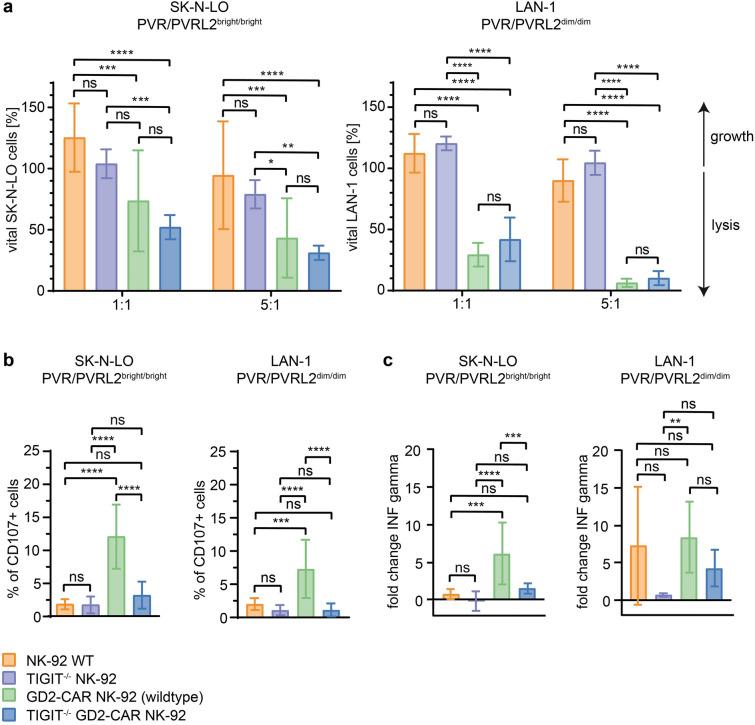
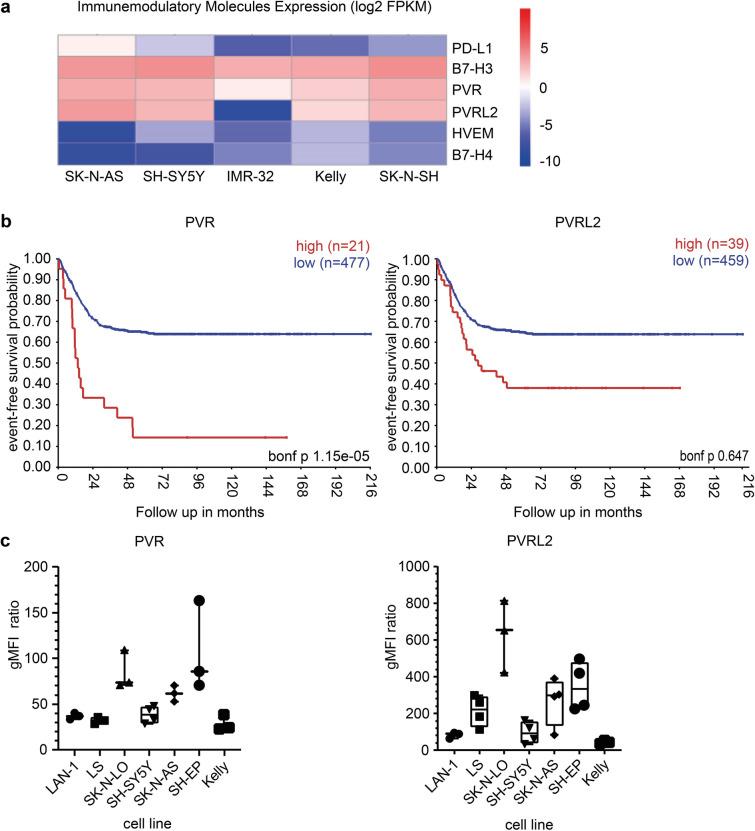
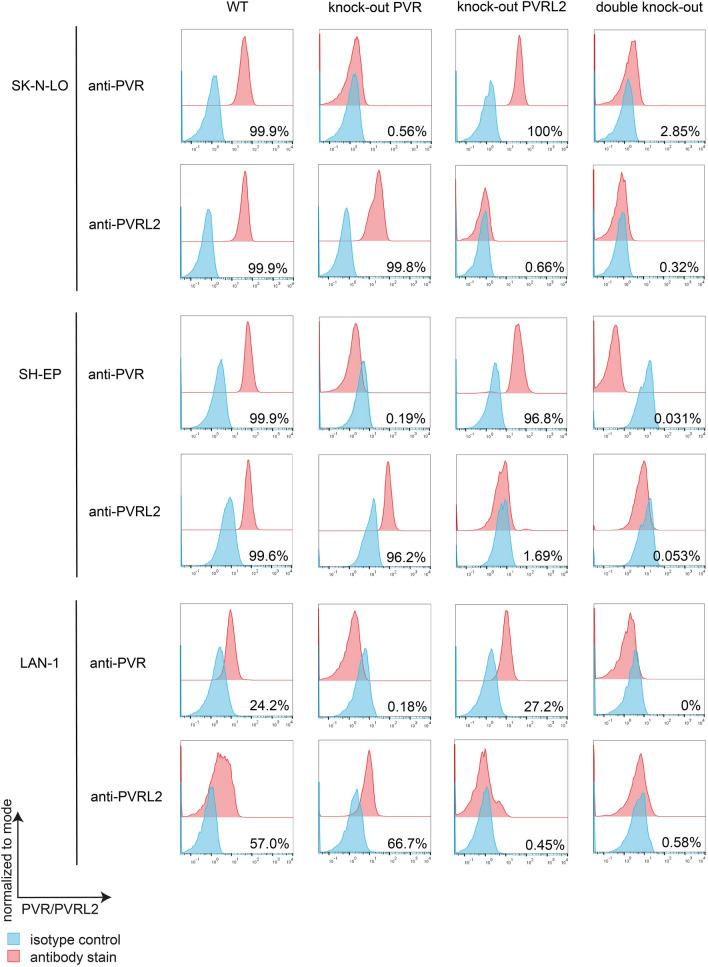
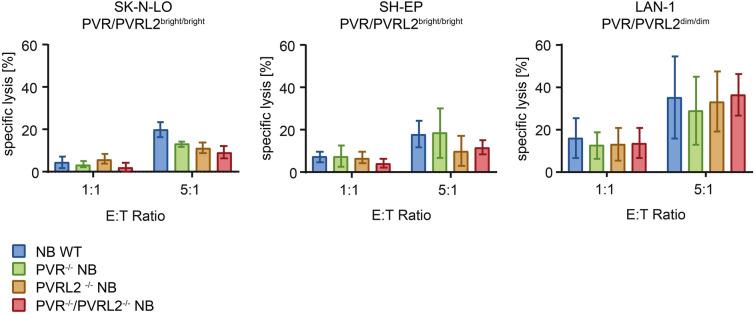
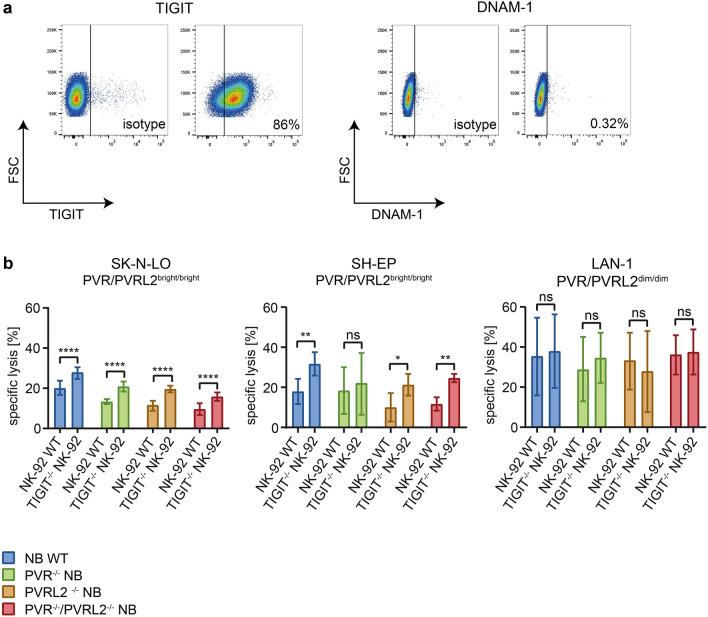
Immunotherapy by inhibition of immune checkpoint (IC) molecules has emerged as an important cancer therapy. Among these lC, the poliovirus receptor/poliovirus receptor-like 2 protein (PVR/PVRL2)-TIGIT axis was discovered as potential target for various cancers. For neuroblastoma (NB), the most common extracranial solid cancer in children, no effective IC therapy has been established yet. To investigate the PVR/PVRL2-TIGIT IC axis as a new target for the treatment of NB, we analysed whether PVR and PVRL2 influence the survival of patients and verified the expression of the receptors on NB cell lines. To disrupt the checkpoint axis, we performed single and double knockouts of these receptors on NB cell lines and subsequently removed TIGIT, an inhibitory receptor on immune effector cells, from NK-92 cells. Finally, we combined checkpoint inhibition with GD2-CAR NK-92 cells and investigated changes in cytotoxicity. Using RNA-Seq data we showed that the expression of PVR and PVRL2 on NB cells correlates to a lower event-free survival of patients. CRISPR/Cas9 knockouts of PVR and PVRL2 showed no improved cytotoxic activity of NK-92 cells. We observed enhanced lysis of NB cells using TIGIT-deficient NK-92 cells. However, the cytotoxicity of GD2-CAR NK-92 was not significantly enhanced. In summary, we have shown that in addition to the interaction of PVR/PVRL2 and TIGIT on engineered immune effector cells against NB, pleiotropic ligands appear to be relevant. Deletion of TIGIT from immune effector cells is a promising approach to protect these cells from tumour-associated inhibitory signals but cannot enhance the effect of GD2-CAR-NK-92 cells.
通过抑制免疫检查点(IC)分子进行免疫治疗已成为一种重要的癌症治疗方法。在这些IC分子中,脊髓灰质炎病毒受体/脊髓灰质炎病毒受体样2蛋白(PVR/PVRL2)-TIGIT轴被发现是多种癌症的潜在靶点。对于神经母细胞瘤(NB),这是儿童最常见的颅外实体癌,目前尚未建立有效的IC治疗方法。为了研究PVR/PVRL2-TIGIT IC轴作为NB治疗的新靶点,我们分析了PVR和PVRL2是否影响患者的生存率,并验证了这些受体在NB细胞系上的表达。为了破坏检查点轴,我们在NB细胞系上对这些受体进行了单敲除和双敲除,随后从NK-92细胞中去除了免疫效应细胞上的抑制性受体TIGIT。最后,我们将检查点抑制与GD2-CAR NK-92细胞相结合,并研究了细胞毒性的变化。利用RNA测序数据,我们发现NB细胞上PVR和PVRL2的表达与患者较低的无事件生存率相关。PVR和PVRL2的CRISPR/Cas9敲除并未显示NK-92细胞的细胞毒性活性有所提高。我们观察到使用缺乏TIGIT的NK-92细胞时,NB细胞的裂解增强。然而,GD2-CAR NK-92的细胞毒性并未显著增强。总之,我们已经表明,除了PVR/PVRL2和TIGIT在工程化抗NB免疫效应细胞上的相互作用外,多效性配体似乎也很重要。从免疫效应细胞中删除TIGIT是一种有前途的方法,可以保护这些细胞免受肿瘤相关抑制信号的影响,但不能增强GD2-CAR-NK-92细胞的效果。
 Zotero 插件