
针对痴呆症患者及其照护者的远程医疗实施:范围综述
Implementation of Telemedicine for Patients With Dementia and Their Caregivers: Scoping Review.
作者信息
Ye Mengfei, Liu Zheng, Xie Weigen, Shou Mengna, Wang Shengpang, Lin Xuebing, Xu Yan, Yao Miner, Chen Jialu, Shou Yunli, Wu Jingzhu, Guan Lili
机构信息
Department of Psychiatry, Shaoxing Seventh People's Hospital, Affiliated Mental Health Center of Shaoxing University, Shaoxing, China.
Department of Pharmacology, School of Medicine, Shaoxing University, Shaoxing, China.
出版信息
J Med Internet Res. 2025 May 5;27:e65667. doi: 10.2196/65667.
BACKGROUND
As dementia advances, symptoms and associated concerns lead to significant distress for both the patients and their caregivers. Telemedicine has the capacity to alleviate care-related issues for patients with dementia and their family caregivers.
OBJECTIVE
This study aims to synthesize the implementation strategies for providing telemedicine to assist patients with dementia and their caregivers in home and community settings and to examine its effectiveness and implementation barriers.
METHODS
In accordance with the PRISMA-ScR (Preferred Reporting Items for Systematic Reviews and Meta-Analyses extension for Scoping Reviews) guidelines, a systematic search was conducted across 6 databases, including MEDLINE, Embase, PsycINFO, CINAHL, Web of Science, and ProQuest. The eligibility criteria for peer-reviewed English publications from January 2000 up to January 2025 encompassed research studies related to telemedicine services for individuals diagnosed with dementia and caregivers.
RESULTS
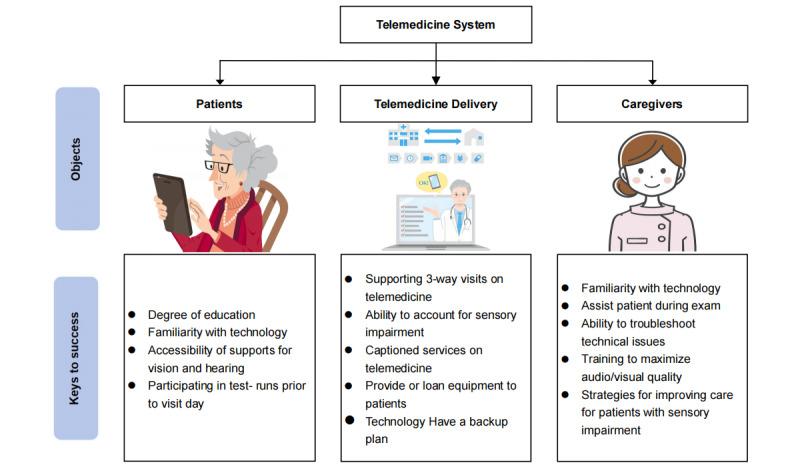
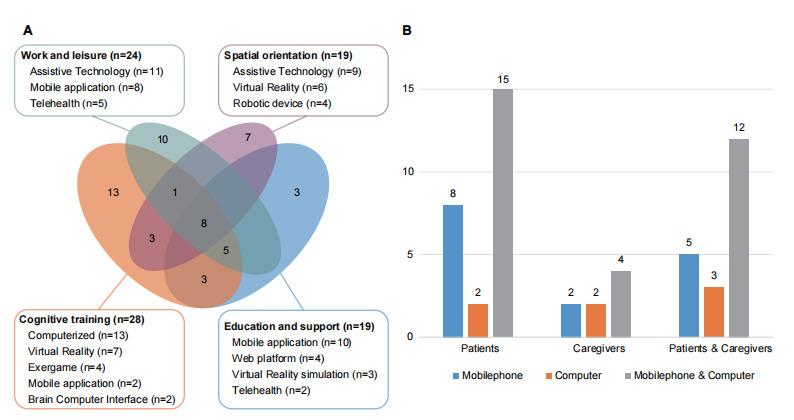
This study included 54 articles, comprising 14,446 participants from 10 countries. In total, 4 major themes emerged from the articles: the design of telemedicine services, effectiveness of telemedicine, external environmental factors, and barriers in telemedicine implementation. Cognitive training was addressed in 28 studies. Within the domain of work and leisure, 24 solutions were identified. Most reviewed studies indicated favorable experiences with telemedicine services and highlighted perceived personal and social benefits among patients with dementia, as well as identified barriers to accessing and using such services.
CONCLUSIONS
Future studies should encompass the enhancement of digital accessibility for individuals with restricted resources and limited technological proficiency, the use of randomized controlled trial methodologies to ascertain the comparative efficacy of various service delivery modes, and the augmentation of sample diversity.
背景
随着痴呆症病情进展,症状及相关问题给患者及其照护者都带来了极大痛苦。远程医疗有能力缓解痴呆症患者及其家庭照护者与照护相关的问题。
目的
本研究旨在综合阐述在家庭和社区环境中为痴呆症患者及其照护者提供远程医疗的实施策略,并考察其有效性及实施障碍。
方法
按照PRISMA-ScR(系统评价与Meta分析扩展版的范围综述优先报告项目)指南,对6个数据库进行了系统检索,包括MEDLINE、Embase、PsycINFO、CINAHL、科学引文索引和ProQuest。纳入标准为2000年1月至2025年1月期间经同行评审的英文出版物,涵盖与为被诊断患有痴呆症的个体及其照护者提供远程医疗服务相关的研究。
结果
本研究纳入了54篇文章,涉及来自10个国家的14446名参与者。文章共出现4个主要主题:远程医疗服务的设计、远程医疗的有效性、外部环境因素以及远程医疗实施中的障碍。28项研究涉及认知训练。在工作和休闲领域,确定了24种解决方案。大多数综述研究表明远程医疗服务体验良好,并强调了痴呆症患者所感知到的个人和社会效益,同时也指出了获取和使用此类服务的障碍。
结论
未来的研究应包括提高资源有限和技术水平有限者的数字可及性,采用随机对照试验方法确定各种服务提供模式的比较疗效,以及增加样本多样性。

 Zotero 插件