
综合运动方法对月经正常女性总睾酮水平的影响:一项随机对照试验。
Effects of integrated exercise approach on total testosterone levels in eumenorrheic women: a randomized controlled trial.
作者信息
Shahid Wajiha, Noor Rabiya
机构信息
Riphah International University, Lahore, Pakistan.
出版信息
Sci Rep. 2025 May 5;15(1):15692. doi: 10.1038/s41598-025-00599-x.
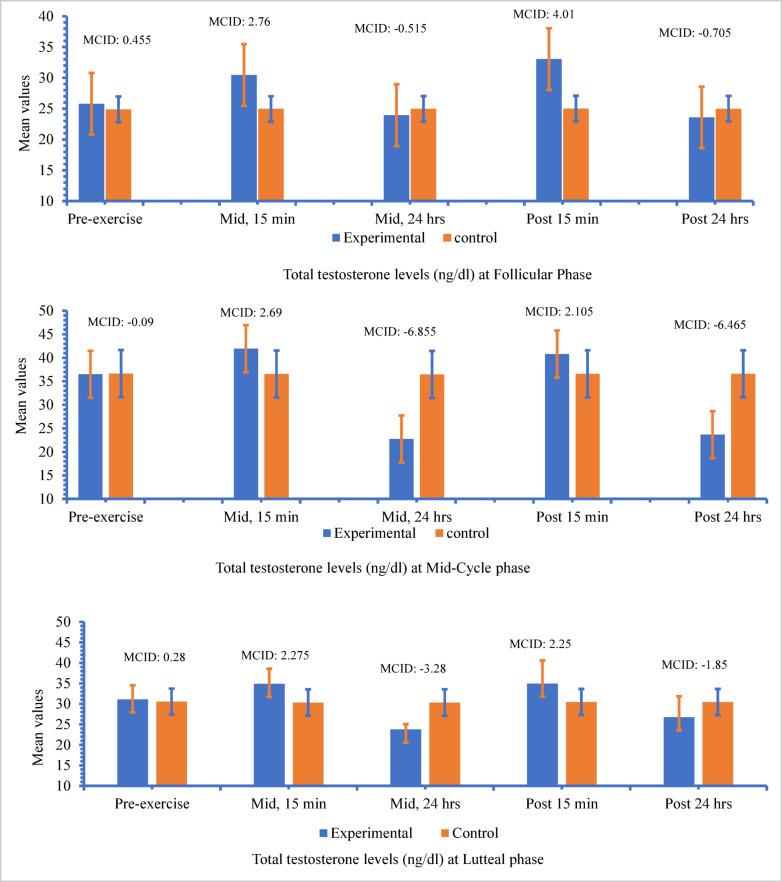
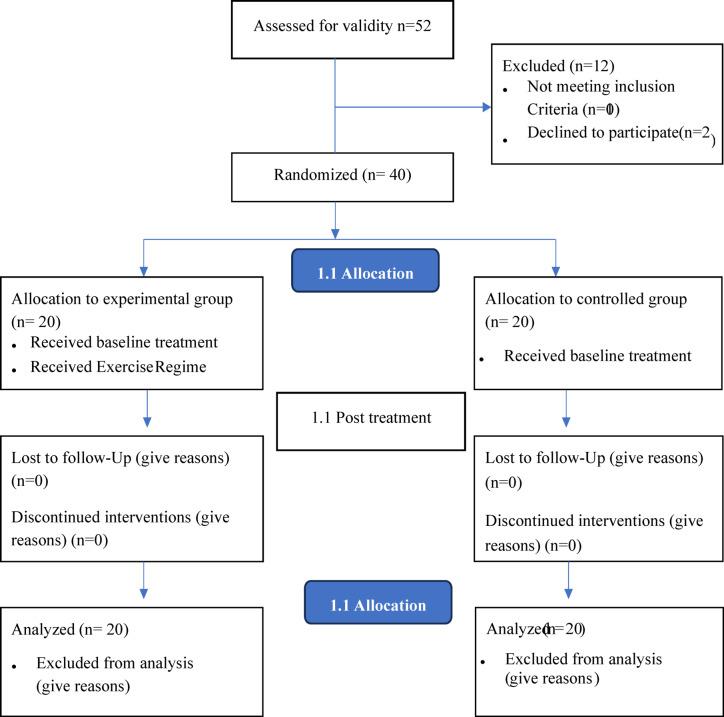
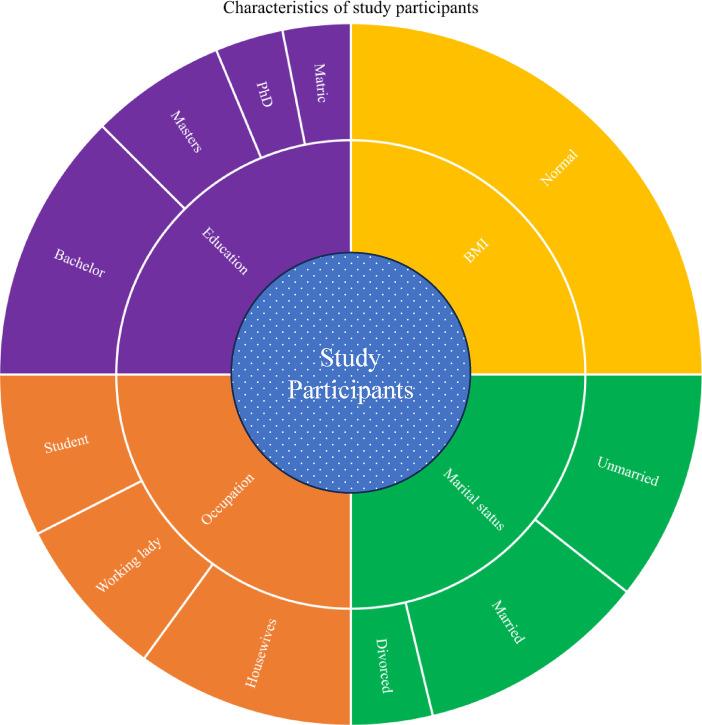
Testosterone modulated by exercise plays a pivotal role in maintaining the overall health of both males and females. Therefore, this study aimed to determine the effects of an integrated exercise approach on total testosterone levels during different phases of the menstrual cycle in eumenorrheic females. This was a two-armed parallel design, single-blinded, randomized controlled trial held from March 14, 2023, to February 21, 2024, in Aadil Hospital Defense Lahore. Forty eumenorrheic females within the age range of 20 to 40 years, with a BMI ranging from 18.5 to 24.9, who were able to maintain sitting balance without the need for upper limb support or who had a minimum score of 25 on the trunk control test were recruited for the study. They were then divided into 2 groups using a random table generator and concealed envelope allocation. The treatment group was given an exercise plan 3 times per week for 16 weeks along with an awareness program for menstrual hygiene and maintaining an active lifestyle, while the control group was given an awareness program to maintain menstrual hygiene and an active lifestyle along with a recommendation to walk for 30 min 3 times a week for 16 weeks. The testosterone levels were calculated pre-intervention, mid-intervention, and post-intervention. Mixed model ANOVA was used for within- and between-group analyses. The data were analyzed using SPSS v21. The educational backgrounds of the participants were diverse, with 17.5% having completed matric, 47.5% holding a bachelor's degree, and 17.5% having a master's degree or PhD. Regarding occupation, 35% were students, 32.5% were housewives, and 32.5% were working professionals. Marital status varied, with 37.5% married, 45% unmarried, and 17.5% divorced. Total testosterone levels (ng/dl) were measured at different menstrual cycles for the experimental and control groups. During the follicular phase, the experimental group showed pre-exercise levels of 25.80 ± 2.57 (95% CI: 24.24-27.35) and post-intervention levels within 15 min of exercise of 33.04 ± 8.67 (95% CI: 28.85-37.23). In the mid-cycle phase, the pre-exercise level was 36.48 ± 2.80 (95% CI: 33.47-37.48), and the post-intervention level was 40.80 ± 7.12 (95% CI: 37.15-44.46). The luteal phase showed pre-exercise levels of 31.10 ± 3.44 (95% CI: 29.90-34.31) and post-intervention levels within 15 min of exercise of 34.97 ± 5.60 (95% CI: 31.95-38.00). Compared with the experimental group, the control group exhibited consistent testosterone levels with minor variations across all phases. The mixed model ANOVA results for the between-group effect were highly significant, with p = 0.00 and an effect size of 0.99. Integrated exercise leads to an increase in testosterone levels in females immediately after exercise, which decreases below pre-exercise levels within 24 h of exercise, with the testosterone level peaking in the mid-cycle phase of the menstrual cycle. This immediate increase in testosterone levels can lead to increased strength, cognition and sexual functions in females.Trial registration number. This clinical trial was submitted by Dr. Rabiya Noor on clinicaltrials.gov for registration with ID: NCT05460741 first posted on 31/05/2022, last updated on 03/04/2024, and last verified on 29/04/2024.
运动调节的睾酮在维持男性和女性的整体健康方面起着关键作用。因此,本研究旨在确定综合运动方法对月经周期正常的女性在月经周期不同阶段总睾酮水平的影响。这是一项双臂平行设计、单盲、随机对照试验,于2023年3月14日至2024年2月21日在拉合尔国防区的阿迪勒医院进行。招募了40名年龄在20至40岁之间、BMI在18.5至24.9之间、能够在无需上肢支撑的情况下保持坐姿平衡或在躯干控制测试中至少得25分的月经周期正常的女性参与该研究。然后使用随机数字表生成器和隐藏信封分配法将她们分为2组。治疗组每周进行3次运动计划,持续16周,并接受月经卫生和保持积极生活方式的宣传计划,而对照组接受保持月经卫生和积极生活方式的宣传计划,并建议每周步行3次,每次30分钟,持续16周。在干预前、干预中期和干预后计算睾酮水平。采用混合模型方差分析进行组内和组间分析。数据使用SPSS v21进行分析。参与者的教育背景各不相同,17.5%完成了中学教育,47.5%拥有学士学位,17.5%拥有硕士学位或博士学位。在职业方面,35%是学生,32.5%是家庭主妇,32.5%是在职专业人员。婚姻状况各不相同,37.5%已婚,45%未婚,17.5%离婚。测量了实验组和对照组在不同月经周期的总睾酮水平(ng/dl)。在卵泡期,实验组运动前水平为25.80±2.57(95%CI:24.24 - 27.35),运动后15分钟内的干预后水平为33.04±8.67(95%CI:28.85 - 37.23)。在月经周期中期,运动前水平为36.48±2.80(95%CI:33.47 - 37.48),干预后水平为40.80±7.12(95%CI:37.15 - 44.46)。黄体期运动前水平为31.10±3.44(95%CI:29.90 - 34.31),运动后15分钟内的干预后水平为34.97±5.60(95%CI:31.95 - 38.00)。与实验组相比,对照组在所有阶段的睾酮水平保持一致,变化较小。组间效应的混合模型方差分析结果高度显著,p = 0.00,效应大小为0.99。综合运动导致女性运动后立即睾酮水平升高,在运动后24小时内降至运动前水平以下,睾酮水平在月经周期的中期达到峰值。睾酮水平的这种立即升高可导致女性力量、认知和性功能增强。试验注册号。本临床试验由拉比亚·努尔博士在clinicaltrials.gov上提交注册,ID:NCT05460741,首次发布于2022年5月31日,最后更新于2024年4月3日,最后核实于2024年4月29日。
 Zotero 插件