
机器学习方法揭示了与小儿急性髓系白血病复发相关的甲基化特征。
Machine learning approaches reveal methylation signatures associated with pediatric acute myeloid leukemia recurrence.
作者信息
Dong Yushuang, Liao HuiPing, Huang Feiming, Bao YuSheng, Guo Wei, Tan Zhen
机构信息
Department of Pediatric Hematology and Oncology, Xinhua Hospital Affiliated to Shanghai Jiao Tong University School of Medicine, Shanghai, 200092, China.
Changping Laboratory, Beijing, 102206, China.
出版信息
Sci Rep. 2025 May 6;15(1):15815. doi: 10.1038/s41598-025-99258-4.
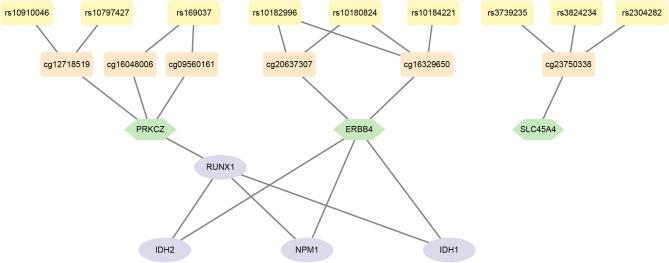
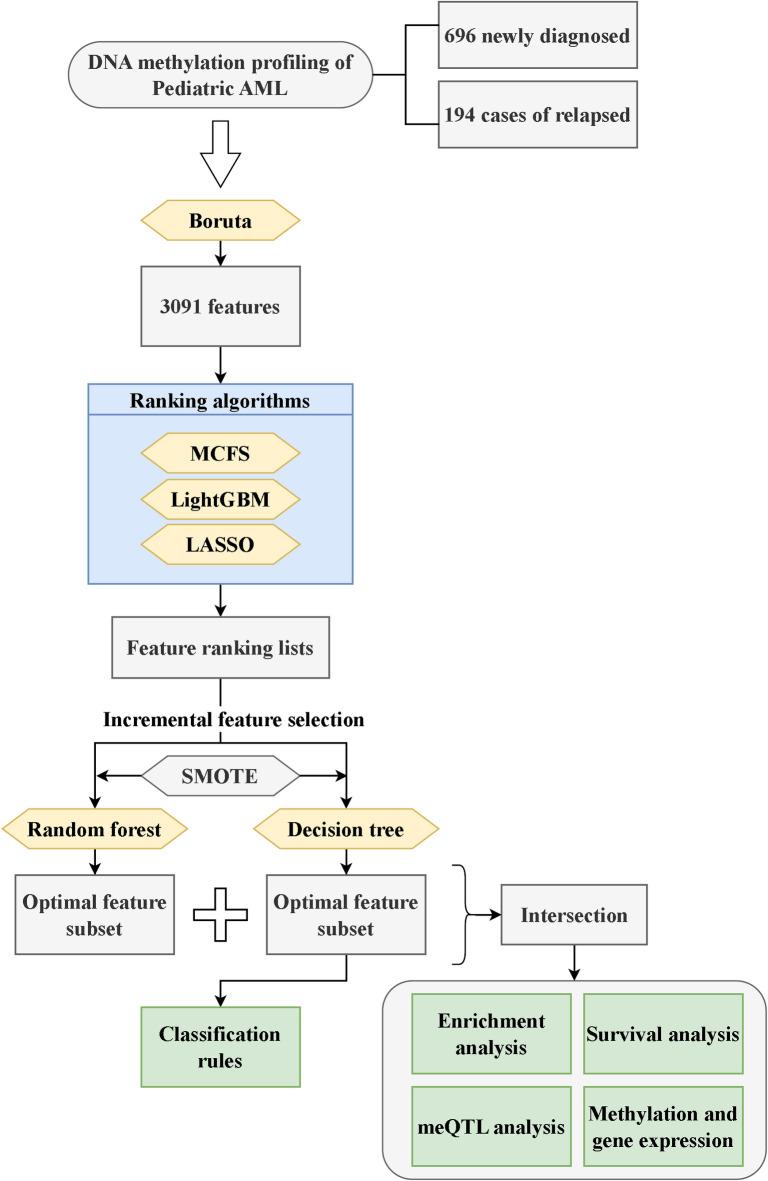
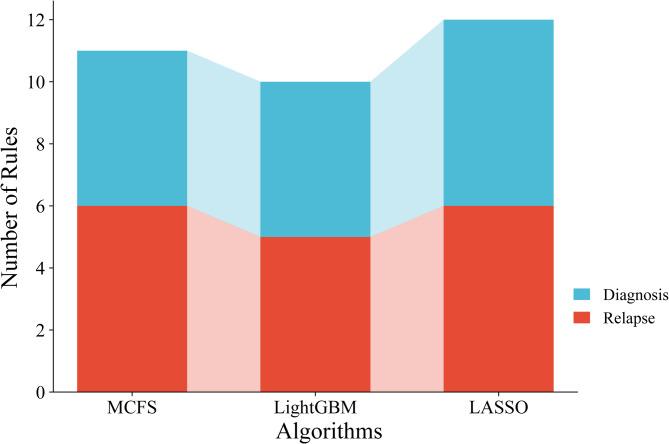
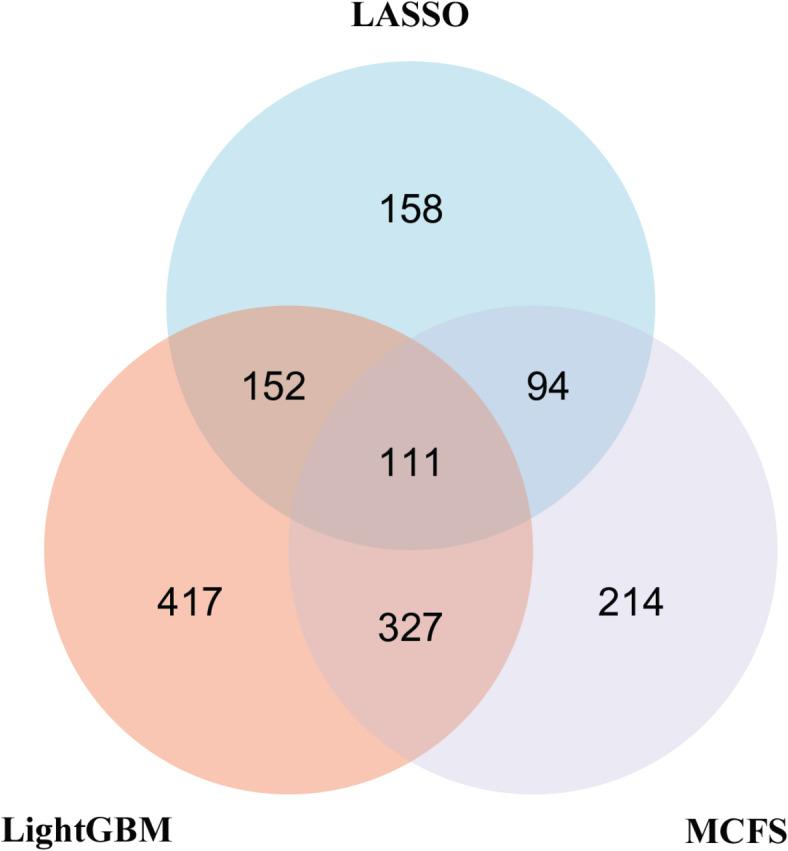
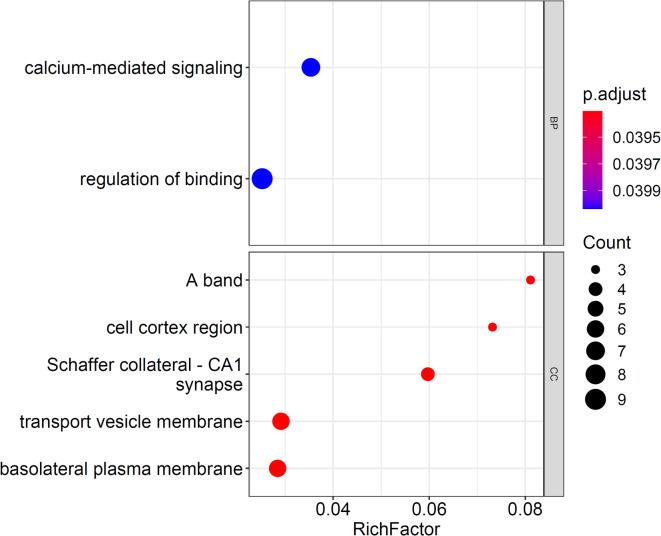
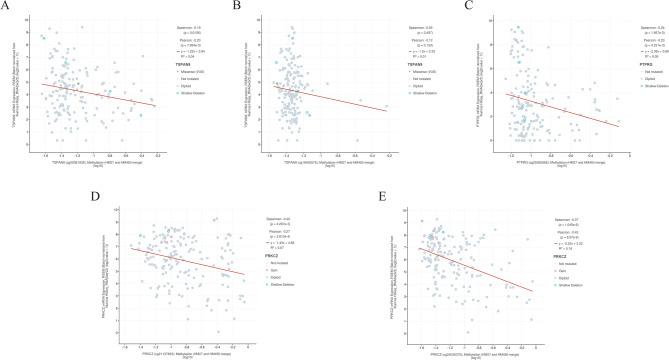
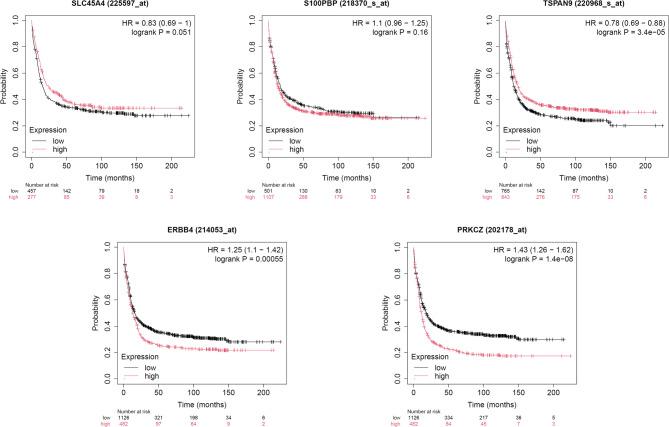
Acute myeloid leukemia (AML) is a severe hematological malignancy characterized by high recurrence rates, especially in pediatric patients, highlighting the need for reliable prognostic markers. This study proposes methylation signatures associated with AML recurrence using computational methods. DNA methylation data from 696 newly diagnosed and 194 relapsed pediatric AML patients were analyzed. Feature selection algorithms, including Boruta, least absolute shrinkage and selection operator, light gradient boosting machine, and Monte Carlo feature selection, were employed to screen and rank methylation sites strongly correlated with AML recurrence. Incremental Feature Selection was performed to evaluate these results, and optimal subsets were identified using Decision Tree and Random Forest methods. Several important methylation features, such as modifications in SLC45A4, S100PBP, TSPAN9, PTPRG, ERBB4, and PRKCZ, emerged from the intersection of all feature selection algorithms. Functional enrichment analysis indicated these genes participate in biological processes, including calcium-mediated signaling and regulation of binding. These findings are consistent with existing literature, suggesting that identified methylation features likely contribute to AML progression through alterations in gene expression levels. Therefore, this study provides a valuable reference for enhancing recurrence risk prediction models in AML and clarifying disease pathogenesis, as well as offering broader insights into mechanisms underlying other major diseases.
急性髓系白血病(AML)是一种严重的血液系统恶性肿瘤,其特征是复发率高,尤其是在儿科患者中,这凸显了对可靠预后标志物的需求。本研究使用计算方法提出了与AML复发相关的甲基化特征。分析了来自696例新诊断和194例复发的儿科AML患者的DNA甲基化数据。采用包括Boruta、最小绝对收缩和选择算子、轻梯度提升机和蒙特卡罗特征选择在内的特征选择算法,对与AML复发高度相关的甲基化位点进行筛选和排序。进行增量特征选择以评估这些结果,并使用决策树和随机森林方法识别最优子集。在所有特征选择算法的交叉分析中,出现了几个重要的甲基化特征,如SLC45A4、S100PBP、TSPAN9、PTPRG、ERBB4和PRKCZ的修饰。功能富集分析表明,这些基因参与生物过程,包括钙介导的信号传导和结合调节。这些发现与现有文献一致,表明所识别的甲基化特征可能通过基因表达水平的改变促进AML进展。因此,本研究为增强AML复发风险预测模型和阐明疾病发病机制提供了有价值的参考,也为其他重大疾病的潜在机制提供了更广泛的见解。

 Zotero 插件