
新型冠状病毒肺炎患者的尿液氨基酸和γ-氨基丁酸水平
Urine amino acid and gamma aminobutyric acid level in COVID 19 patients.
作者信息
Kazezoglu Cemal, İrvem Arzu, Sutasir Yasemin Tuba, Çakiroglu Büşra, Kirgiz Banu, Yilmaz Habip, Kocatas Ali
机构信息
Department of Medical Biochemistry, Kanuni Sultan Süleyman Research and Training Hospital, Istanbul, Turkey.
Department of Medical Microbiology, Kanuni Sultan Süleyman Research and Training Hospital, Istanbul, Turkey.
出版信息
Iran J Microbiol. 2025 Feb;17(1):122-127. doi: 10.18502/ijm.v17i1.17809.
BACKGROUND AND OBJECTIVES
SARS CoV2 has tropism for various tissues, including the respiratory tract, brain, endothelium, heart, kidney and liver. Neurological symptoms can also be seen in the clinical course of the disease, and anosmia is the most common. The main objective of our study was to examine the urinary amino acid profiles of moderately severe patients diagnosed with COVID-19 with a positive RT-PCR test and try to find metabolic changes associated with the infection. Also, it was aimed to investigate the neuroinhibitory Gamma-Aminobutyric acid (GABA) levels in order to examine the physiopathology.
MATERIALS AND METHODS
Thirty adult cases who were followed up in the infection clinic with positive SARS CoV 2 RT-PCR and diagnosed with COVID 19 disease were included in the study with consent. The amino acid profile of these patients' urine samples, 30 different amino acid levels and creatine levels were examined using the liquid chromatography-mass spectrometry (LCMS) method on the SCIEX QTRAP 4500 device.
RESULTS
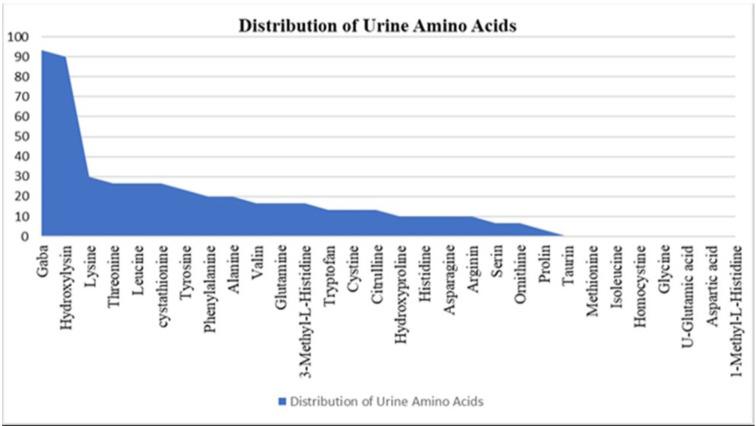
The mean age of the patients is 40 ± 5. Elevated GABA in 28/30 cases, high hydroxylysine amino acid in 27/30 cases, low glycine in 30/30 cases were detected in the urine. The creatinine levels of the patients were found to be normal.
CONCLUSION
It has been thought that the height of GABA may be due to bacteria producing GABA as a result of the change in microbiota due to lactic acidosis, as well as that the virus may directly affect the brain and cause an increase in GABA.
背景与目的
严重急性呼吸综合征冠状病毒2(SARS-CoV-2)可感染多种组织,包括呼吸道、脑、内皮、心脏、肾脏和肝脏。该疾病临床过程中也可出现神经症状,其中嗅觉丧失最为常见。我们研究的主要目的是检测经逆转录聚合酶链反应(RT-PCR)检测确诊为COVID-19的中度重症患者的尿氨基酸谱,并试图找出与感染相关的代谢变化。此外,旨在研究神经抑制性γ-氨基丁酸(GABA)水平,以探究其病理生理学机制。
材料与方法
本研究纳入30例成年患者,这些患者在感染门诊接受随访,SARS-CoV-2 RT-PCR检测呈阳性,且被诊断为COVID-19疾病,并均已签署知情同意书。使用SCIEX QTRAP 4500设备上的液相色谱-质谱联用(LCMS)方法检测这些患者尿液样本中的氨基酸谱、30种不同氨基酸水平及肌酸水平。
结果
患者的平均年龄为40±5岁。尿液检测发现,28/30例患者GABA升高,27/30例患者羟赖氨酸氨基酸水平升高,30/30例患者甘氨酸水平降低。患者的肌酐水平正常。
结论
人们认为,GABA升高可能是由于乳酸酸中毒导致微生物群变化,细菌产生GABA所致,也可能是病毒直接影响大脑,导致GABA增加。

 Zotero 插件