
多环芳烃在棉花、黑麦草、高羊茅和小麦对不同烃类污染土壤进行植物修复过程中的归宿。
Fate of polycyclic aromatic hydrocarbons in the phytoremediation of different hydrocarbon contaminated soils with cotton, ryegrass, tall fescue, and wheat.
作者信息
Zeng Yunmin, Wang Shijie, Huang Fan, Luo Qiang, Ren Bing, Abo El-Maati Mohamed F, El-Sappah Ahmed H
机构信息
Faculty of Quality Management and Inspection & Quarantine, Yibin University, Yibin, China.
Key Laboratory of Treatment for Special Wastewater of Sichuan Province Higher Education System, College of Chemistry and Materials Science, Sichuan Normal University, Chengdu, China.
出版信息
Front Plant Sci. 2025 Apr 22;16:1550234. doi: 10.3389/fpls.2025.1550234. eCollection 2025.
INTRODUCTION
Phytoremediation is a promising strategy for cleaning up polycyclic aromatic hydrocarbon (PAH)-contaminated soils. This study investigated the effectiveness of four plant species-cotton, ryegrass, tall fescue, and wheat-in enhancing PAH removal from soils contaminated with diesel oil, PAHs, and aged oily sludge.
METHODS
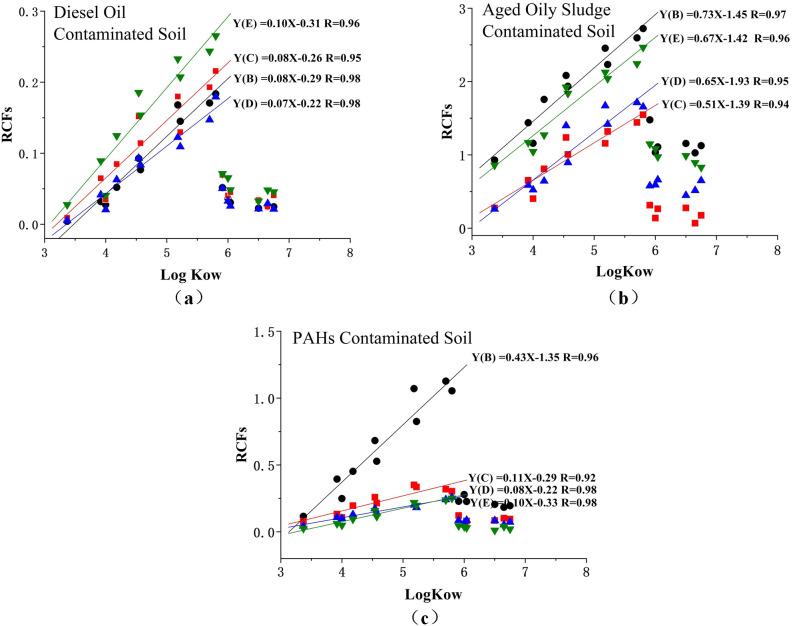
Aged oily sludge-contaminated soil was artificially prepared, and the selected plants were cultivated in different hydrocarbon-contaminated soils (diesel oil, PAHs, and oily sludge). The fate of PAHs was analyzed by measuring their distribution in rhizospheric soil and plant tissues. Root concentration factors (RCFs) and transpiration stream concentration factors (TSCFs) were used to evaluate PAH translocation and accumulation in plant tissues and their interactions with the rhizosphere.
RESULTS
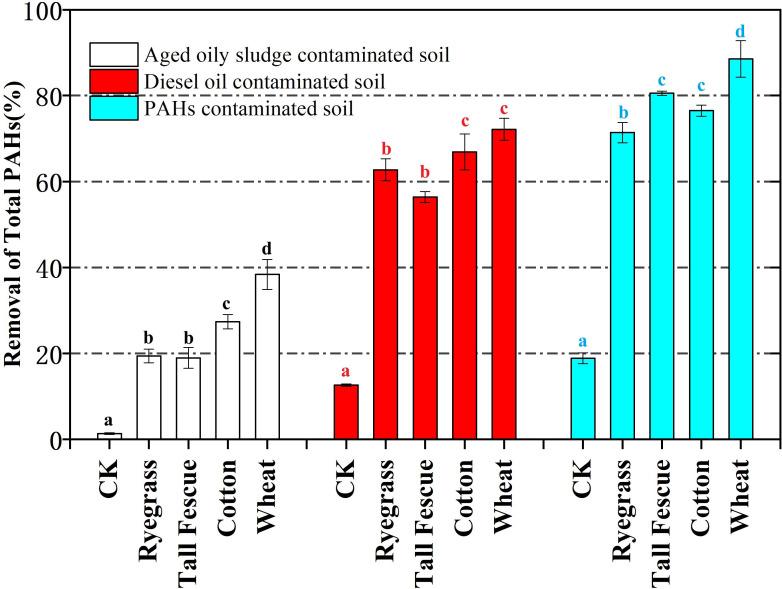
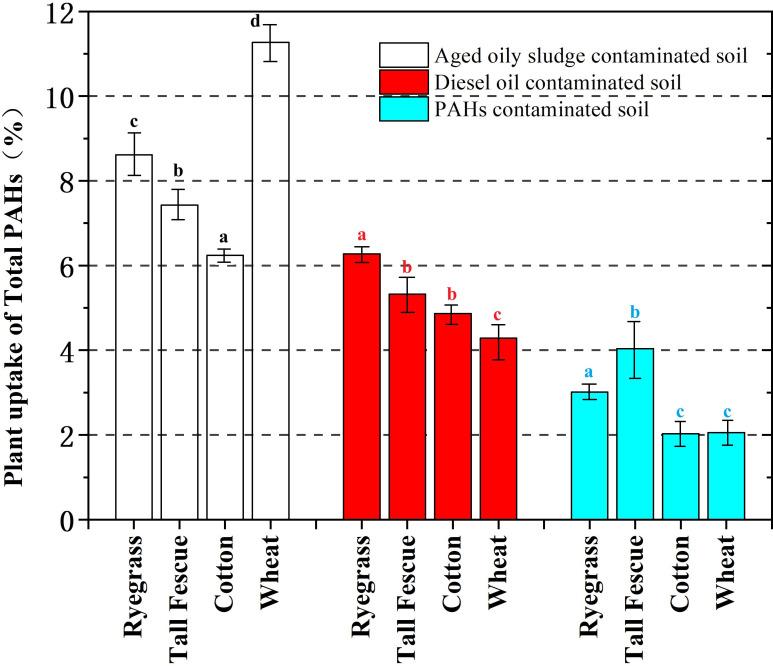
The study demonstrated that plants enhanced PAH removal by 20%-80%, with wheat showing the highest efficiency. PAH removal was generally more effective in oily sludge-contaminated soil than in diesel oil or PAH-contaminated soil. Plant uptake of PAHs accounted for 2%-10% of total removal and exhibited a strong linear correlation with root weight. RCFs were linearly correlated with LogKow (3-6), indicating that the four plant species did not significantly concentrate PAHs in their roots.
DISCUSSION
The findings confirm the potential of phytoremediation for PAH-contaminated soils, particularly using wheat as an effective species. The low RCFs and TSCFs suggest that PAH uptake was limited, implying that rhizodegradation and microbial interactions may play a more critical role than direct plant accumulation. This study supports phytoremediation as a cost-effective and eco-friendly alternative to conventional soil remediation methods, reducing economic and environmental burdens.
引言
植物修复是一种很有前景的策略,可用于清理受多环芳烃(PAH)污染的土壤。本研究调查了四种植物——棉花、黑麦草、高羊茅和小麦——在增强从受柴油、多环芳烃和老化油污污泥污染的土壤中去除多环芳烃方面的有效性。
方法
人工制备受老化油污污泥污染的土壤,并将所选植物种植在不同的烃类污染土壤(柴油、多环芳烃和油污污泥)中。通过测量多环芳烃在根际土壤和植物组织中的分布来分析其归宿。根富集系数(RCF)和蒸腾流富集系数(TSCF)用于评估多环芳烃在植物组织中的转运和积累及其与根际的相互作用。
结果
研究表明,植物可将多环芳烃的去除率提高20% - 80%,其中小麦的效率最高。在受油污污泥污染的土壤中,多环芳烃的去除通常比在受柴油或多环芳烃污染的土壤中更有效。植物对多环芳烃的吸收占总去除量的2% - 10%,且与根重呈强线性相关。根富集系数与LogKow(3 - 6)呈线性相关,表明这四种植物在其根部并未显著富集多环芳烃。
讨论
研究结果证实了植物修复受多环芳烃污染土壤的潜力,特别是使用小麦作为一种有效植物。较低的根富集系数和蒸腾流富集系数表明多环芳烃的吸收有限,这意味着根际降解和微生物相互作用可能比植物直接积累发挥更关键的作用。本研究支持植物修复作为一种经济高效且生态友好的替代传统土壤修复方法,可减轻经济和环境负担。


 Zotero 插件