
1型蛋白磷酸酶4aD通过抑制响应脱落酸的激酶的磷酸化来负调控棉花()的耐盐性。
Type One Protein Phosphatase 4aD Negatively Regulates Cotton () Salt Tolerance by Inhibiting the Phosphorylation of Kinases That Respond to Abscisic Acid.
作者信息
Cao Pengfei, Zhao Miao, Liu Jinxin, Du Mingwei, Tian Xiaoli, Li Fangjun, Li Zhaohu
机构信息
Engineering Research Center of Plant Growth Regulator, Ministry of Education & College of Agronomy and Biotechnology, China Agricultural University, Beijing 100193, China.
State Key Laboratory of Plant Physiology and Biochemistry, China Agricultural University, Beijing 100193, China.
出版信息
Int J Mol Sci. 2025 Apr 8;26(8):3471. doi: 10.3390/ijms26083471.
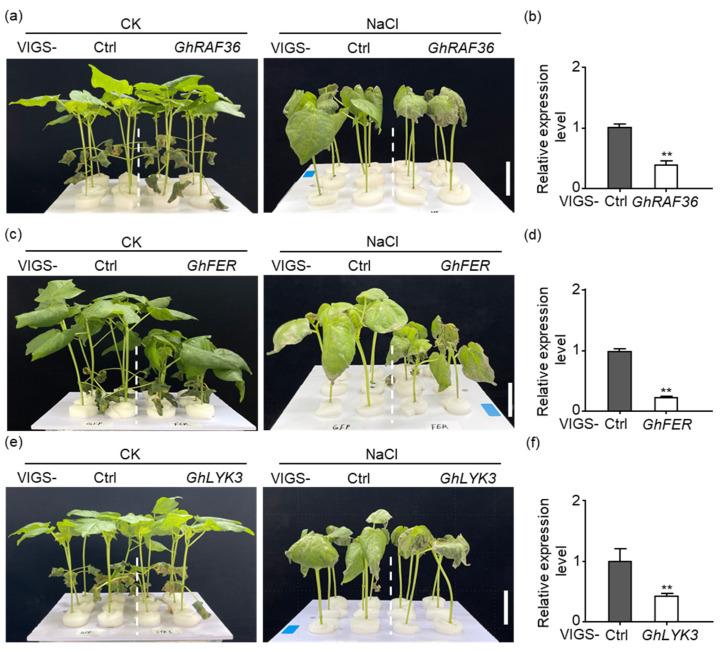
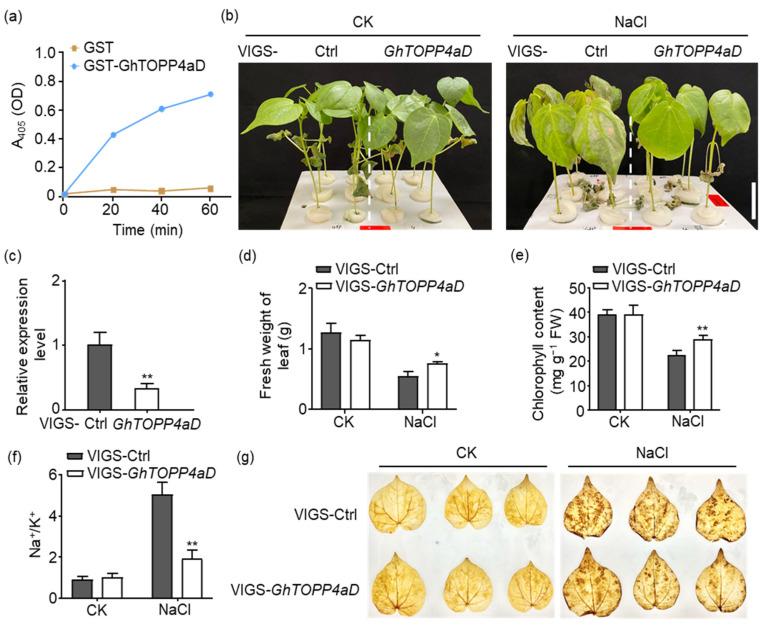
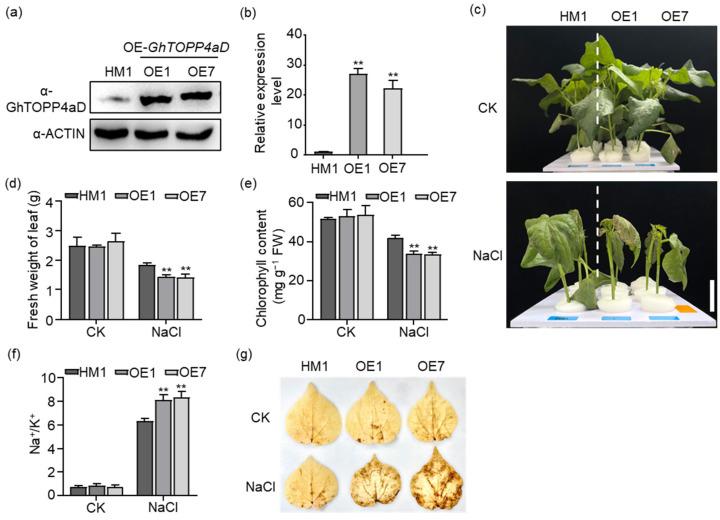
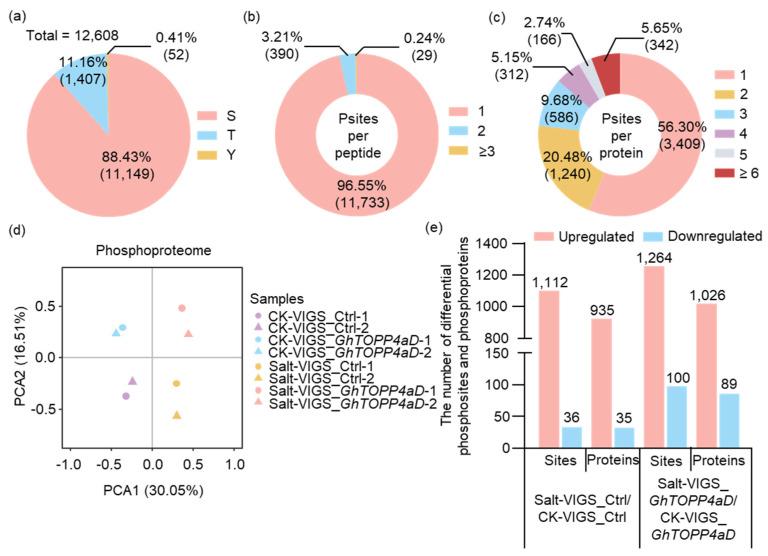
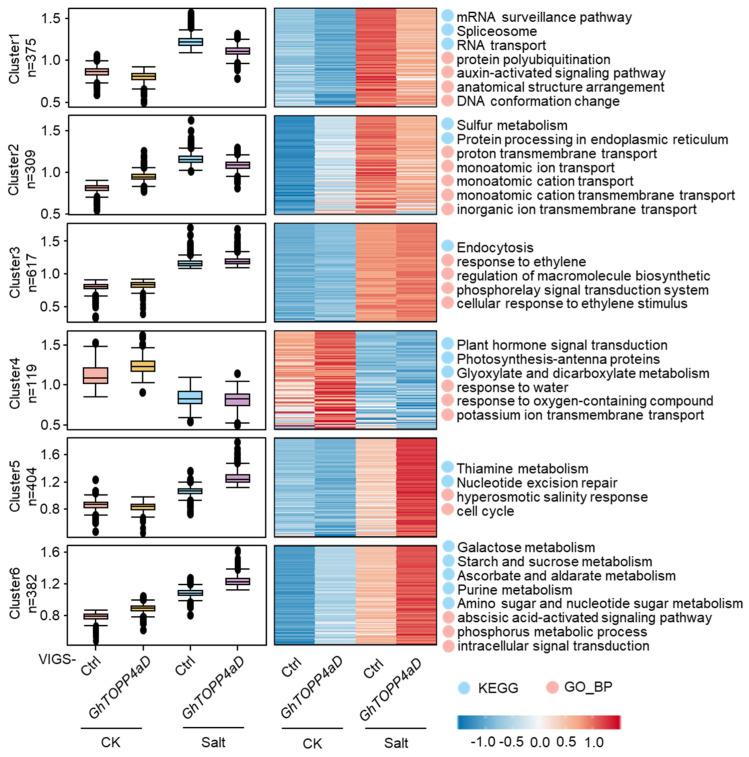
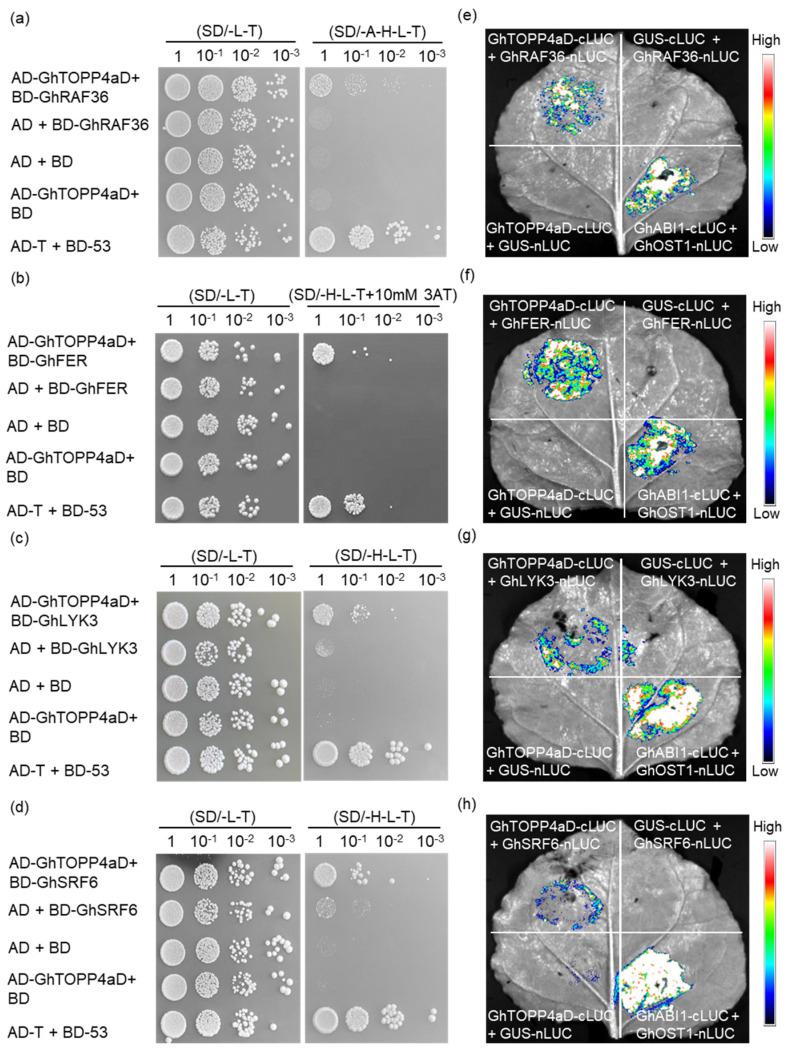
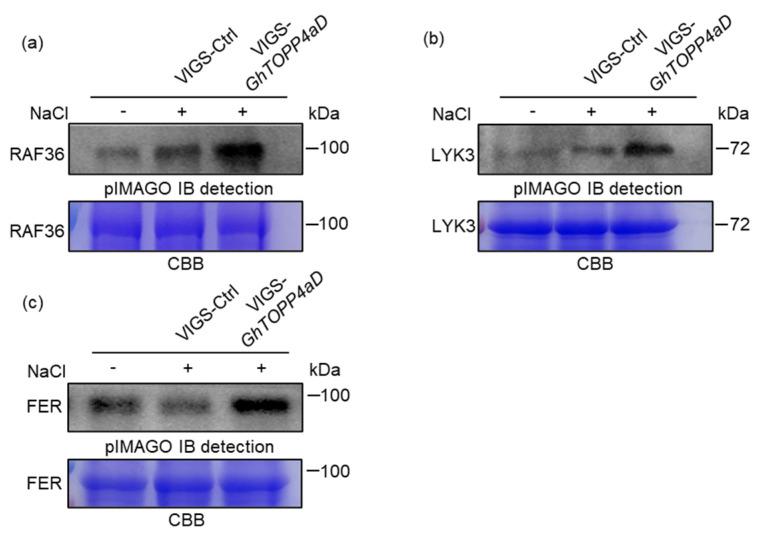
Salinity is one of the major factors limiting the growth, development, and yield of cotton. Although the mechanisms of cotton tolerance to salt stress have been studied, the regulatory roles and mechanisms of protein kinases and phosphatases in cotton salt response remain poorly understood. Here, we identify Type One Protein Phosphatase 4aD (), belonging to the Type One Protein Phosphatase (TOPP) family, as a negative regulator in cotton salt stress response. To reveal the post-translational modification mechanism by which regulates salt stress response in cotton, phosphoproteome analysis was performed. A total of 6055 phosphoproteins with 12,608 phosphosites were identified. In VIGS-Ctrl plants, there were 935 upregulated and 35 downregulated phosphoproteins, while there were 1026 upregulated and 89 downregulated phosphoproteins in VIGS- plants after NaCl treatment. Moreover, a class of tyrosine kinases responsive to abscisic acid (ABA) was significantly enriched at upregulated, differentially phosphorylated sites that were induced by NaCl in -silenced plants, suggesting that these proteins could be regulated by dephosphorylation mediated by in response to salt stress. Among them, Raf-like Kinase 36 (GhRAF36), FERONIA (GhFER), and Lysin Motif-containing Receptor-like Kinase 3 (GhLYK3) interacted with GhTOPP4aD and their kinase activities were inhibited by GhTOPP4aD. VIGS-, VIGS-, and VIGS- plants were sensitive to salt stress, suggesting that these kinases may play important roles in the regulation of cotton salt stress response mediated by GhTOPP4aD. These studies provide new insights into the mechanisms of cotton salt stress tolerance and the potential molecular targets for breeding salt-tolerant cotton varieties.
盐度是限制棉花生长、发育和产量的主要因素之一。尽管已经对棉花耐盐胁迫的机制进行了研究,但蛋白激酶和磷酸酶在棉花盐响应中的调控作用和机制仍知之甚少。在此,我们鉴定出属于一类蛋白磷酸酶(TOPP)家族的1型蛋白磷酸酶4aD()作为棉花盐胁迫响应中的负调控因子。为了揭示调控棉花盐胁迫响应的翻译后修饰机制,进行了磷酸化蛋白质组分析。共鉴定出6055个磷酸化蛋白,含有12608个磷酸化位点。在VIGS-Ctrl植株中,有935个磷酸化蛋白上调,35个磷酸化蛋白下调,而在NaCl处理后的VIGS-植株中有1026个磷酸化蛋白上调,89个磷酸化蛋白下调。此外,一类对脱落酸(ABA)有响应的酪氨酸激酶在沉默植株中由NaCl诱导的上调、差异磷酸化位点显著富集,这表明这些蛋白可能通过在盐胁迫响应中去磷酸化介导的作用进行调控。其中,Raf样激酶36(GhRAF36)、FERONIA(GhFER)和含赖氨酸基序的类受体激酶3(GhLYK3)与GhTOPP4aD相互作用,并且它们的激酶活性被GhTOPP4aD抑制。VIGS-、VIGS-和VIGS-植株对盐胁迫敏感,这表明这些激酶可能在由GhTOPP4aD介导的棉花盐胁迫响应调控中发挥重要作用。这些研究为棉花耐盐胁迫机制以及培育耐盐棉花品种的潜在分子靶点提供了新的见解。


 Zotero 插件