
俄罗斯境内分布的某属植物甲醇提取物的生物活性
Biological Potential of Methanol Extracts from Plants of the Genus Spreading in Russia.
作者信息
Orlova Anastasia, Soboleva Alena, Tsvetkova Elena, Silinskaia Svetlana, Esaulkova Yana L, Veklich Tatiana N, Zarubaev Vladimir V, Khakulova Anna A, Akberdin Ilya R, Kolmykov Semyon K, Kostikova Vera A, Frolov Andrej
机构信息
Laboratory of Analytical Biochemistry and Biotechnology, K.A. Timiryazev Institute of Plant Physiology Russian Academy of Science, 35 Botanicheskaya Str., 127276 Moscow, Russia.
Department of Biochemistry, St. Petersburg State University, 7-9-11 University Emb., 199034 St. Petersburg, Russia.
出版信息
Int J Mol Sci. 2025 Apr 10;26(8):3587. doi: 10.3390/ijms26083587.
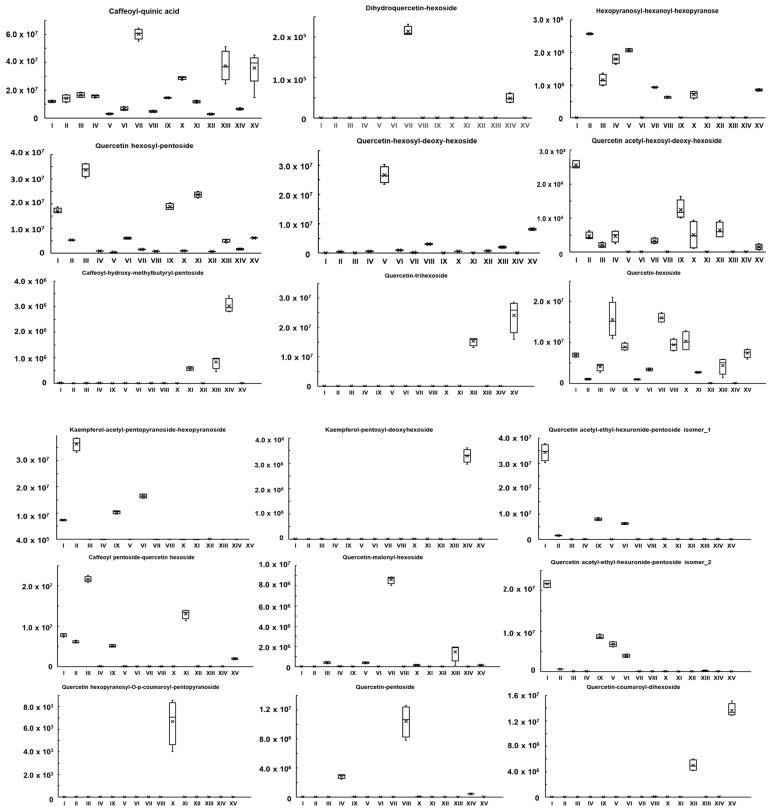
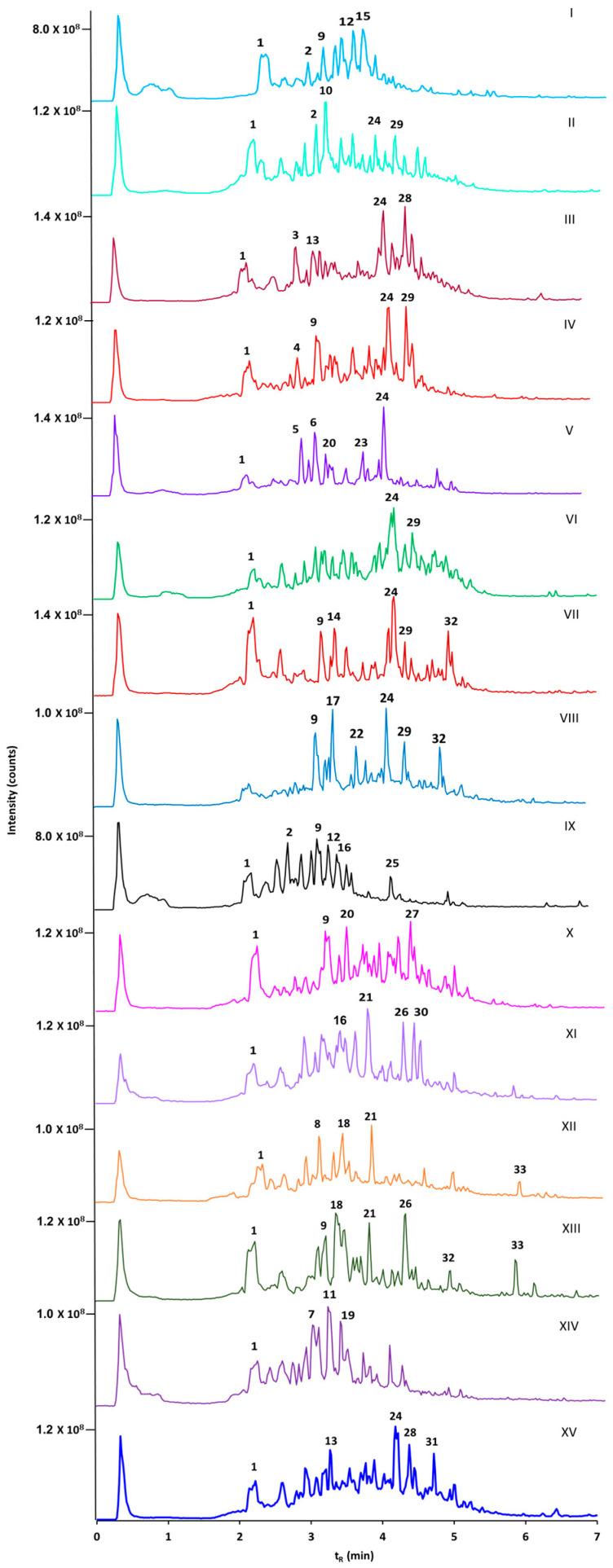
The genus is well represented in the Russian flora. Several phytochemical and bioactivity studies, completed so far with several individual species of this genus, indicate young shoots as a promising source of pharmaceutically and nutraceutically active natural products. Therefore, a broad-scale phytochemical analysis of shoot extracts from multiple Russian species (i.e., profiling of secondary metabolites and assignment of their structures), complemented with comprehensive activity screening, might give access to valuable information on the structure-activity relationship (SAR) of their constituents. However, despite a lot of phytochemical and bioactivity information on individual species being available, these data are mostly fragmentary and do not allow for building a general picture, and in-depth comprehensive studies are still missing. Therefore, to fill this gap, here, we present a comprehensive metabolite profiling study accomplished with 15 of the most widely spread Russian species, which was complemented with appropriate bioactivity screening of their first-year shoot alcoholic extracts. A chromatography-mass spectrometric (LC-MS) analysis revealed 33 major constituents of the shoot isolates, which were dominated by flavonoids (quercetin and kaempferol derivatives) and hydroxycinnamic acids (caffeic, ferulic, and coumaric acid derivatives). Their relative quantification indicated that most of the identified major components were distributed among all of the studied extracts with minimal overlap in their composition and relative abundance. The antioxidant activity screening revealed the high efficiency of all of the extracts as potential redox protectors, acting at the levels of radical scavenging (DPPH assay) and quenching cation radicals (TEAC assay) and superoxide anion radicals (NBT assay). Screening the antiviral and antimicrobial activity of the same extracts revealed significant antiviral activity at a concentration of 2 µg/mL, and high (MIC < 1 mg/mL) or moderate (1 mg/mL ≤ MIC ≤ 4 mg/mL) antibacterial activity against Gram-positive and Gram-negative strains. The structures responsible for the manifestation of the studied types of activity were tentatively assigned using a bioinformatics-based strategy. This analysis revealed the most bioactive species that might be promising for further in-depth phytochemical analysis and evaluations of their structure-activity relationships (SARs). In this context, we consider , which simultaneously showed antioxidant, antimicrobial, and antiviral activity; , with marked antioxidant, antimicrobial, and cytotoxic properties; , a strong antioxidant and cytotoxic species; and , with a combination of antioxidant and antiviral properties.
该属在俄罗斯植物区系中具有良好的代表性。迄今为止,对该属的几个单独物种进行了多项植物化学和生物活性研究,结果表明嫩枝是具有药学和营养活性的天然产物的一个有前景的来源。因此,对多种俄罗斯该属物种的嫩枝提取物进行大规模植物化学分析(即次生代谢物的谱分析及其结构鉴定),并辅以全面的活性筛选,可能会获得有关其成分的结构 - 活性关系(SAR)的有价值信息。然而,尽管有大量关于单个物种的植物化学和生物活性信息,但这些数据大多是零散的,无法形成一个总体概况,并且仍缺少深入的综合研究。因此,为了填补这一空白,在此我们展示了一项针对15种分布最广泛的俄罗斯该属物种完成的综合代谢物谱研究,并对其一至一年生嫩枝乙醇提取物进行了适当的生物活性筛选。色谱 - 质谱(LC - MS)分析揭示了嫩枝分离物中的33种主要成分,其中以黄酮类化合物(槲皮素和山奈酚衍生物)和羟基肉桂酸(咖啡酸、阿魏酸和香豆酸衍生物)为主。它们的相对定量表明,大多数已鉴定的主要成分分布在所有研究的提取物中,其组成和相对丰度的重叠最小。抗氧化活性筛选显示所有提取物作为潜在的氧化还原保护剂具有高效性,在自由基清除(DPPH测定)、阳离子自由基淬灭(TEAC测定)和超氧阴离子自由基淬灭(NBT测定)水平上发挥作用。对相同提取物的抗病毒和抗菌活性筛选显示,在浓度为2μg/mL时具有显著的抗病毒活性,对革兰氏阳性和革兰氏阴性菌株具有高(MIC < 1mg/mL)或中度(1mg/mL ≤ MIC ≤ 4mg/mL)的抗菌活性。使用基于生物信息学的策略初步确定了负责所研究活性类型表现的结构。该分析揭示了最具生物活性的该属物种,这些物种可能有望用于进一步深入的植物化学分析及其结构 - 活性关系(SARs)评估。在此背景下,我们认为[具体物种1]同时表现出抗氧化、抗菌和抗病毒活性;[具体物种2]具有显著的抗氧化、抗菌和细胞毒性特性;[具体物种3]是一种强抗氧化和细胞毒性物种;以及[具体物种4]具有抗氧化和抗病毒特性的组合。
 Zotero 插件