
评估厄瓜多尔的免疫接种覆盖率以及当地疫苗生产停止的负面影响。
Assessing Immunization Coverage and the Negative Impact of Local Vaccine Production Cessation in Ecuador.
作者信息
Ortiz-Prado Esteban, Villacreses-Brito Lissette Carolina, Vasconez-Gonzalez Jorge, Jacome Cristina Anabel, Arias-Intriago Marlon, Izquierdo-Condoy Juan S
机构信息
One Health Research Group, Faculty of Health Science, Universidad de Las Americas, Quito 170604, Ecuador.
Dirección Nacional de Inmunización, Ministerio de Salud del Ecuador, Quito 170604, Ecuador.
出版信息
Vaccines (Basel). 2025 Mar 25;13(4):348. doi: 10.3390/vaccines13040348.
BACKGROUND
The COVID-19 pandemic highlighted vaccine importance while exposing inequities in global immunization, especially in LMICs like Ecuador. Local vaccine production ensures supply, reduces reliance on imports, and boosts health security. Understanding the relationship between local production and vaccination outcomes is crucial to addressing emerging public health challenges.
OBJECTIVE
The objective was to assess the impact of local vaccine production cessation on vaccination coverage rates for BCG- and DTP-containing vaccines.
METHODOLOGY
This retrospective cross-sectional study analyzed vaccine coverage data from 2004 to 2023, focusing on key vaccines such as BCG and DTP, to assess the impact of the cessation of local vaccine production. Mann-Whitney U tests were conducted to compare vaccination coverage during the periods of local production (2004-2013) and post-production cessation (2014-2023). Historical context and policy implications were also evaluated to provide a comprehensive perspective.
RESULTS
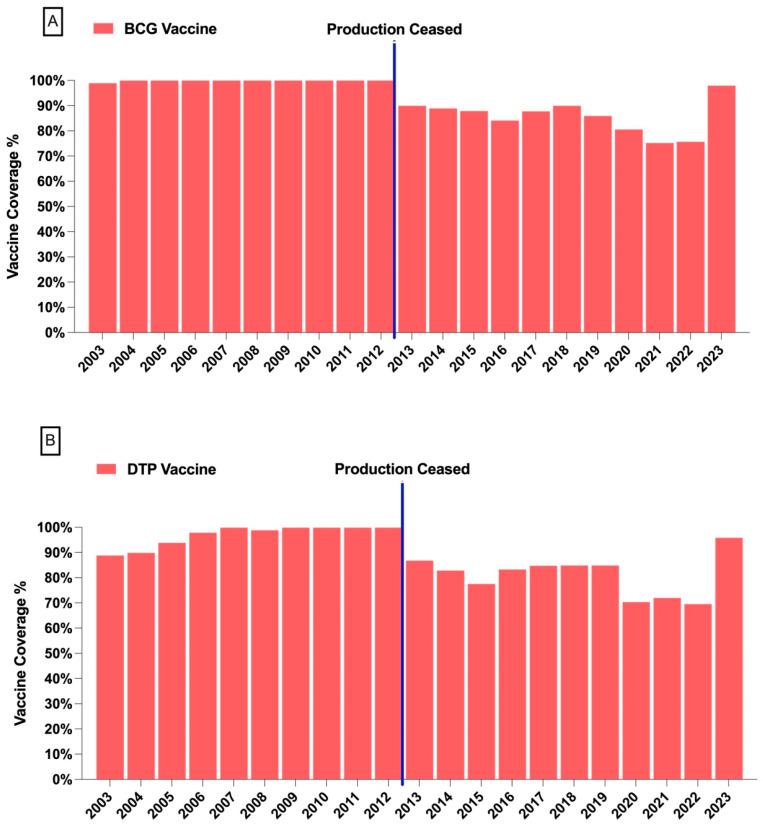
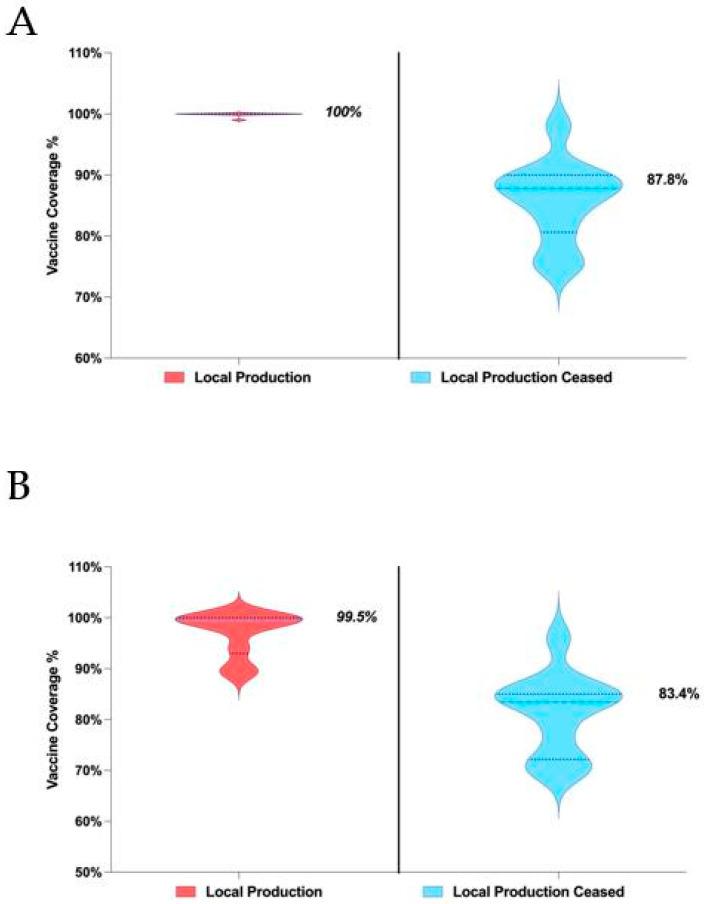
A significant decline in vaccine coverage was observed following the cessation of local production. For BCG, median coverage decreased from 100% during the production period to 87.8% post-cessation ( < 0.0001). Similarly, DTP coverage dropped from a median of 99.5% to 83.4% ( < 0.0001). The findings highlight the critical role of local production in maintaining high vaccination rates and ensuring immunization equity.
CONCLUSIONS
Reinvesting in local vaccine production is pivotal to improving immunization outcomes and strengthening Ecuador's health security. International collaboration and strategic planning can help overcome current challenges, positioning Ecuador as a regional leader in vaccine production and public health resilience.
背景
新冠疫情凸显了疫苗的重要性,同时也暴露了全球免疫接种方面的不平等现象,尤其是在厄瓜多尔等低收入和中等收入国家。本地疫苗生产可确保供应、减少对进口的依赖并增强卫生安全。了解本地生产与疫苗接种结果之间的关系对于应对新出现的公共卫生挑战至关重要。
目的
目的是评估本地疫苗生产停止对含卡介苗和百白破疫苗的疫苗接种覆盖率的影响。
方法
这项回顾性横断面研究分析了2004年至2023年的疫苗接种覆盖率数据,重点关注卡介苗和百白破等关键疫苗,以评估本地疫苗生产停止的影响。进行曼-惠特尼U检验以比较本地生产期间(2004-2013年)和生产停止后(2014-2023年)的疫苗接种覆盖率。还评估了历史背景和政策影响,以提供全面的视角。
结果
本地生产停止后,疫苗接种覆盖率显著下降。对于卡介苗,生产期间的覆盖率中位数从100%降至停止生产后的87.8%(<0.0001)。同样,百白破疫苗的覆盖率从99.5%的中位数降至83.4%(<0.0001)。研究结果凸显了本地生产在维持高疫苗接种率和确保免疫公平方面的关键作用。
结论
对本地疫苗生产进行再投资对于改善免疫接种结果和加强厄瓜多尔的卫生安全至关重要。国际合作和战略规划有助于克服当前的挑战,使厄瓜多尔成为疫苗生产和公共卫生复原力方面的区域领导者。


 Zotero 插件