
基于尼帕病毒糖蛋白G表位的肽疫苗在小鼠中的设计及初步免疫原性评估
Design and Preliminary Immunogenicity Evaluation of Nipah Virus Glycoprotein G Epitope-Based Peptide Vaccine in Mice.
作者信息
Kim Seungyeon, Flores Rochelle A, Moon Seo Young, Lee Seung Yun, Altanzul Bujinlkham, Baek Jiwon, Choi Eun Bee, Lim Heeji, Jang Eun Young, Lee Yoo-Kyoung, Ouh In-Ohk, Kim Woo H
机构信息
Division of Vaccine Development Coordination, Center for Vaccine Research, National Institute of Infectious Diseases, National Institute of Health, Korea Disease Control and Prevention Agency, Osong, Cheongju 28159, Chungcheongbuk-do, Republic of Korea.
College of Veterinary Medicine & Institute of Animal Medicine, Gyeongsang National University, Jinju 52828, Gyeongsangnam-do, Republic of Korea.
出版信息
Vaccines (Basel). 2025 Apr 18;13(4):428. doi: 10.3390/vaccines13040428.
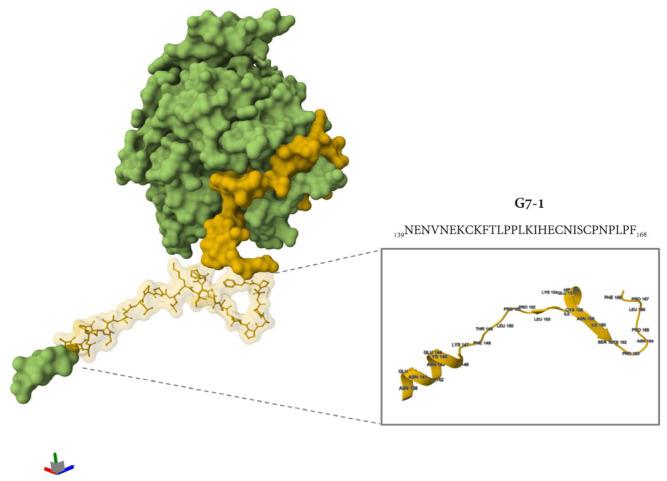
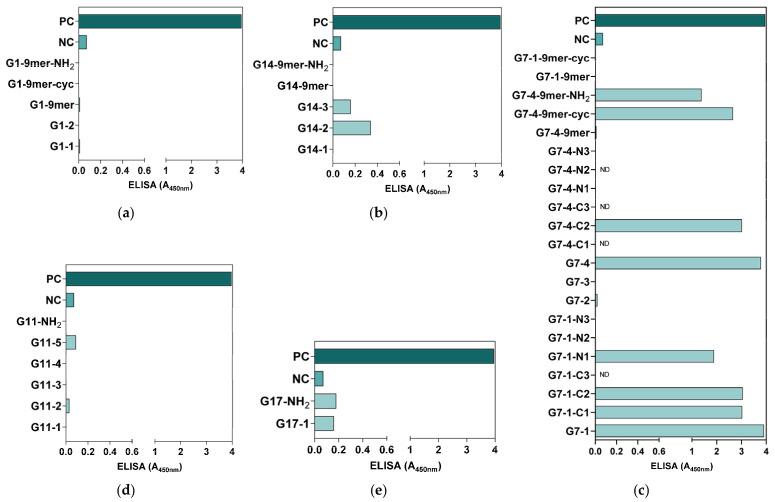
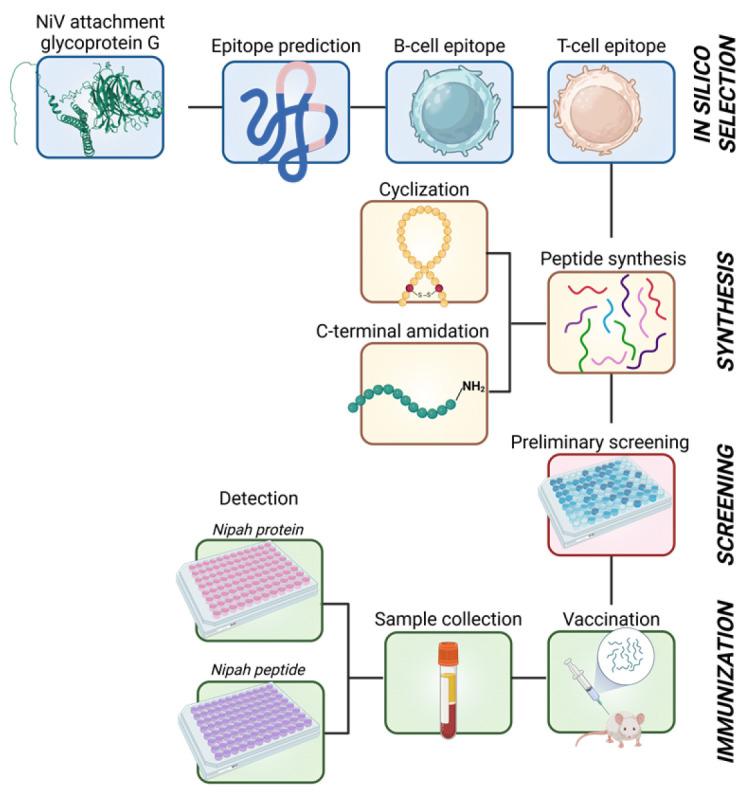
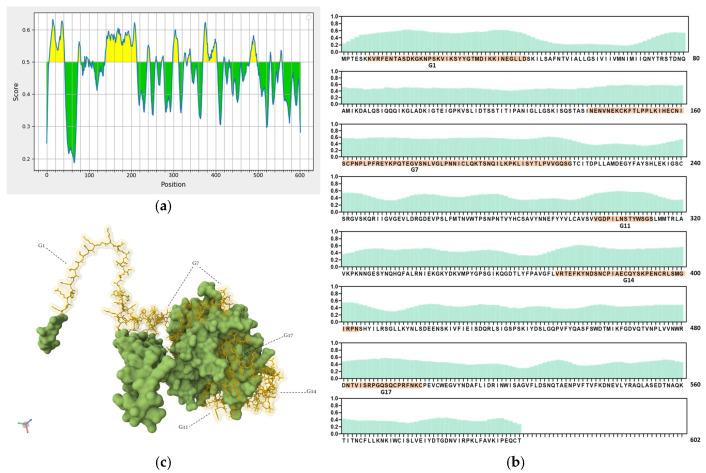
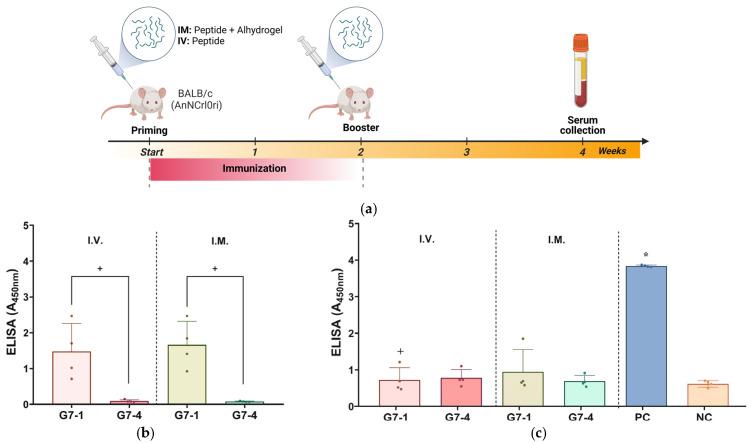
The emergence of several paramyxoviruses, including Nipah virus (NiV), makes continued efforts in vaccine development as part of pandemic preparedness efforts necessary. Although NiV is a zoonotic pathogen with high case fatality, there is still no licensed vaccine. Herein, NiV attachment glycoprotein G (NiV-G), which is crucial to host cell receptor binding, was used to develop Nipah epitope-based peptide vaccines. A total of 39 B- and T-cell epitopes of NiV-G were shortlisted for peptide synthesis and evaluation using in silico analysis. The in vitro antigenicity evaluation of the peptide candidates showed eight synthesized peptides (G7, stalk-domain epitopes) with relatively high binding to NiV-G antibody-positive serum (A: 1.39-3.78). Moreover, nine-mer (9-mer) peptides were found to be less reactive than their longer peptide counterparts (15-30 aa, G7-1, and G7-4), but 9-mer activity was enhanced with cyclization (NPLPFREYK, A: 2.66) and C-terminal amidation modification (NPLPFREYK-NH2, A: 1.39). Subsequently, in vivo validation in immunized mice revealed the immunogenicity potential of the G7-1 peptide vaccine (30 aa, NENVNEKCKFTLPPLKIHECNISCPNPLPF) to elicit a strong antigen-specific antibody response against their homologous peptide antigen (I.V., A: 1.48 ± 0.78; I.M., A: 1.66 ± 0.66). However, antibody binding to recombinant NiV-G protein remained low, suggesting limited recognition to the native antigen. This study focused on the preliminary screening and validation of peptide vaccines using single formulations with minimal modifications in the peptide candidates. Our findings collectively show the immunogenic potential of the NiV-G stalk-based epitope peptide vaccine as a novel therapeutic for NiV and underscores the need for strategic design, delivery, and formulation optimization to enhance its protective efficacy and translational application.
包括尼帕病毒(NiV)在内的几种副粘病毒的出现,使得作为大流行防范工作一部分的疫苗研发工作仍需继续努力。尽管NiV是一种病死率很高的人畜共患病原体,但目前仍没有获得许可的疫苗。在此,对宿主细胞受体结合至关重要的NiV附着糖蛋白G(NiV-G)被用于开发基于尼帕表位的肽疫苗。通过计算机分析,总共筛选出39个NiV-G的B细胞和T细胞表位用于肽合成和评估。对候选肽的体外抗原性评估显示,8种合成肽(G7,茎域表位)与NiV-G抗体阳性血清具有相对较高的结合力(A:1.39 - 3.78)。此外,发现九聚体(9-mer)肽的反应性低于其较长的肽对应物(15 - 30个氨基酸,G7-1和G7-4),但通过环化(NPLPFREYK,A:2.66)和C末端酰胺化修饰(NPLPFREYK-NH2,A:1.39)可增强9-mer的活性。随后,在免疫小鼠体内的验证揭示了G7-1肽疫苗(30个氨基酸,NENVNEKCKFTLPPLKIHECNISCPNPLPF)引发针对其同源肽抗原的强烈抗原特异性抗体反应的免疫原性潜力(静脉注射,A:1.48 ± 0.78;肌肉注射,A:1.66 ± 0.66)。然而,抗体与重组NiV-G蛋白的结合仍然较低,表明对天然抗原的识别有限。本研究重点关注了使用对候选肽进行最少修饰的单一制剂的肽疫苗的初步筛选和验证。我们的研究结果共同表明,基于NiV-G茎的表位肽疫苗作为一种针对NiV的新型疗法具有免疫原性潜力,并强调了进行战略设计、递送和制剂优化以提高其保护效力和转化应用的必要性。
 Zotero 插件