
高收入国家中与饮食相关的健康不平等:观察性研究的范围综述
Diet-Related Health Inequalities in High-Income Countries: A Scoping Review of Observational Studies.
作者信息
Carrillo-Alvarez Elena, Rifà-Ros Rosa, Salinas-Roca Blanca, Costa-Tutusaus Lluís, Lamas Mafalda, Rodriguez-Monforte Míriam
机构信息
Universitat Ramon Llull, Blanquerna School of Health Sciences, Global Research on Wellbeing Research Group, Barcelona, Spain.
Universitat Ramon Llull, Blanquerna School of Health Sciences, Global Research on Wellbeing Research Group, Barcelona, Spain.
出版信息
Adv Nutr. 2025 Jun;16(6):100439. doi: 10.1016/j.advnut.2025.100439. Epub 2025 May 5.
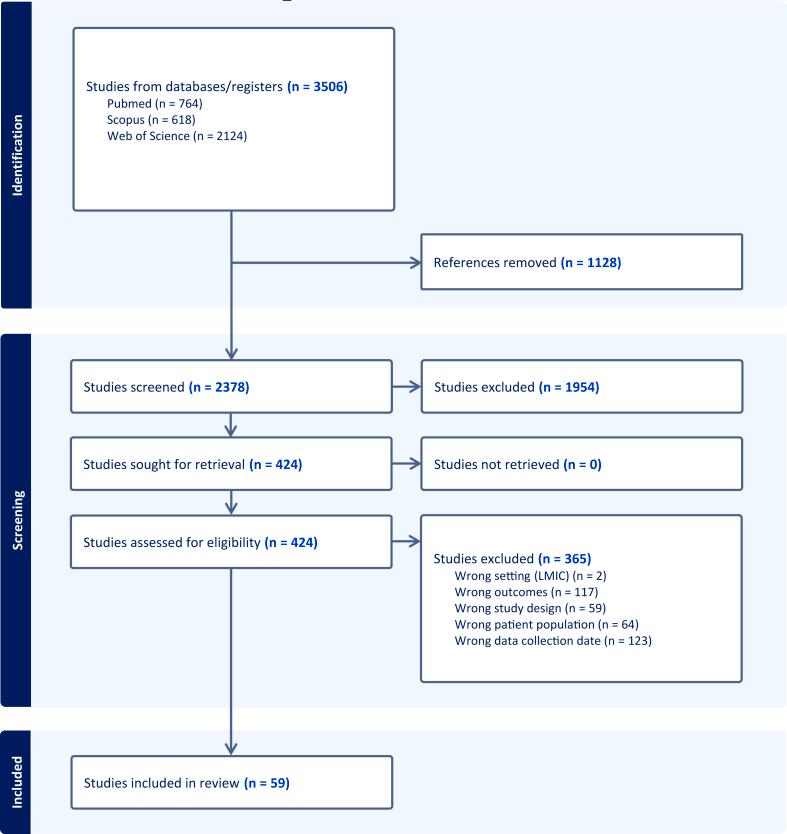
Diet-related health inequalities are a persistent public health challenge in high-income countries, disproportionately affecting socially and economically disadvantaged populations. This study aims to map the existing evidence on diet-related health inequalities in high-income countries through a scoping review of observational studies, identifying populations most affected and key dietary outcomes across social determinants of health. We conducted a systematic search of MEDLINE, Web of Science, Scopus, and Embase for observational studies published between January 2011 and March 2021. Eligible studies assessed diet-related health outcomes stratified by ≥1 Place of Residence, Race/Ethnicity, Occupation, Gender/Sex, Religion, Education, Socioeconomic Status, and Social Capital (PROGRESS)-Plus determinant. We followed Preferred Reporting Items for Systematic Reviews and Meta-Analyses Extension for Scoping Reviews guidelines and registered the review with International Prospective Register of Systematic Reviews (CRD42021234567). Data were charted and analyzed thematically according to PROGRESS categories. A total of 163 studies were included. Most studies focused on education, socioeconomic status, and place of residence, whereas fewer addressed gender identity, sexual orientation, or disability. Common dietary indicators included fruit and vegetable intake, dietary patterns, and food group consumption. Evidence consistently showed that lower education and income levels were associated with poorer dietary outcomes. Notably, certain population groups (for example, ethnic minorities, rural residents, and individuals with low education or income) experienced cumulative disadvantages. The scoping review highlights persistent and intersecting diet-related health inequalities in high-income countries. It underscores the need for standardized indicators and intersectional approaches in monitoring, research, and policy making.
在高收入国家,与饮食相关的健康不平等是一个长期存在的公共卫生挑战,对社会和经济弱势群体的影响尤为严重。本研究旨在通过对观察性研究的范围综述,梳理高收入国家中与饮食相关的健康不平等的现有证据,确定受影响最严重的人群以及健康社会决定因素中的关键饮食结果。我们对MEDLINE、科学网、Scopus和Embase进行了系统检索,以查找2011年1月至2021年3月期间发表的观察性研究。符合条件的研究评估了按≥1个居住地、种族/民族、职业、性别/性、宗教、教育、社会经济地位和社会资本(PROGRESS)加决定因素分层的与饮食相关的健康结果。我们遵循系统评价和Meta分析扩展的范围综述的首选报告项目指南,并在国际前瞻性系统评价注册库(CRD42021234567)中注册了该综述。根据PROGRESS类别对数据进行图表绘制和主题分析。共纳入163项研究。大多数研究关注教育、社会经济地位和居住地,而涉及性别认同、性取向或残疾的研究较少。常见的饮食指标包括水果和蔬菜摄入量、饮食模式和食物组消费。证据一致表明,较低的教育和收入水平与较差的饮食结果相关。值得注意的是,某些人群(例如少数民族、农村居民以及教育程度或收入较低的个人)经历了累积性劣势。该范围综述凸显了高收入国家持续存在且相互交织的与饮食相关的健康不平等。它强调了在监测、研究和政策制定中采用标准化指标和交叉性方法的必要性。
 Zotero 插件