
中风亚急性期偏瘫患者胫前肌局部肌肉振动对步态康复的影响:NEUROVIB-AVC研究方案——一项多中心随机对照试验
Effect of tibialis anterior focal muscle vibration for gait rehabilitation in hemiplegic individuals during the subacute phase after stroke: the NEUROVIB-AVC study protocol - a multicentric randomised controlled trial.
作者信息
Bessaguet Hugo, Fernandez Bruno, Malejac Vincent, Nerriere Emy, Velarde Mathias, Coiffet Alexandre, Rimaud Diana, Lapole Thomas
机构信息
Physical Medicine and Rehabilitation Department, Lyon 1, Savoie Mont-Blanc University, Inter-University Laboratory of Human Movement Biology, CHU de Saint-Étienne, Jean Monnet University, Saint-Étienne, France
Physical Medicine and Rehabilitation Department, Lyon 1, Savoie Mont-Blanc University, Inter-University Laboratory of Human Movement Biology, CHU de Saint-Étienne, Jean Monnet University, Saint-Étienne, France.
出版信息
BMJ Open. 2025 May 6;15(5):e102838. doi: 10.1136/bmjopen-2025-102838.
INTRODUCTION
Gait recovery remains one of the most determining factors in social participation for poststroke individuals, in whom ankle dorsiflexor function is closely related to gait speed. Focal muscle vibration has shown promising neurophysiological and clinical effects in neuromotor recovery. However, it remains to be determined whether tibialis anterior focal muscle vibration applied to the paretic limb could improve walking speed when implemented in early rehabilitation after stroke occurrence.
METHODS AND ANALYSIS
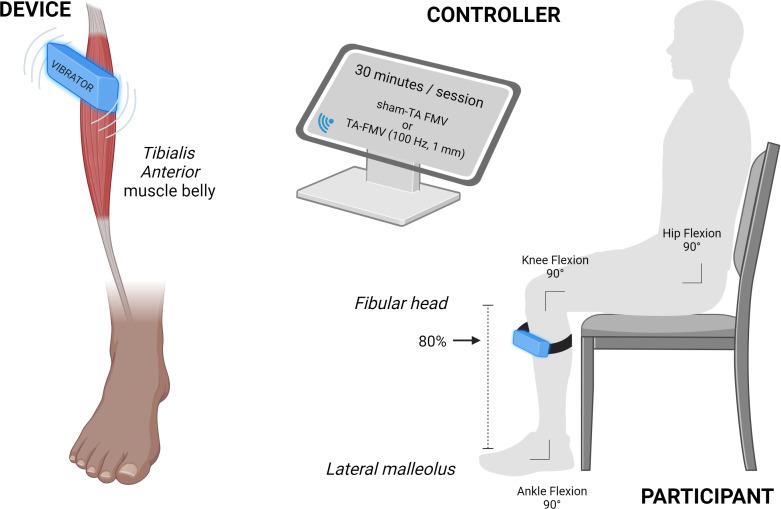
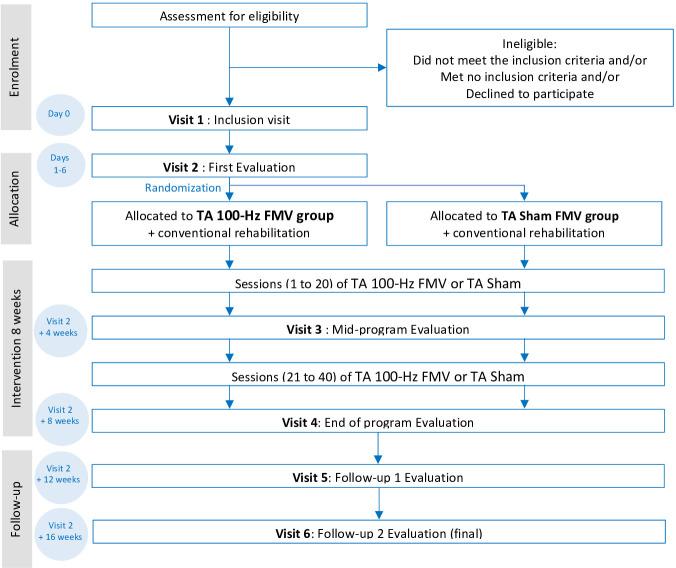
This study describes a multicentric randomised controlled trial in which 70 participants will be randomly assigned in a 1:1 ratio to the tibialis anterior focal muscle vibration group or the sham group, in addition to their conventional rehabilitation. Participants will receive 100 Hz vibration/sham for 30 min, five times per week, for 8 weeks. The primary outcome will be gait speed, as assessed through a 10 m walking test and will be compared between groups at the end of the intervention. Secondary outcomes will include gait abilities, neuromuscular clinical evaluations and neurophysiological measures. Outcomes will be assessed at baseline and across five visits during and after the intervention, until 16 weeks of follow-up.
ETHICS AND DISSEMINATION
Ethics approval was obtained from the French Ethics Committee 'Protection des Personnes Nord Ouest III' in 30 May 2023 (IDRCB: 2023-A00489-36). The results will be published in a peer-reviewed journal and presented at scientific conferences.
TRIAL REGISTRATION NUMBER
NCT05945212.
引言
步态恢复仍然是中风后个体社会参与的最关键因素之一,其中踝背屈肌功能与步速密切相关。局部肌肉振动在神经运动恢复方面已显示出有前景的神经生理学和临床效果。然而,在中风发生后的早期康复中,对患侧肢体施加胫前肌局部肌肉振动是否能提高步行速度仍有待确定。
方法与分析
本研究描述了一项多中心随机对照试验,70名参与者将在接受常规康复治疗的基础上,以1:1的比例随机分配到胫前肌局部肌肉振动组或假刺激组。参与者将接受100赫兹的振动/假刺激,每次30分钟,每周5次,共8周。主要结局指标将是步速,通过10米步行测试进行评估,并在干预结束时在组间进行比较。次要结局指标将包括步态能力、神经肌肉临床评估和神经生理学测量。结局指标将在基线时以及干预期间和干预后的五次访视中进行评估,直至随访16周。
伦理与传播
2023年5月30日获得了法国伦理委员会“西北三区人体保护委员会”的伦理批准(IDRCB:2023-A00489-36)。研究结果将发表在同行评审期刊上,并在科学会议上展示。
试验注册号
NCT05945212。
 Zotero 插件