
长期新冠中的运动后不适:主观报告与客观评估
Post-exertional malaise in Long COVID: subjective reporting versus objective assessment.
作者信息
Stussman Barbara, Camarillo Nathan, McCrossin Gayle, Stockman Marybeth, Norato Gina, Vetter C Stephenie, Ferrufino Alenka, Adedamola Ashade, Grayson Nicholas, Nath Avindra, Chan Leighton, Walitt Brian, Chin Lisa M K
机构信息
National Institute of Neurological Disorders and Stroke, National Institutes of Health, Bethesda, MD, United States.
Rehabilitation Medicine Department, National Institutes of Health Clinical Center, Bethesda, MD, United States.
出版信息
Front Neurol. 2025 Apr 23;16:1534352. doi: 10.3389/fneur.2025.1534352. eCollection 2025.
BACKGROUND
Post-exertional malaise (PEM) is a central feature of myalgic encephalomyelitis/chronic fatigue syndrome (ME/CFS) and has emerged as a prominent feature of Long COVID. The optimal clinical approach to PEM is inconclusive, and studies of the impact of exercise have yielded contradictory results.
OBJECTIVE
The objective of this study was to examine PEM in Long COVID by assessing the prevalence of self-reported PEM across study cohorts and symptom responses of Long COVID patients to a standardized exercise stressor. Secondarily, Long COVID symptom responses to exercise were compared to those of ME/CFS and healthy volunteers.
METHODS
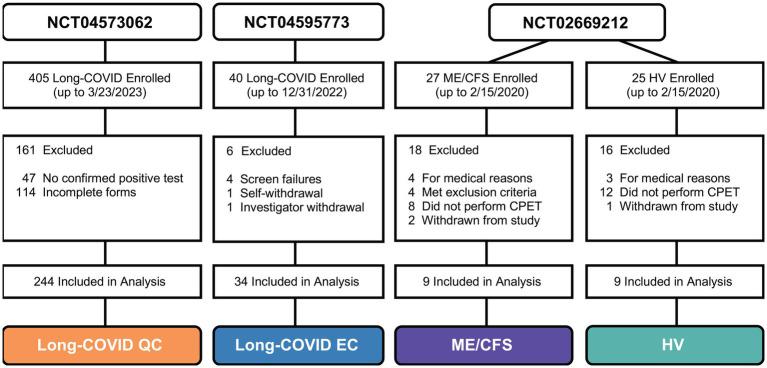
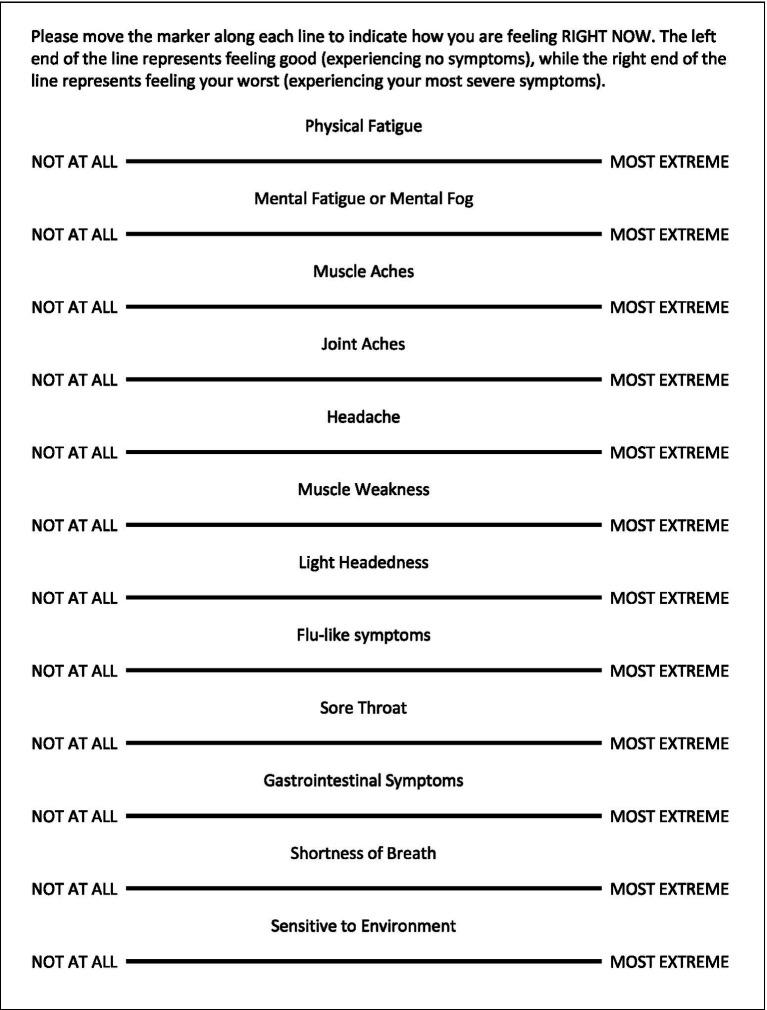
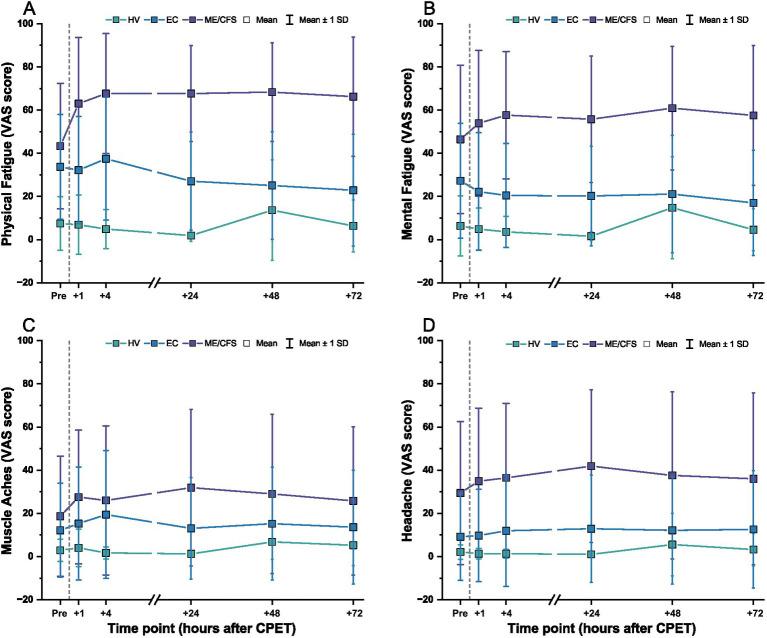
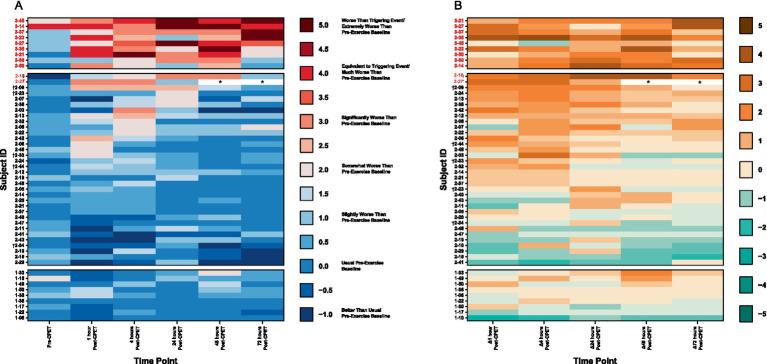
Data from three registered clinical trials comprised four cohorts in this study: Long COVID Questionnaire Cohort (QC; = 244), Long COVID Exercise Cohort (EC; = 34), ME/CFS cohort ( = 9), and healthy volunteers (HV; = 9). All cohorts completed questionnaires related to physical function, fatigue, and/or PEM symptoms. EC also performed a standardized exercise test (cardiopulmonary exercise test, CPET), and the PEM response to CPET was assessed using visual analog scales and qualitative interviews (QIs) administered serially over 72 h. EC PEM measures were compared to ME/CFS and HV cohorts. A secondary analysis of QI explored positive responses to CPET among EC, ME/CFS and HV.
RESULTS
Self-reported PEM was 67% in QC and estimated at 27% in EC. Only 2 of 34 EC patients (5.9%) were observed to develop PEM after a CPET. In addition, PEM responses after CPET in Long COVID were not as severe and prolonged as those assessed in ME/CFS. Twenty-two of 34 EC patients (64.7%) expressed at least one of 7 positive themes after the CPET.
CONCLUSION
Self-report of PEM is common in Long COVID. However, observable PEM following an exercise stressor was not frequent in this small cohort. When present, PEM descriptions during QI were less severe in Long COVID than in ME/CFS. Positive responses after an exercise stressor were common in Long COVID. Exercise testing to determine the presence of PEM may have utility for guiding clinical management of Long COVID.
背景
运动后不适(PEM)是肌痛性脑脊髓炎/慢性疲劳综合征(ME/CFS)的核心特征,也是长期新冠的一个突出特征。针对PEM的最佳临床治疗方法尚无定论,关于运动影响的研究结果相互矛盾。
目的
本研究的目的是通过评估各研究队列中自我报告的PEM患病率以及长期新冠患者对标准化运动应激源的症状反应,来研究长期新冠中的PEM。其次,将长期新冠患者运动后的症状反应与ME/CFS患者和健康志愿者的反应进行比较。
方法
本研究中的三个注册临床试验数据包括四个队列:长期新冠问卷调查队列(QC;n = 244)、长期新冠运动队列(EC;n = 34)、ME/CFS队列(n = 9)和健康志愿者(HV;n = 9)。所有队列均完成了与身体功能、疲劳和/或PEM症状相关的问卷。EC队列还进行了标准化运动测试(心肺运动测试,CPET),并在72小时内连续使用视觉模拟量表和定性访谈(QI)评估对CPET的PEM反应。将EC队列的PEM测量结果与ME/CFS队列和HV队列进行比较。对QI的二次分析探讨了EC、ME/CFS和HV队列中对CPET的阳性反应。
结果
QC队列中自我报告的PEM患病率为67%,EC队列估计为27%。在34名EC患者中,只有2名(5.9%)在CPET后出现PEM。此外,长期新冠患者CPET后的PEM反应不如ME/CFS患者评估的那样严重和持久。34名EC患者中有22名(64.7%)在CPET后表达了7个阳性主题中的至少一个。
结论
PEM的自我报告在长期新冠中很常见。然而,在这个小队列中,运动应激源后可观察到的PEM并不常见。出现PEM时,长期新冠患者在QI期间对PEM的描述不如ME/CFS患者严重。运动应激源后的阳性反应在长期新冠中很常见。通过运动测试来确定PEM的存在可能有助于指导长期新冠的临床管理。






 Zotero 插件