
有子女的流动老年人的生活满意度、睡眠障碍与心理健康问题之间的关联:基于人均卧室面积的条件过程分析
Association between life satisfaction, sleep disturbance and mental health problems among the migrant older adults with children: a conditional process analysis based on per capita bedroom area.
作者信息
Pang Mingli, Wang Jieru, Li Hexian, Liu Guangwen, Jiang Xiaoxu, Xu Jing, Li Shixue, Kong Fanlei
机构信息
Department of Social Medicine and Health Management, School of Public Health, Cheeloo College of Medicine, Shandong University, Jinan, 250012, China.
NHC Key Lab of Health Economics and Policy Research (Shandong University), Jinan, 250012, China.
出版信息
BMC Geriatr. 2025 May 8;25(1):318. doi: 10.1186/s12877-025-05957-y.
BACKGROUND
The relationship between life satisfaction and mental health problems had been confirmed in many existed studies, but the underlying mediating and moderating effect of sleep disturbance and per capita bedroom area (PCBA) behind this association had never been identified. This study aimed to explore the mediating role of sleep disturbance and the moderating effect of PCBA on the association between life satisfaction and mental health problems.
METHODS
Multistage cluster random sampling method was used to select the participants and finally 613 migrant older adults with children (MOAC) were included in the survey. A conditional process model was performed to examine the relationship between life satisfaction and mental health problems, as well as the mediating effect of sleep disturbance and the moderating effect of PCBA.
RESULTS
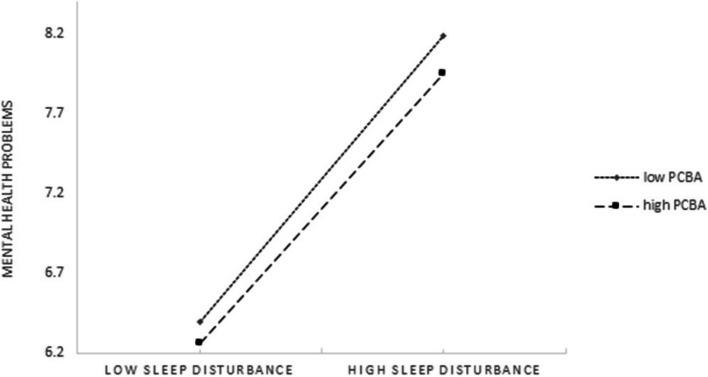
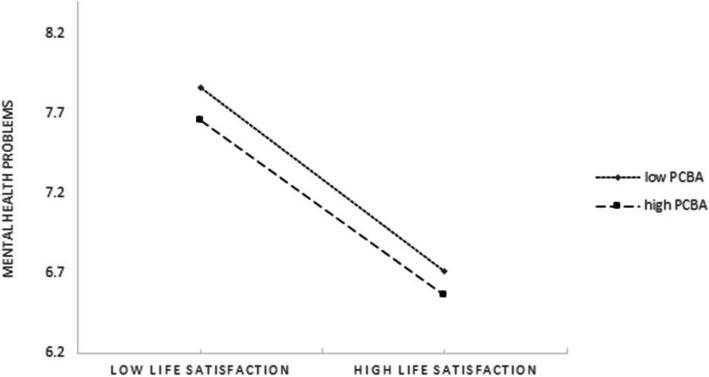
Life satisfaction was negatively associated with mental health problems, and sleep disturbance could mediate their association. Furthermore, the direct effect of life satisfaction on mental health problems and the indirect effect of sleep disturbance in the relationship were moderated by PCBA, but it only moderated the direct effect and the second indirect link (sleep disturbance-mental health problems) of the mediating effect. Both these two effects were stronger for MOAC with a low level of PCBA.
CONCLUSIONS
Life satisfaction had negative effect on mental health problems. PCBA moderated the direct effect of life satisfaction on mental health problems and the mediating effect of sleep disturbance on mental health problems. For MOAC with a low level of life satisfaction and high sleep disturbance, particularly those with a low level of PCBA, targeted implication for the community, family members and MOAC were proposed to improve the mental health of MOAC.
背景
许多现有研究已证实生活满意度与心理健康问题之间的关系,但这种关联背后睡眠障碍和人均卧室面积(PCBA)的潜在中介和调节作用尚未得到明确。本研究旨在探讨睡眠障碍的中介作用以及PCBA对生活满意度与心理健康问题之间关联的调节作用。
方法
采用多阶段整群随机抽样方法选取参与者,最终613名有子女的流动老年人(MOAC)被纳入调查。进行条件过程模型分析,以检验生活满意度与心理健康问题之间的关系,以及睡眠障碍的中介作用和PCBA的调节作用。
结果
生活满意度与心理健康问题呈负相关,睡眠障碍可介导二者之间的关联。此外,生活满意度对心理健康问题的直接效应以及二者关系中睡眠障碍的间接效应受到PCBA的调节,但它仅调节了直接效应以及中介效应的第二个间接路径(睡眠障碍-心理健康问题)。对于PCBA水平较低的MOAC,这两种效应均更强。
结论
生活满意度对心理健康问题有负面影响。PCBA调节了生活满意度对心理健康问题的直接效应以及睡眠障碍对心理健康问题的中介效应。对于生活满意度低且睡眠障碍高的MOAC,尤其是那些PCBA水平低的人群,建议针对社区、家庭成员和MOAC采取有针对性的措施,以改善MOAC的心理健康状况。

 Zotero 插件