
阿尔茨海默病脑组织的跨研究转录组学调查:发现与局限
Cross study transcriptomic investigation of Alzheimer's brain tissue discoveries and limitations.
作者信息
Tsurukawa Fernando Koiti, Mao Yixiang, Sanchez-Villalobos Cesar, Khanna Nishtha, Crasto Chiquito J, Lawrence J Josh, Pal Ranadip
机构信息
Department of Electrical and Computer Engineering, Texas Tech University, Lubbock, TX, 79409, USA.
Center for Biotechnology and Genomics, Texas Tech University, Lubbock, TX, 79409, USA.
出版信息
Sci Rep. 2025 May 8;15(1):16041. doi: 10.1038/s41598-025-01017-y.
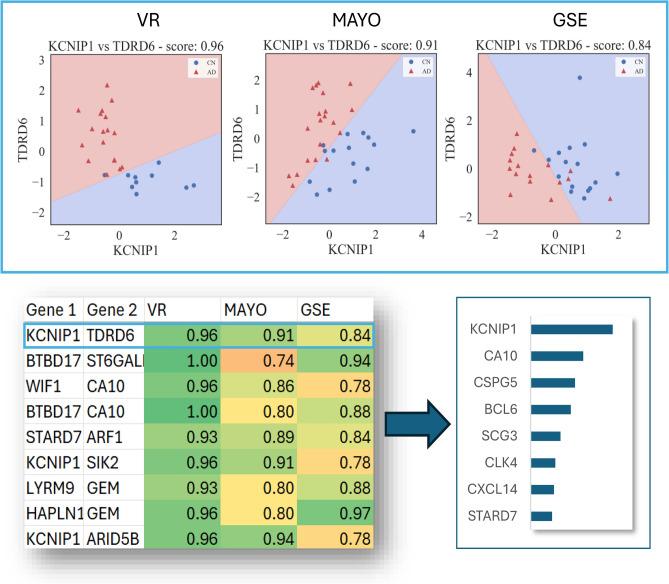
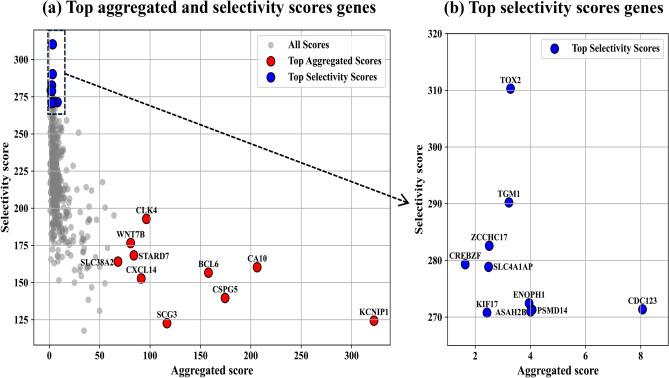
Developing effective treatments for Alzheimer's disease (AD) likely requires a deep understanding of molecular mechanisms. Integration of transcriptomic datasets and developing innovative computational analyses may yield novel molecular targets with broad applicability. The motivation for this study was conceived from two main observations: (a) most transcriptomic analyses of AD data consider univariate differential expression analysis, and (b) insights are often not transferable across studies. We designed a machine learning-based framework that can elucidate interpretable multivariate relationships from multiple human AD studies to discover robust transcriptomic AD biomarkers transferable across multiple studies. Our analysis of three human hippocampus datasets revealed multiple robust synergistic associations from unrelated pathways along with inconsistencies of gene associations across different studies. Our study underscores the utility of developing AI-assisted next-gen metrics for integration, robustness, and generalization and also highlights the potential benefit of elucidating molecular mechanisms and pathways that are important in targeting a single population.
开发针对阿尔茨海默病(AD)的有效治疗方法可能需要深入了解分子机制。整合转录组数据集并开展创新的计算分析可能会产生具有广泛适用性的新型分子靶点。本研究的动机源自两个主要观察结果:(a)大多数AD数据的转录组分析采用单变量差异表达分析,以及(b)研究结果往往无法在不同研究之间进行转换。我们设计了一个基于机器学习的框架,该框架可以从多项人类AD研究中阐明可解释的多变量关系,以发现可在多项研究之间转换的稳健的转录组AD生物标志物。我们对三个人类海马体数据集的分析揭示了来自不相关途径的多个稳健的协同关联以及不同研究之间基因关联的不一致性。我们的研究强调了开发人工智能辅助的下一代指标以实现整合、稳健性和通用性的实用性,同时也突出了阐明在针对单一人群时重要的分子机制和途径的潜在益处。



 Zotero 插件