
肿瘤微环境驱动的非小细胞肺癌免疫治疗耐药性:冷肿瘤向热肿瘤转变的策略
Tumor microenvironment-driven resistance to immunotherapy in non-small cell lung cancer: strategies for Cold-to-Hot tumor transformation.
作者信息
Yu Jinglu, Kong Xiaoni, Feng Yu
机构信息
Institute of Integrated Chinese and Western Medicine, PuDong Traditional Chinese Medicine Hospital Affiliated to Shanghai University of Traditional Chinese Medicine, Shanghai 201200, China.
Institute of Respiratory Medicine, PuDong Traditional Chinese Medicine Hospital Affiliated to Shanghai University of Traditional Chinese Medicine, Shanghai 201200, China.
出版信息
Cancer Drug Resist. 2025 Apr 24;8:21. doi: 10.20517/cdr.2025.14. eCollection 2025.
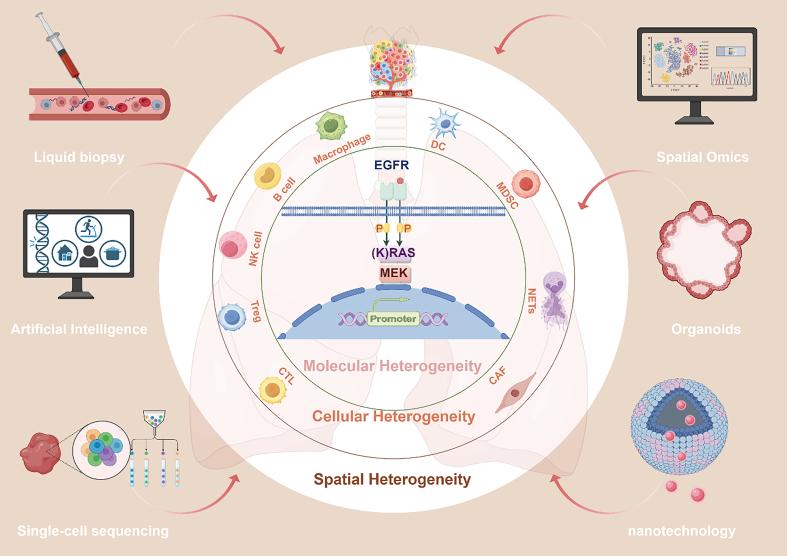
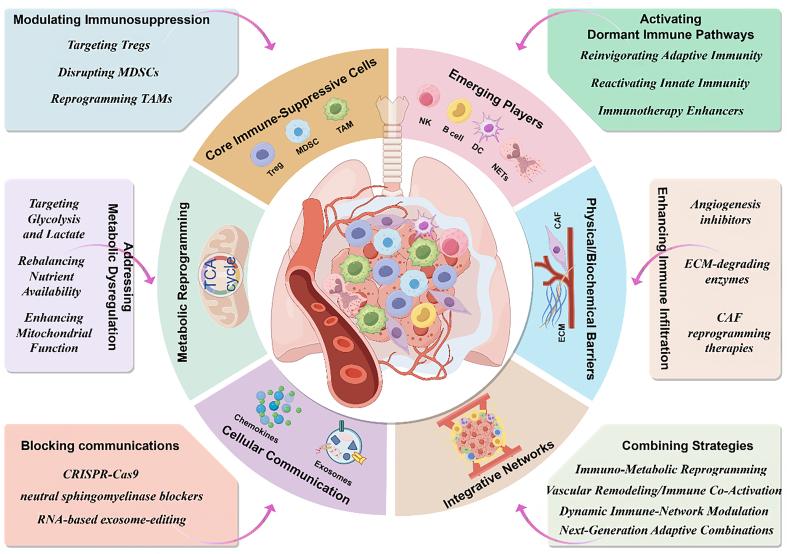
Non-small cell lung cancer (NSCLC) represents a formidable challenge in oncology due to its molecular heterogeneity and the dynamic suppressive nature of its tumor microenvironment (TME). Despite the transformative impact of immune checkpoint inhibitors (ICIs) on cancer therapy, the majority of NSCLC patients experience resistance, necessitating novel approaches to overcome immune evasion. This review highlights shared and subtype-specific mechanisms of immune resistance within the TME, including metabolic reprogramming, immune cell dysfunction, and physical barriers. Beyond well-characterized components such as regulatory T cells, tumor-associated macrophages, and myeloid-derived suppressor cells, emerging players - neutrophil extracellular traps, tertiary lymphoid structures, and exosomal signaling networks - underscore the TME's complexity and adaptability. A multi-dimensional framework is proposed to transform cold, immune-excluded tumors into hot, immune-reactive ones. Key strategies include enhancing immune infiltration, modulating immunosuppressive networks, and activating dormant immune pathways. Cutting-edge technologies, such as single-cell sequencing, spatial transcriptomics, and nanomedicine, are identified as pivotal tools for decoding TME heterogeneity and personalizing therapeutic interventions. By bridging mechanistic insights with translational innovations, this review advocates for integrative approaches that combine ICIs with metabolic modulators, vascular normalizers, and emerging therapies such as STING agonists and tumor vaccines. The synergistic potential of these strategies is poised to overcome resistance and achieve durable antitumor immunity. Ultimately, this vision underscores the importance of interdisciplinary collaboration and real-time TME profiling in refining precision oncology for NSCLC, offering a blueprint for extending these advances to other malignancies.
非小细胞肺癌(NSCLC)因其分子异质性及其肿瘤微环境(TME)的动态抑制特性,在肿瘤学领域构成了巨大挑战。尽管免疫检查点抑制剂(ICIs)对癌症治疗产生了变革性影响,但大多数NSCLC患者仍会产生耐药性,因此需要新的方法来克服免疫逃逸。本综述重点介绍了TME内免疫耐药的共同机制和亚型特异性机制,包括代谢重编程、免疫细胞功能障碍和物理屏障。除了调节性T细胞、肿瘤相关巨噬细胞和髓源性抑制细胞等已明确的成分外,新出现的因素——中性粒细胞胞外陷阱、三级淋巴结构和外泌体信号网络——凸显了TME的复杂性和适应性。本文提出了一个多维框架,将冷的、免疫排斥的肿瘤转化为热的、免疫反应性的肿瘤。关键策略包括增强免疫浸润、调节免疫抑制网络和激活休眠免疫途径。单细胞测序、空间转录组学和纳米医学等前沿技术被确定为解码TME异质性和个性化治疗干预的关键工具。通过将机制性见解与转化创新相结合,本综述倡导将ICIs与代谢调节剂、血管正常化剂以及STING激动剂和肿瘤疫苗等新兴疗法相结合的综合方法。这些策略的协同潜力有望克服耐药性并实现持久的抗肿瘤免疫。最终,这一愿景强调了跨学科合作和实时TME分析在优化NSCLC精准肿瘤学中的重要性,为将这些进展扩展到其他恶性肿瘤提供了蓝图。
 Zotero 插件