
用于治疗口面部疼痛的瞬时受体电位香草酸亚型1(TRPV1)靶向药物。
TRPV1-target drugs for the treatment of orofacial pain.
作者信息
Andrade Ana Cláudia Macedo, Molina Esquivel Natalia, Goldschmied Rossel Florencia, Benso Bruna
机构信息
School of Dentistry, Faculty of Medicine, Pontificia Universidad Catolica de Chile, Santiago, Chile.
出版信息
Front Pharmacol. 2025 Apr 24;16:1568109. doi: 10.3389/fphar.2025.1568109. eCollection 2025.
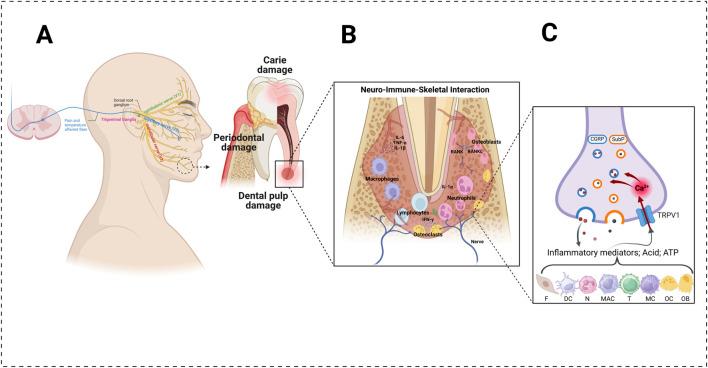
Orofacial pain, encompassing sensory and emotional discomfort in the facial and oral regions, is a multifaceted condition that significantly impacts patients' quality of life. This review focuses on the role of Transient Receptor Potential Vanilloid 1 (TRPV1) channels in modulating orofacial pain and new ligands targeting this receptor. TRPV1 channels act as key mediators of nociception, responding to stimuli such as temperature, pH changes, and capsaicin molecules. Recent advancements in TRPV1-targeted therapeutics, including natural, synthetic, and protein-based molecules, offer promising strategies for pain management. This review analyzed studies related to TRPV1-mediated pain inhibition, including seven clinical trials and preclinical investigations. The compounds studied in these works demonstrated pain relief, although adverse effects were reported. TRPV1-targeted molecules represent a novel avenue for developing innovative pharmacological interventions, addressing the limitations of current therapies, and improving patient outcomes in managing orofacial pain.
口面部疼痛,包括面部和口腔区域的感觉和情绪不适,是一种多方面的病症,会显著影响患者的生活质量。本综述聚焦于瞬时受体电位香草酸亚型1(TRPV1)通道在调节口面部疼痛中的作用以及靶向该受体的新配体。TRPV1通道作为伤害感受的关键介质,对温度、pH变化和辣椒素分子等刺激作出反应。TRPV1靶向治疗的最新进展,包括天然、合成和基于蛋白质的分子,为疼痛管理提供了有前景的策略。本综述分析了与TRPV1介导的疼痛抑制相关的研究,包括七项临床试验和临床前研究。这些研究中所研究的化合物显示出疼痛缓解,尽管也有不良反应的报道。TRPV1靶向分子代表了开发创新药物干预措施的新途径,可解决当前疗法的局限性,并改善口面部疼痛管理中的患者预后。

 Zotero 插件