
聚合物氧化:一种用于可控降解可注射性冷冻凝胶的策略。
Polymer oxidation: A strategy for the controlled degradation of injectable cryogels.
作者信息
Nukovic Alexandra, Hamrangsekachaee Mohammad, Rajkumar Mahalakshmi, Wong Gwyneth, Tressler Emily R, Hashmi Sara M, Hatfield Stephen M, Bencherif Sidi A
机构信息
Department of Chemical Engineering, Northeastern University, Boston, MA, 02115, USA.
New England Inflammation and Tissue Protection Institute, Department of Pharmaceutical Sciences, Northeastern University, Boston, MA, 02115, USA.
出版信息
Mater Today Bio. 2025 Apr 8;32:101743. doi: 10.1016/j.mtbio.2025.101743. eCollection 2025 Jun.
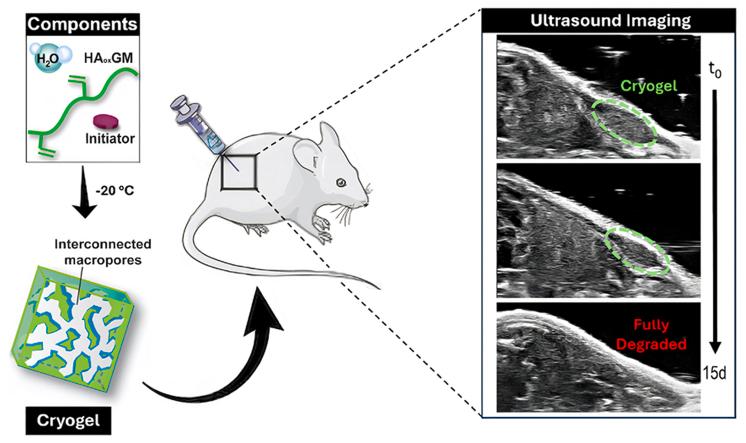
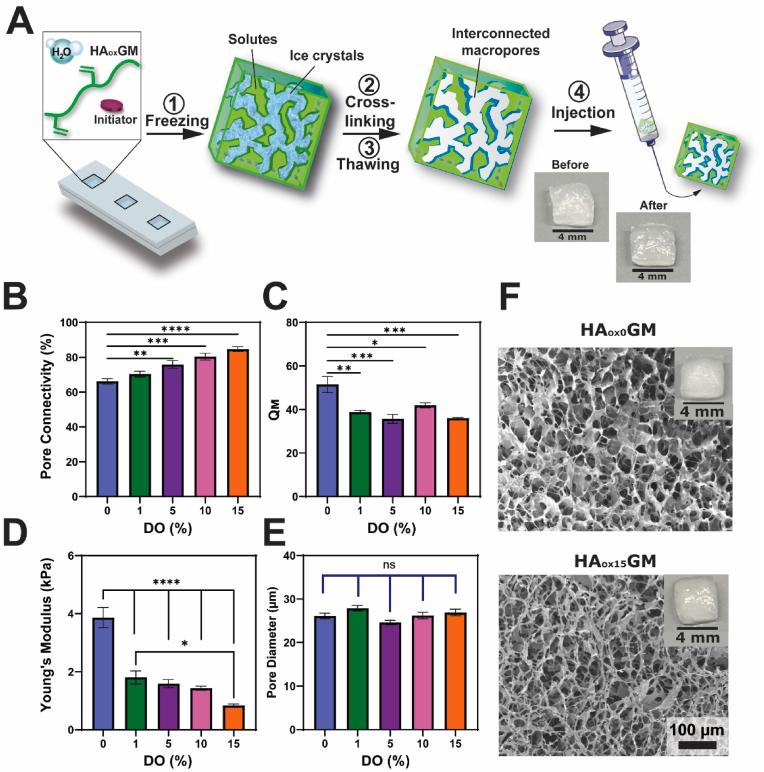
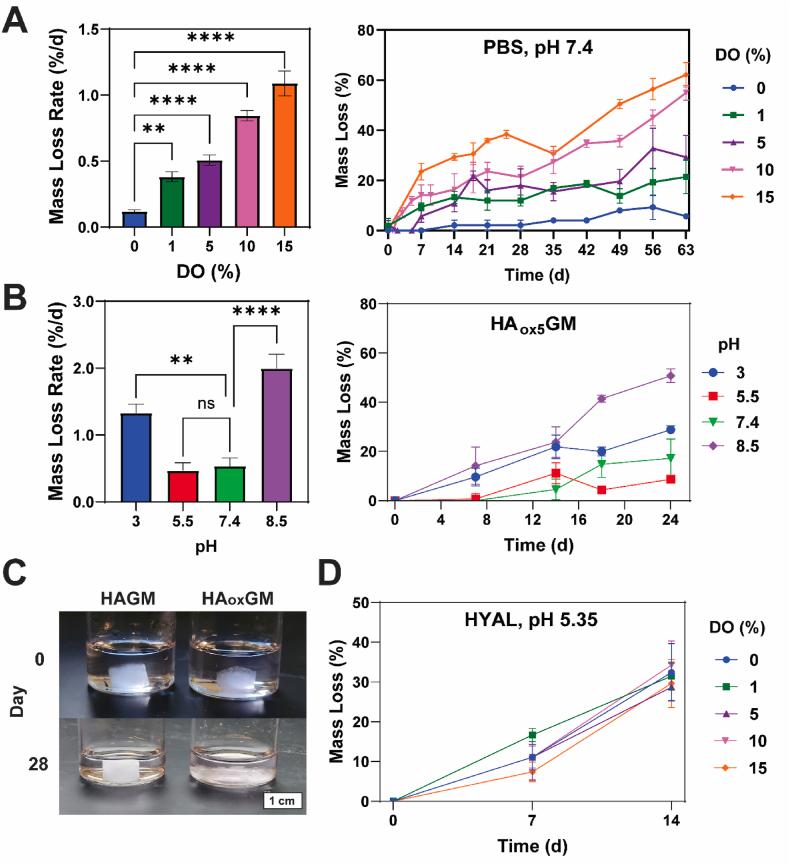
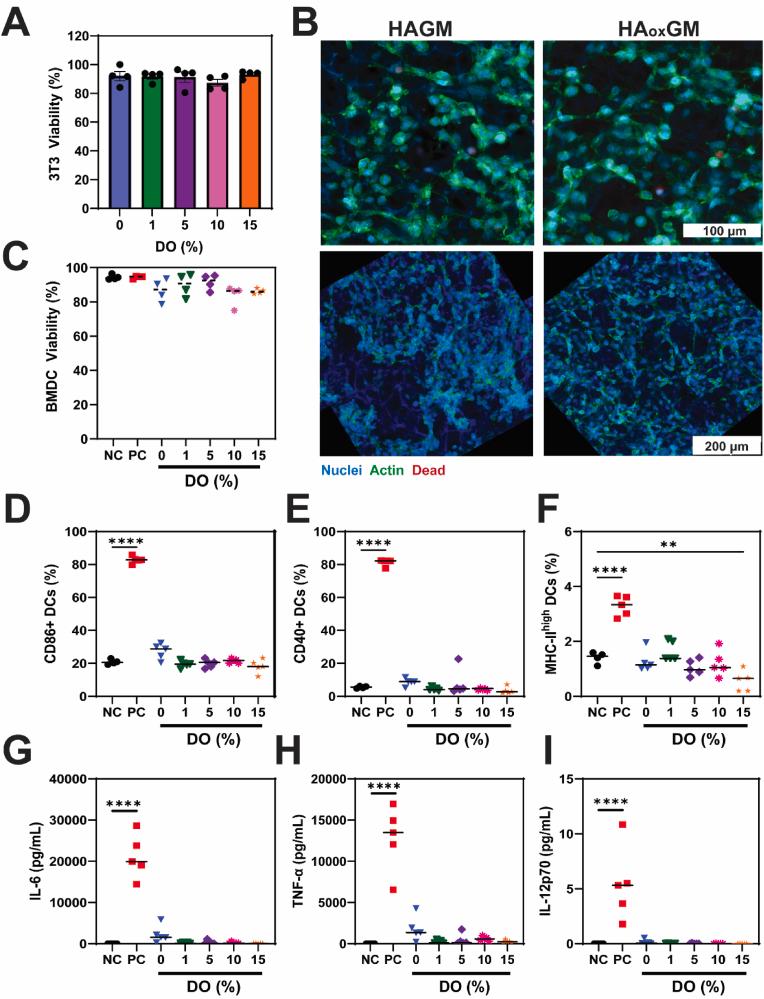
Cryogels, an advanced subclass of hydrogels, are widely used in biomedical applications such as tissue engineering, drug delivery, and immunotherapy. Biopolymers, like hyaluronic acid (HA), are key building blocks for cryogel fabrication due to their intrinsic biological properties, biocompatibility, and biodegradability. HA undergoes biodegradation through hydrolysis, enzymatic degradation, and oxidation, but becomes less susceptible to degradation once chemically modified. This modification is necessary for producing HA-based cryogels with unique properties, including an open macroporous network, mechanical resilience, shape memory, and syringe injectability. Endowing cryogels with resorbable features is essential for meeting regulatory requirements and improving treatment outcomes. To this end, HA was oxidized with sodium periodate (HA) and chemically modified with glycidyl methacrylate (HAGM) to create HAGM cryogels with controlled degradation. Oxidation of HA increased the susceptibility of the polymer backbone to breakdown through various mechanisms, including oxidative cleavage and alkaline hydrolysis. Compared to their poorly degradable counterparts, HAGM cryogels retained their advantageous properties despite reduced compressive strength. HAGM cryogels were highly cytocompatible, biocompatible, and tunable in degradation. When injected subcutaneously into mice, the HAGM cryogels were biocompatible and resorbed within two weeks. To validate the beneficial effect of controlled biodegradation in a relevant setting, we demonstrated that the degradation of HAGM cryogels accelerates ovalbumin release and enhances its uptake and response by immune cells in mice. This versatile oxidation strategy can be applied to a wide range of polymers, allowing better control over cryogel degradation, and advancing their potential for biomedical applications and clinical translation.
冷冻凝胶是水凝胶的一种高级子类,广泛应用于生物医学领域,如组织工程、药物递送和免疫治疗。生物聚合物,如透明质酸(HA),由于其固有的生物学特性、生物相容性和生物可降解性,是冷冻凝胶制备的关键组成部分。HA通过水解、酶解和氧化进行生物降解,但一旦经过化学修饰,其降解敏感性就会降低。这种修饰对于制备具有独特性能的基于HA的冷冻凝胶是必要的,这些性能包括开放的大孔网络、机械弹性、形状记忆和注射器可注射性。赋予冷冻凝胶可吸收特性对于满足监管要求和改善治疗效果至关重要。为此,用高碘酸钠氧化HA并与甲基丙烯酸缩水甘油酯化学修饰(HAGM),以制备具有可控降解性的HAGM冷冻凝胶。HA的氧化增加了聚合物主链通过各种机制分解的敏感性,包括氧化裂解和碱性水解。与降解性差的同类物相比,HAGM冷冻凝胶尽管抗压强度降低,但仍保留了其有利性能。HAGM冷冻凝胶具有高度的细胞相容性、生物相容性和可调节的降解性。当皮下注射到小鼠体内时,HAGM冷冻凝胶具有生物相容性,并在两周内被吸收。为了在相关环境中验证可控生物降解的有益效果,我们证明了HAGM冷冻凝胶的降解加速了卵清蛋白的释放,并增强了其在小鼠体内被免疫细胞摄取和反应的能力。这种通用的氧化策略可应用于多种聚合物,从而更好地控制冷冻凝胶的降解,并提高其在生物医学应用和临床转化方面的潜力。



 Zotero 插件