
传染病接触者追踪策略:一项系统文献综述。
Contact tracing strategies for infectious diseases: A systematic literature review.
作者信息
Guy Danielle, Kodjamanova Petya, Woldmann Lena, Sahota Jyoti, Bannister-Tyrrell Melanie, Elouard Yajna, Degail Marie-Amélie
机构信息
Amaris, Health Economics and Market Access, Barcelona, Spain.
Amaris, Health Economics and Market Access, London, United Kingdom.
出版信息
PLOS Glob Public Health. 2025 May 9;5(5):e0004579. doi: 10.1371/journal.pgph.0004579. eCollection 2025.
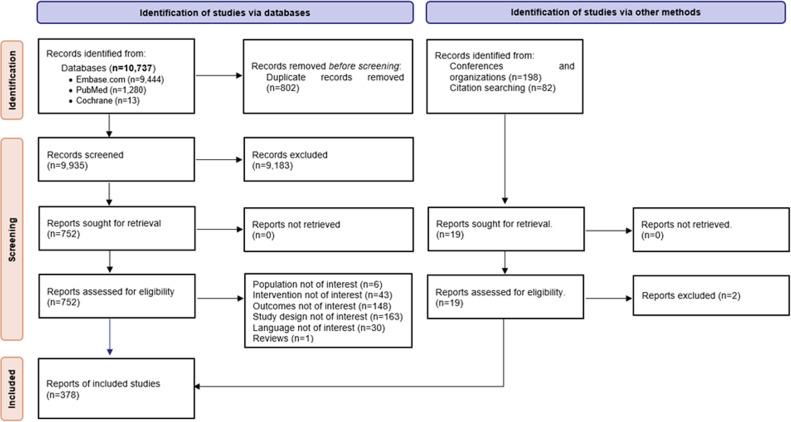
Contact tracing has been a crucial public health strategy for breaking infectious diseases chains of transmission. Although many resources exist for disease outbreak management none address the rationale of contact tracing. This comprehensive review aims to evaluate contact tracing strategies, their effectiveness, and health systems governance across various diseases to inform a disease-agnostic contact tracing guideline. This systematic review was registered with PROSPERO (ID: CRD42023474507) and follows Preferred Reporting Items for Systematic reviews and Meta-Analyses (PRISMA) guidelines. Descriptive and interventional studies in the six official United Nations languages were included, excluding modelling studies and animal-to-human transmission. An electronic search was conducted in Embase, Medline, Medline-in-process, and Cochrane libraries from inception to September 2023. The revised Cochrane Risk of Bias Tool and the Risk of Bias in Non-Randomized Studies of Interventions were used for bias assessment. The search yielded 378 studies, primarily from Europe (29.6%) and North America (21.6%) and focusing on diseases such as the coronavirus disease (COVID-19) (47.4%) or tuberculosis (26.7%). 244 (64.5%) studies addressed contact tracing definitions, commonly based on physical proximity, including duration of contact and sexual partnerships (47.6%) and household exposure (27%). Effectiveness was examined in 330 (87.3%) studies, showing variation across diseases and contexts, with only five studies evaluating epidemiological impacts. Socio-cultural aspects were covered in 166 (43.9%) studies, revealing that stigma and public trust may affect the adherence to contact tracing. Health systems governance was discussed in 278 (73.5%) studies, emphasising the need for coordination among international organisations, national governments, and local health authorities, alongside a sustained and adequately supported workforce. This review provides critical insights into optimising contact tracing strategies. Effective contact tracing requires robust health systems governance, adequate resources, and community involvement. Future research should focus on establishing standardised metrics for comparative analysis and investigating the impact of contact tracing on disease incidence and mortality.
接触者追踪一直是打破传染病传播链的关键公共卫生策略。尽管有许多资源可用于疾病爆发管理,但没有一个涉及接触者追踪的基本原理。本综述旨在评估各种疾病的接触者追踪策略、其有效性以及卫生系统治理,以制定一个与疾病无关的接触者追踪指南。本系统综述已在国际前瞻性系统评价注册库(PROSPERO,注册号:CRD42023474507)登记,并遵循系统评价和Meta分析的首选报告项目(PRISMA)指南。纳入了以联合国六种官方语言发表的描述性和干预性研究,排除了建模研究和动物传人研究。从数据库建立至2023年9月,在Embase、Medline、Medline正在进行的研究以及Cochrane图书馆进行了电子检索。使用修订后的Cochrane偏倚风险工具和干预性非随机研究中的偏倚风险工具进行偏倚评估。检索共获得378项研究,主要来自欧洲(29.6%)和北美(21.6%),重点关注冠状病毒病(COVID-19)(47.4%)或结核病(26.7%)等疾病。244项(64.5%)研究涉及接触者追踪的定义,通常基于身体接近程度,包括接触持续时间和性伴侣关系(47.6%)以及家庭暴露(27%)。330项(87.3%)研究对有效性进行了考察,结果显示不同疾病和背景下存在差异,只有五项研究评估了流行病学影响。166项(43.9%)研究涵盖了社会文化方面,表明耻辱感和公众信任可能会影响对接触者追踪的依从性。278项(73.5%)研究讨论了卫生系统治理,强调国际组织、国家政府和地方卫生当局之间需要协调,同时要有一支持续且得到充分支持的工作人员队伍。本综述为优化接触者追踪策略提供了重要见解。有效的接触者追踪需要强有力的卫生系统治理、充足的资源和社区参与。未来的研究应侧重于建立用于比较分析的标准化指标,并调查接触者追踪对疾病发病率和死亡率的影响。
 Zotero 插件