
胰十二指肠切除术期间行端侧双层带支架胰管-黏膜胰空肠吻合术并大网膜包裹的新技术。
New technique of end to side two layered and stented duct to mucosa pancreaticojejunostomy with omental wrapping during Whipple operation.
作者信息
Elmeligy Hesham A, Azzam Ahmed M, Ossama Yousra, Rady Mahmoud
机构信息
General Surgery Department, Theodor Bilharz Research Institute (TBRI), Giza, Egypt.
Environmental Research Department, Theodor Bilharz Research Institute (TBRI), Giza, Egypt.
出版信息
BMC Surg. 2025 May 9;25(1):201. doi: 10.1186/s12893-025-02893-x.
BACKGROUND
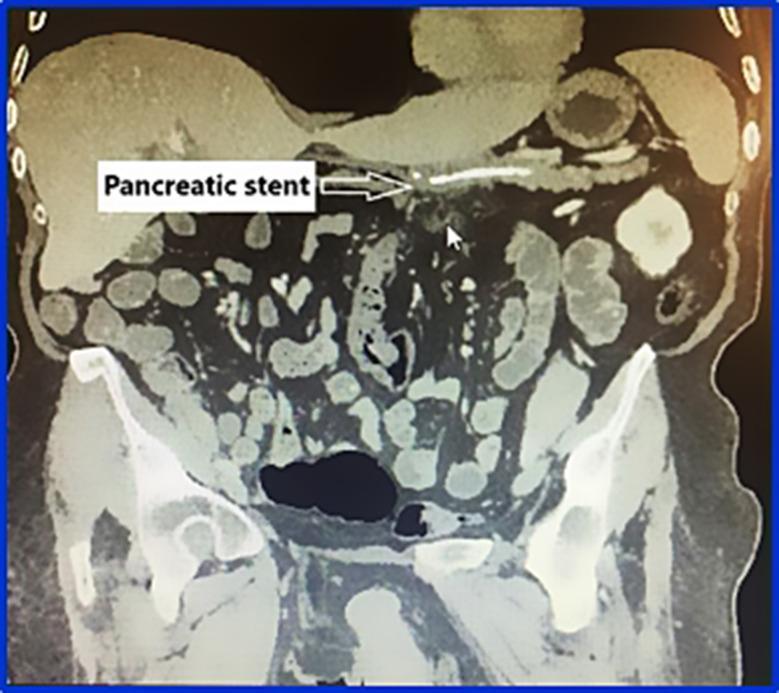
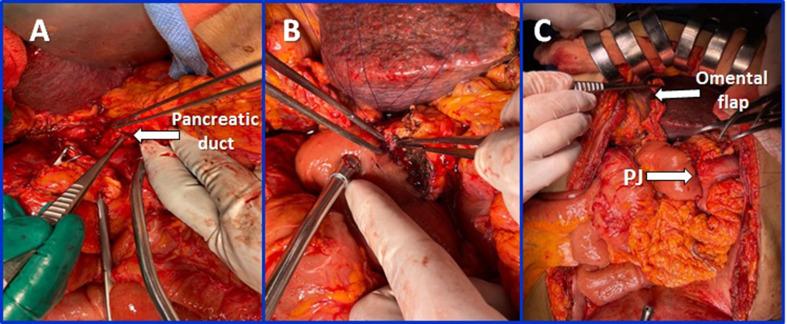
A leaking pancreaticojejunal anastomosis is typically the cause of major problems following pancreaticoduodenectomy. To stop fistula formation, omental flaps were positioned around the pancreaticojejunal anastomosis.
METHODS
Forty-eight individuals who had pancreaticoduodenectomy procedures performed between March 2022 and March 2024 were examined. Based on the placement of a stent and omental flaps around the pancreaticojejunal anastomosis, the patients were split into two groups: group A, consisting of twenty-four patients, did not get omental wrapping and stenting, and group B, consisting of twenty-four patients, received omental wrapping with stent inside the pancreaticojejunal anastomosis. To evaluate the efficacy of the omental flap operation in preventing postoperative pancreatic fistula and other complications, perioperative data from both groups was examined.
RESULTS
There were no discernible variations in the clinical traits of the two groups. Group B experienced considerably lower occurrences of postoperative pancreatic fistula (20.8% vs. 4.2%), post-pancreatectomy hemorrhage (4.2% vs. 0%), biliary fistula (4.2% vs. 0%), and delayed gastric emptying (12.5% vs. 4.2%). Group B had a considerably lower overall morbidity rate (41.7% vs. 8.3%) and shorter hospital stay (15.3 vs. 10.9 days) than to group A.
CONCLUSION
Following pancreaticoduodenectomy, pancreatic stent and omental flaps around the pancreatic anastomosis can lower the risk of postoperative pancreatic fistula, post-pancrectomy bleeding, and delayed gastric emptying. This straightforward and efficient treatment can decrease the overall morbidity following pancreaticoduodenectomy.
TRIAL REGISTRATION
The trial registration was recorded as ClinicalTrial.gov Identifier No.: NCT06630910 on 10/05/2024. Our study also adheres to the Declaration of Helsinki.
背景
胰肠吻合口漏通常是胰十二指肠切除术后出现重大问题的原因。为阻止瘘管形成,在胰肠吻合口周围放置了网膜瓣。
方法
对2022年3月至2024年3月期间接受胰十二指肠切除术的48例患者进行了检查。根据胰肠吻合口周围支架和网膜瓣的放置情况,将患者分为两组:A组24例患者,未进行网膜包裹和支架置入;B组24例患者,在胰肠吻合口内进行了带支架的网膜包裹。通过检查两组的围手术期数据,评估网膜瓣手术预防术后胰瘘及其他并发症的疗效。
结果
两组的临床特征没有明显差异。B组术后胰瘘(20.8%对4.2%)、胰十二指肠切除术后出血(4.2%对0%)、胆瘘(4.2%对0%)和胃排空延迟(12.5%对4.2%)的发生率显著更低。B组的总体发病率(41.7%对8.3%)明显低于A组,住院时间也更短(15.3天对10.9天)。
结论
胰十二指肠切除术后,胰肠吻合口周围的胰管支架和网膜瓣可降低术后胰瘘、胰十二指肠切除术后出血和胃排空延迟的风险。这种简单有效的治疗方法可降低胰十二指肠切除术后的总体发病率。
试验注册
该试验于2024年5月10日在ClinicalTrial.gov上注册,标识符为NCT06630910。我们的研究也遵循《赫尔辛基宣言》。
 Zotero 插件