
胰岛素输注量对儿科糖尿病酮症酸中毒结局的影响:回顾性观察研究
Effects of insulin infusion volume on diabetic ketoacidosis outcome in pediatrics: Retrospective observational study.
作者信息
Al Muqati Hessa, Alsmari Abeer, Alrahili Mohanned, AlJuraibah Fahad, Aldibasi Omar, Alsaleh Nada A
机构信息
Pharmaceutical Care Services, Ministry of the National Guard - Health Affairs, Riyadh, Saudi Arabia.
College of Pharmacy, King Saud bin Abdulaziz University for Health Sciences, Riyadh, Saudi Arabia.
出版信息
Medicine (Baltimore). 2025 May 9;104(19):e42453. doi: 10.1097/MD.0000000000042453.
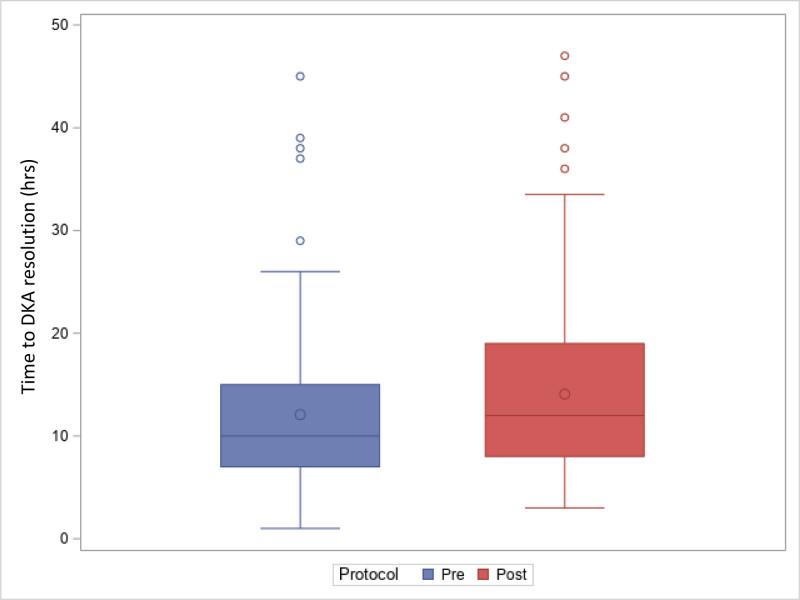
Diabetic ketoacidosis (DKA) poses a significant risk to diabetic pediatric patients, warranting effective management strategies to prevent complications. Current DKA management protocols often use normal saline for insulin infusion, which can contribute to hyperchloremia. This study aimed to compare the effects of 2 insulin concentrations (1 unit of regular human insulin per 1 mL vs 1 unit per 10 mL of 0.9% sodium chloride) on the incidence of hyperchloremic metabolic acidosis (HMA). A retrospective observational study was conducted on pediatric patients admitted to a large pediatric hospital, recognized as a leading provider of tertiary pediatric care in the region, from January 2018 to June 2023. The study compared preprotocol (1 unit/10 mL) and postprotocol (1 unit/1 mL) insulin concentrations. Data collected included demographics, DKA severity, electrolytes, intravenous fluid type, total volume, chloride load, and length of hospital stay. The study included 279 DKA admissions, with 140 preprotocol and 139 postprotocol cases. The postprotocol group had a higher incidence of new onset of type 1 diabetes cases. The incidence of HMA was 38% (53 patients) in the postprotocol group, compared with 43% (60 patients) in the preprotocol group, but this difference was not statistically significant (P = .365). Furthermore, the total chloride load per kg in the first 24 hours showed no statistical significance between the pre- and postgroups (mean 11 ± 5 and 11 ± 5, respectively; P = .665). Similarly, length of stay also showed no significant difference between the pre- and postprotocol groups (mean 3 ± 2 vs 4 ± 3, respectively; P = .102). This study examines the comparative effectiveness of 2 insulin concentrations in DKA treatment. Changing insulin concentrations did not influence the incidence of HMA.
糖尿病酮症酸中毒(DKA)对糖尿病儿童患者构成重大风险,因此需要有效的管理策略来预防并发症。目前的DKA管理方案通常使用生理盐水进行胰岛素输注,这可能会导致高氯血症。本研究旨在比较两种胰岛素浓度(每1毫升含1单位普通胰岛素与每10毫升0.9%氯化钠溶液含1单位胰岛素)对高氯性代谢性酸中毒(HMA)发生率的影响。对一家大型儿童医院收治的儿科患者进行了一项回顾性观察研究,该医院是该地区三级儿科护理的主要提供者,研究时间为2018年1月至2023年6月。该研究比较了方案前(1单位/10毫升)和方案后(1单位/1毫升)的胰岛素浓度。收集的数据包括人口统计学信息、DKA严重程度、电解质、静脉输液类型、总量、氯负荷和住院时间。该研究纳入了279例DKA入院病例,其中方案前病例140例,方案后病例139例。方案后组1型糖尿病新发病例的发生率较高。方案后组HMA的发生率为38%(53例患者),方案前组为43%(60例患者),但这种差异无统计学意义(P = 0.365)。此外,前组和后组在前24小时每千克的总氯负荷无统计学差异(分别为平均11±5和11±5;P = 0.665)。同样,方案前组和方案后组的住院时间也无显著差异(分别为平均3±2天和4±3天;P = 0.102)。本研究考察了两种胰岛素浓度在DKA治疗中的比较效果。改变胰岛素浓度并未影响HMA的发生率。
 Zotero 插件