
m6A在癌症转移中的调控作用。
The regulatory role of m6A in cancer metastasis.
作者信息
Zhou Ying, Cao Peng, Zhu Qing
机构信息
Division of Abdominal Tumor Multimodality Treatment, Cancer Center, West China Hospital, Sichuan University, Chengdu, China.
Department of Colorectal Cancer Center, West China Hospital, Sichuan University, Chengdu, China.
出版信息
Front Cell Dev Biol. 2025 Apr 28;13:1539678. doi: 10.3389/fcell.2025.1539678. eCollection 2025.
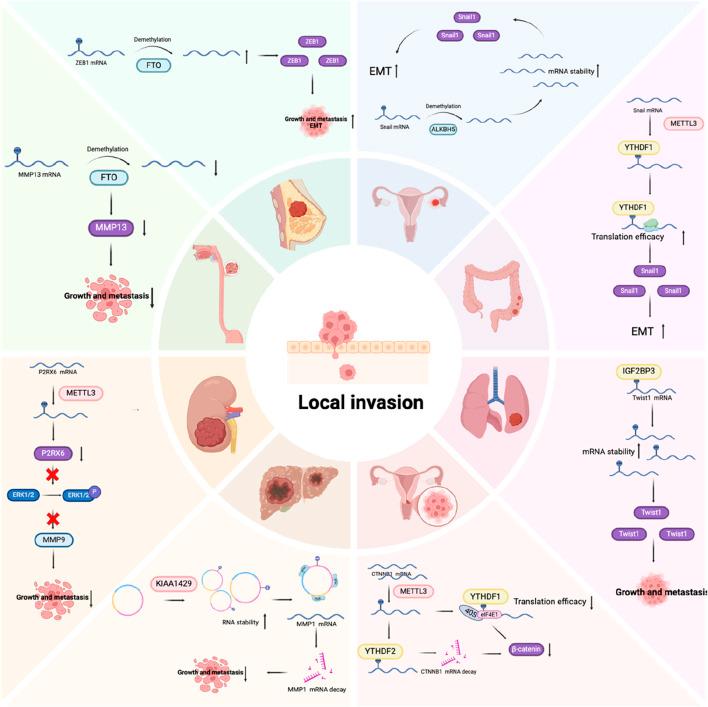
Metastasis remains a primary cause of cancer-related mortality, with its intricate mechanisms continuing to be uncovered through advancing research. Among the various regulatory processes involved, RNA modification has emerged as a critical epitranscriptomic mechanism influencing cancer metastasis. N6-methyladenosine (m6A), recognized as one of the most prevalent and functionally significant RNA modifications, plays a central role in the regulation of RNA metabolism. In this review, we explore the multifaceted role of m6A in the different stages of cancer metastasis, including epithelial-mesenchymal transition, invasion, migration, and colonization. In addition to summarizing the current state of our understanding, we offer insights into how m6A modifications modulate key oncogenic pathways, highlighting the implications of recent discoveries for therapeutic interventions. Furthermore, we critically assess the limitations of previous studies and propose areas for future research, including the potential for targeting m6A as a novel approach in anti-metastatic therapies. Our analysis provides a comprehensive understanding of the regulatory landscape of m6A in metastasis, offering directions for continued exploration in this rapidly evolving field.
转移仍然是癌症相关死亡的主要原因,随着研究的不断推进,其复杂机制也在不断被揭示。在涉及的各种调控过程中,RNA修饰已成为影响癌症转移的关键表观转录组学机制。N6-甲基腺苷(m6A)被认为是最普遍且功能上最重要的RNA修饰之一,在RNA代谢调控中起核心作用。在本综述中,我们探讨了m6A在癌症转移不同阶段的多方面作用,包括上皮-间质转化、侵袭、迁移和定植。除了总结我们目前的理解状态外,我们还深入探讨了m6A修饰如何调节关键致癌途径,强调了近期发现对治疗干预的意义。此外,我们批判性地评估了先前研究的局限性,并提出了未来研究的方向,包括将靶向m6A作为抗转移治疗新方法的潜力。我们的分析全面理解了m6A在转移中的调控格局,为在这个快速发展的领域继续探索提供了方向。




 Zotero 插件