
氯仿暴露与白血病风险:系统评价与荟萃分析
Chloroform exposure and risk of leukemia: systematic review and meta-analysis.
作者信息
Soleimani Yaser, Mahmoudi Sheyda, Daraei Mahdi, Aryanejad Ali, Sani Ali Hosseini, Khazali Alireza, Khorsand Soroush, Mahdavi Mohammadreza, Sabeti Setareh, Sadeghi Hamid, Shahsavari Mohammad Javad, Varseh Mahdieh, Karamian Saeideh, Mosavi Jarrahi Alireza, Taherian Mohammad Reza, Jorjani Goljamal
机构信息
Medical School, Shahid Beheshti University of Medical Sciences, Tehran, Iran.
Student Research Committee, Khomein University of Medical Sciences, Khomein, Iran.
出版信息
Front Public Health. 2025 Apr 28;13:1491075. doi: 10.3389/fpubh.2025.1491075. eCollection 2025.
OBJECTIVES
The aim of this systematic review and meta-analysis was to evaluate the association between chloroform exposure and the risk of leukemia, quantify the overall risk, and identify potential sources of heterogeneity among different leukemia subtypes.
METHODS
A comprehensive literature search was conducted across PubMed, Web of Science, and Scopus to identify relevant epidemiological studies published up to December 2023. Inclusion criteria focused on human studies that assessed chloroform exposure and reported leukemia incidence or mortality. Data were extracted and analyzed using random-effects models to calculate pooled odds ratios (ORs) with 95% confidence intervals (CIs). Heterogeneity was assessed using I, τ, and Cochran's Q test. Publication bias was evaluated using Begg's test.
RESULTS
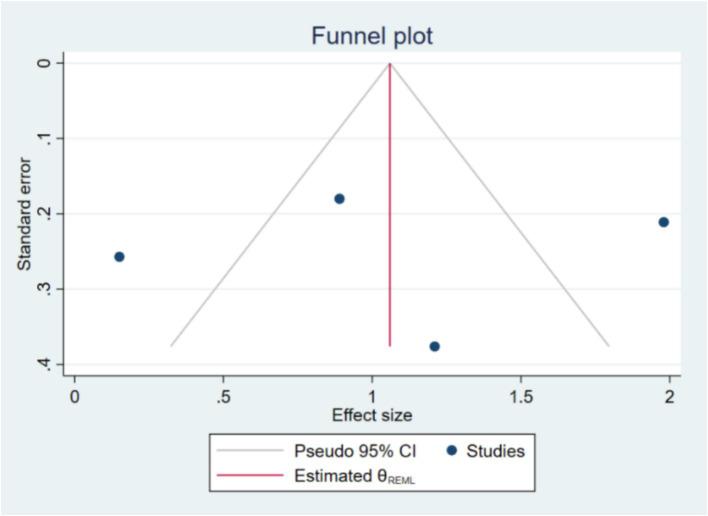
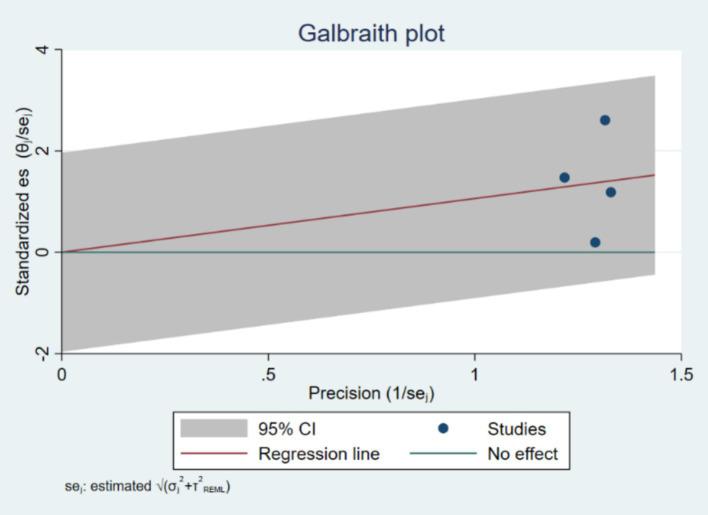
Four case-control studies were included, spanning publication years from 2001 to 2023, with sample sizes ranging from 67 to 31,292 participants. The overall pooled OR for the association between chloroform exposure and leukemia was 0.75 (95% CI: 0.25-2.27), indicating no statistically significant association. However, substantial heterogeneity was observed (I = 95%). Begg's test showed no significant publication bias ( = 1.0000).
CONCLUSION
This systematic review and meta-analysis did not find a significant overall association between chloroform exposure and leukemia risk. The significant association observed for AML suggests that chloroform exposure might increase the risk of this specific subtype, while the reduced risk for CLL warrants further investigation. The high heterogeneity underscores the need for standardized methodologies and further research to clarify these associations, particularly focusing on different leukemia subtypes, exposure levels, and population characteristics. These findings can inform public health policies and targeted prevention strategies to mitigate potential risks associated with chloroform exposure.
CLINICAL TRIAL REGISTRATION/SYSTEMATIC REVIEW REGISTRATION: https://www.waocp.com/journal/index.php/apjec/article/view/1283.
目的
本系统评价和荟萃分析旨在评估氯仿暴露与白血病风险之间的关联,量化总体风险,并确定不同白血病亚型之间潜在的异质性来源。
方法
在PubMed、科学网和Scopus上进行了全面的文献检索,以识别截至2023年12月发表的相关流行病学研究。纳入标准侧重于评估氯仿暴露并报告白血病发病率或死亡率的人体研究。使用随机效应模型提取和分析数据,以计算合并比值比(OR)及95%置信区间(CI)。使用I²、τ²和Cochrane Q检验评估异质性。使用Begg检验评估发表偏倚。
结果
纳入了四项病例对照研究,发表年份从2001年至2023年,样本量从67名至31292名参与者不等。氯仿暴露与白血病之间关联的总体合并OR为0.75(95%CI:0.25 - 2.27),表明无统计学显著关联。然而,观察到显著的异质性(I² = 95%)。Begg检验显示无显著发表偏倚(P = 1.0000)。
结论
本系统评价和荟萃分析未发现氯仿暴露与白血病风险之间存在显著的总体关联。急性髓系白血病(AML)观察到的显著关联表明氯仿暴露可能增加该特定亚型的风险,而慢性淋巴细胞白血病(CLL)风险降低值得进一步研究。高度异质性强调需要标准化方法和进一步研究以阐明这些关联,特别是关注不同白血病亚型、暴露水平和人群特征。这些发现可为公共卫生政策和针对性预防策略提供参考,以减轻与氯仿暴露相关的潜在风险。
临床试验注册/系统评价注册:https://www.waocp.com/journal/index.php/apjec/article/view/1283 。


 Zotero 插件