
通过对蛋白质结构进行系统的重新评估来揭示精氨酸-半胱氨酸和甘氨酸-半胱氨酸一氧化氮合酶连接
Revealing arginine-cysteine and glycine-cysteine NOS linkages by a systematic re-evaluation of protein structures.
作者信息
Bazzi Sophia, Sayyad Sharareh
机构信息
Institute of Physical Chemistry, Georg-August University Göttingen, Tammannstraße 6, Göttingen, D-37077, Germany.
Department of Mathematics and Statistics, Washington State University, Pullman, WA, 99164-3113, USA.
出版信息
Commun Chem. 2025 May 13;8(1):146. doi: 10.1038/s42004-025-01535-w.
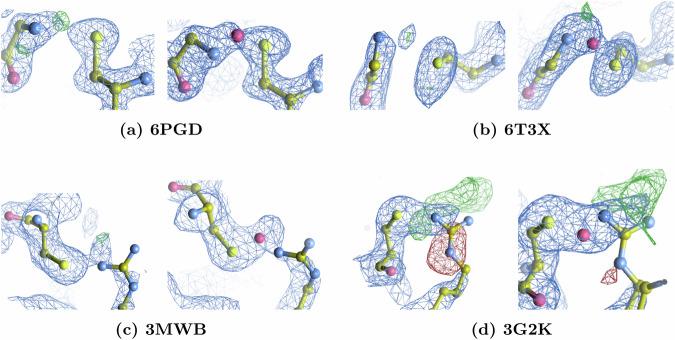
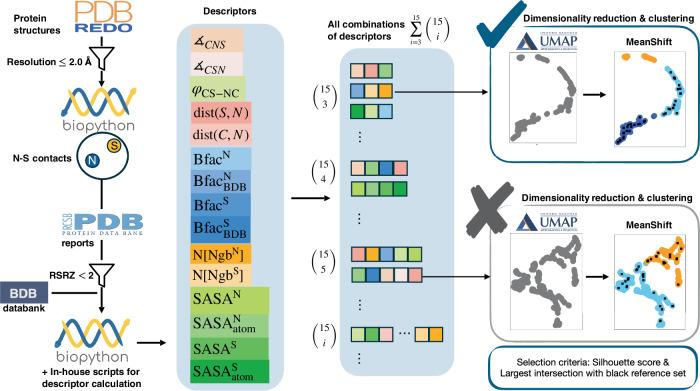
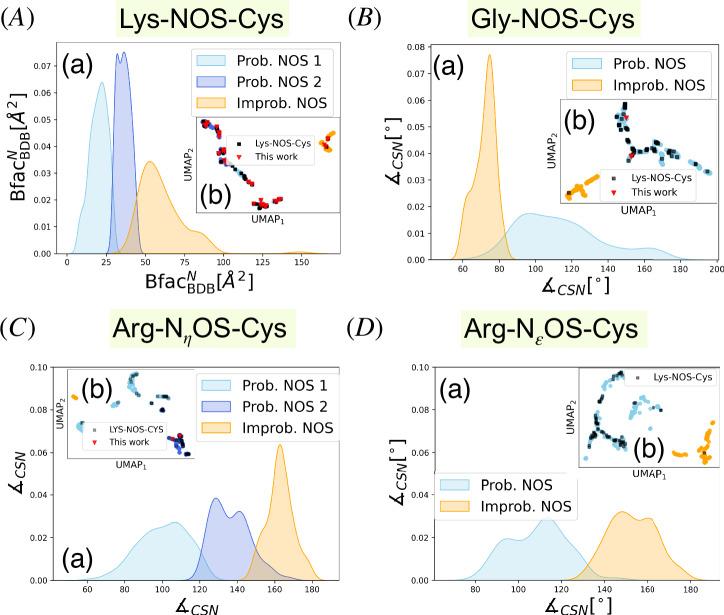
Nitrogen-oxygen-sulfur (NOS) linkages act as allosteric redox switches, modulating enzymatic activity in response to redox fluctuations. While NOS linkages in proteins were once assumed to occur only between lysine and cysteine, our investigation shows that these bonds extend beyond the well-studied lysine-NOS-cysteine examples. By systematically analyzing over 86,000 high-resolution X-ray protein structures, we uncovered 69 additional NOS bonds, including arginine-NOS-cysteine and glycine-NOS-cysteine. Our pipeline integrates machine learning, quantum-mechanical calculations, and high-resolution X-ray crystallographic data to systematically detect these subtle covalent interactions and identify key predictive descriptors for their formation. The discovery of these previously unrecognized linkages broadens the scope of protein chemistry and may enable targeted modulation in drug design and protein engineering. Although our study focuses on NOS linkages, the flexibility of this methodology allows for the investigation of a wide range of chemical bonds and covalent modifications, including structurally resolvable posttranslational modifications (PTMs). By revisiting and re-examining well-established protein models, this work underscores how systematic data-driven approaches can uncover hidden aspects of protein chemistry and inspire deeper insights into protein function and stability.
氮-氧-硫(NOS)键作为变构氧化还原开关,响应氧化还原波动调节酶活性。虽然蛋白质中的NOS键曾被认为仅存在于赖氨酸和半胱氨酸之间,但我们的研究表明,这些键的范围超出了研究充分的赖氨酸-NOS-半胱氨酸实例。通过系统分析超过86,000个高分辨率X射线蛋白质结构,我们发现了另外69个NOS键,包括精氨酸-NOS-半胱氨酸和甘氨酸-NOS-半胱氨酸。我们的流程整合了机器学习、量子力学计算和高分辨率X射线晶体学数据,以系统地检测这些微妙的共价相互作用,并确定其形成的关键预测描述符。这些先前未被识别的键的发现拓宽了蛋白质化学的范围,并可能在药物设计和蛋白质工程中实现靶向调节。尽管我们的研究聚焦于NOS键,但这种方法的灵活性允许研究广泛的化学键和共价修饰,包括结构上可解析的翻译后修饰(PTM)。通过重新审视和重新检查已确立的蛋白质模型,这项工作强调了系统的数据驱动方法如何能够揭示蛋白质化学中隐藏的方面,并激发对蛋白质功能和稳定性更深入的见解。

 Zotero 插件