
1992年至2021年金砖国家多发性骨髓瘤发病率和死亡率的时间趋势及到2046年的预测。
Time trends in multiple myeloma incidence and mortality across the BRICS from 1992 to 2021 and projection to 2046.
作者信息
Zhang Heng, Yao Yuqian, Zhang Xiaoqian, Ji Xiaohui, Wu Tianhao, Wang Jiali, Fang Yongjun
机构信息
Department of Hematology and Oncology, Children's Hospital of Nanjing Medical University, Nanjing, 210008, China.
Department of Pediatrics, The First People's Hospital of Lianyungang, Lianyungang, 222002, China.
出版信息
BMC Public Health. 2025 May 13;25(1):1765. doi: 10.1186/s12889-025-22688-2.
OBJECTIVE
This study evaluates the long-term trends in Multiple Myeloma (MM) incidence, mortality, and Age-Period-Cohort (APC) effects in the BRICS nations (Brazil, Russia, India, China, and South Africa).
METHODS
Data on age-standardized incidence rate (ASIR), age-standardized mortality rate (ASMR), and 95% uncertainty intervals (UIs), were obtained from the Global Burden of Disease Study 2021. Joinpoint regression model was used to estimate the average annual percentage change (AAPC) and annual percentage change (APC) trends from 1992 to 2021, and the Age-Period-Cohort model evaluated nonlinear impacts of age, period, and cohort effects. Projections to 2046 were calculated using Bayesian APC modeling.
RESULTS
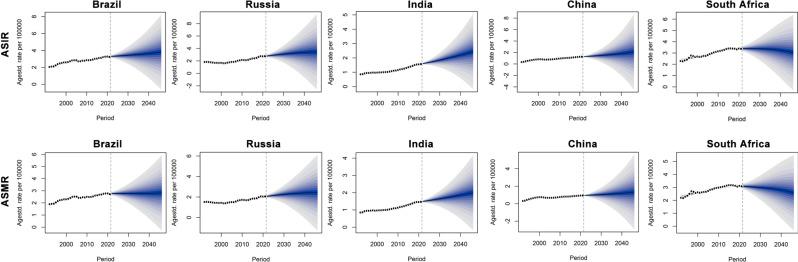
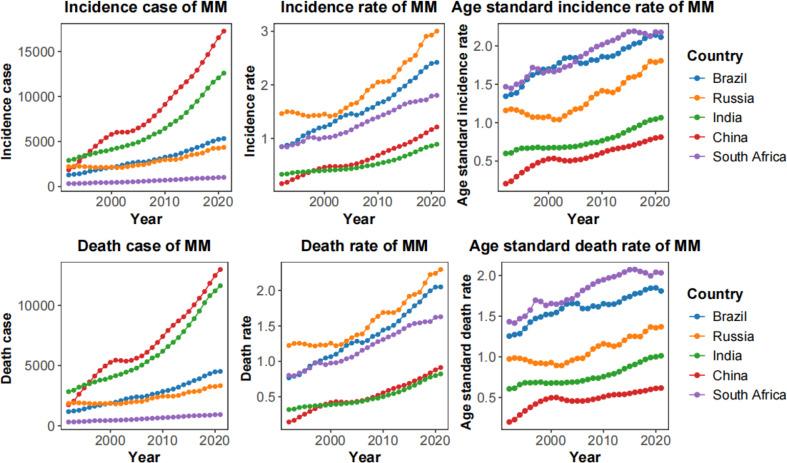
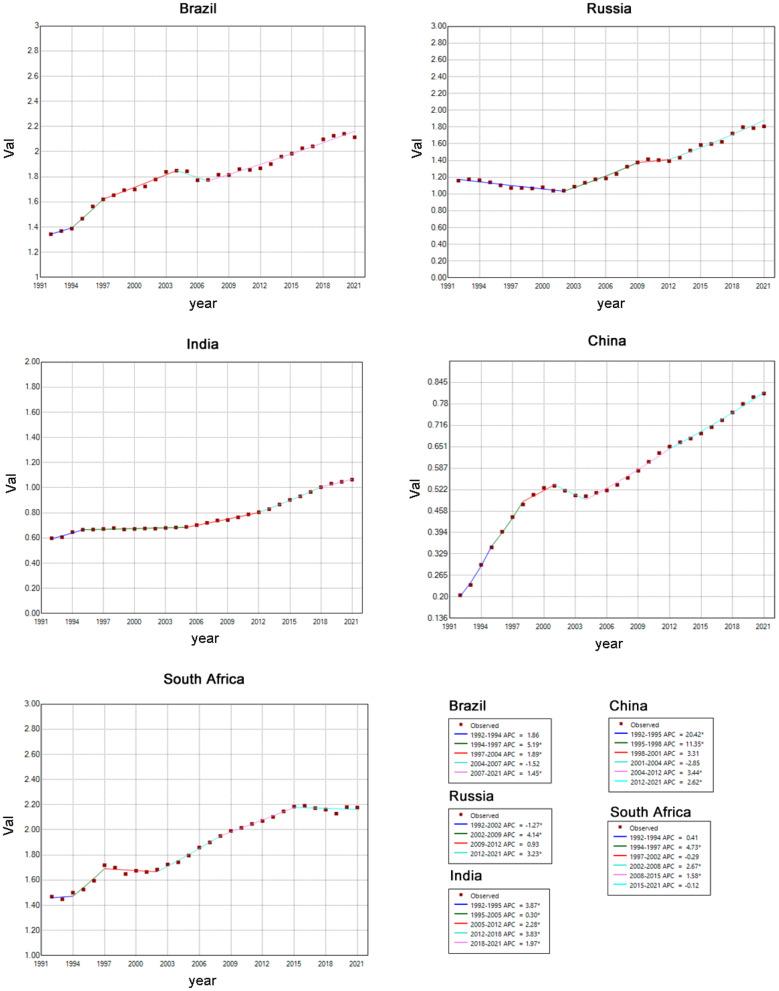
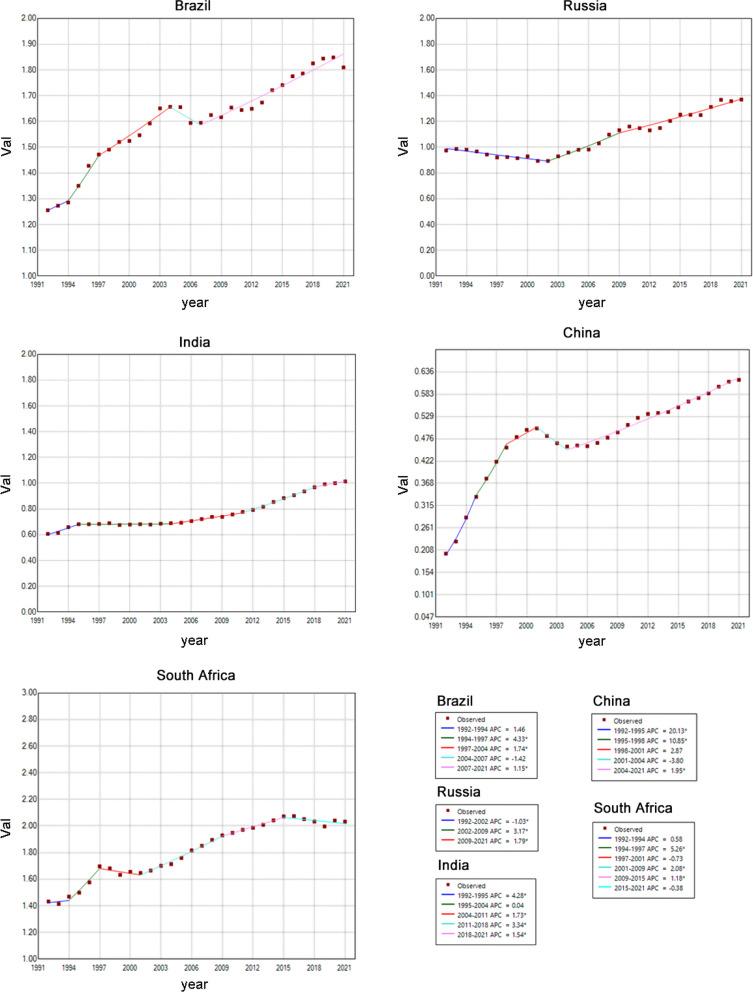
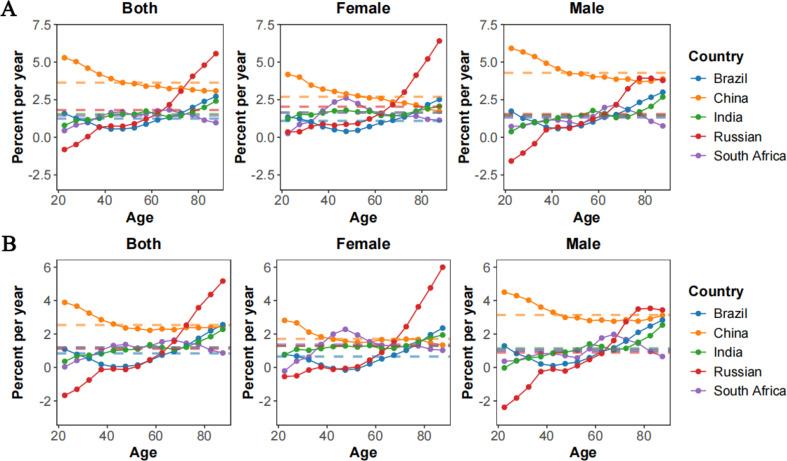
From 1992 to 2021, MM incidence and death cases in the BRICS nations increased nearly four to fivefold, with ASIR and ASMR nearly doubling. China and India had lower ASIR and ASMR than other BRICS countries despite accounting for over half of cases and deaths. South Africa consistently had the highest ASIR and ASMR in both 1992 and 2021. China experienced a significant increase in ASIR (AAPC 4.92%, p < 0.001) and ASMR (AAPC 4.07%, p < 0.001) over the past three decades. MM incidence and mortality increased with aging, and the age effect on MM was more pronounced among individuals aged greater than 40 years. Birth cohorts' impact on MM varied greatly between BRICS, with China suffering the largest risk increase among those born after the 1970s. Projections indicate ASIR and ASMR will reach 2.44 and 1.82 per 100,000 by 2046, continuing to rise across the BRICS nations.
CONCLUSIONS
MM burden is rapidly increasing in the BRICS, closely tied to population aging. Targeted strategies addressing each country's unique challenges are essential as the burden continues to grow.
目的
本研究评估金砖国家(巴西、俄罗斯、印度、中国和南非)多发性骨髓瘤(MM)的发病率、死亡率的长期趋势以及年龄-时期-队列(APC)效应。
方法
年龄标准化发病率(ASIR)、年龄标准化死亡率(ASMR)及95%不确定性区间(UI)的数据来自《2021年全球疾病负担研究》。采用Joinpoint回归模型估计1992年至2021年的平均年度百分比变化(AAPC)和年度百分比变化(APC)趋势,年龄-时期-队列模型评估年龄、时期和队列效应的非线性影响。使用贝叶斯APC模型计算至2046年的预测值。
结果
1992年至2021年,金砖国家的MM发病率和死亡病例增加了近四至五倍,ASIR和ASMR几乎翻了一番。尽管中国和印度的病例和死亡人数占总数的一半以上,但其ASIR和ASMR低于其他金砖国家。南非在1992年和2021年的ASIR和ASMR始终最高。在过去三十年中,中国的ASIR(AAPC 4.92%,p<0.001)和ASMR(AAPC 4.07%,p<0.001)显著增加。MM发病率和死亡率随年龄增长而上升,年龄对MM的影响在40岁以上人群中更为明显。出生队列对MM的影响在金砖国家之间差异很大,中国70年代后出生的人群风险增加最大。预测表明,到2046年,金砖国家的ASIR和ASMR将分别达到每10万人2.44和1.82,且将继续上升。
结论
金砖国家的MM负担正在迅速增加,这与人口老龄化密切相关。随着负担持续加重,针对各国独特挑战制定有针对性的策略至关重要。


 Zotero 插件