
急性应激与自身免疫标志物:评估消防员新兵的心理神经免疫学轴
Acute Stress and Autoimmune Markers: Evaluating the Psychoneuroimmunology Axis in Firefighter Recruits.
作者信息
Schmitt Andrea, Andrews Nathan, Yasuda Krista, Hodge Mitchell, Ryznar Rebecca
机构信息
College of Osteopathic Medicine, Rocky Vista University, Englewood, CO 80112, USA.
Department of Biomedical Sciences, College of Osteopathic Medicine, Rocky Vista University, Englewood, CO 80112, USA.
出版信息
Int J Mol Sci. 2025 Apr 22;26(9):3945. doi: 10.3390/ijms26093945.
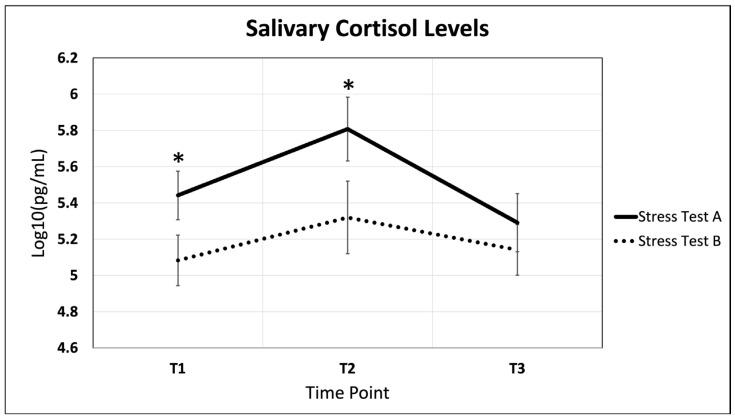
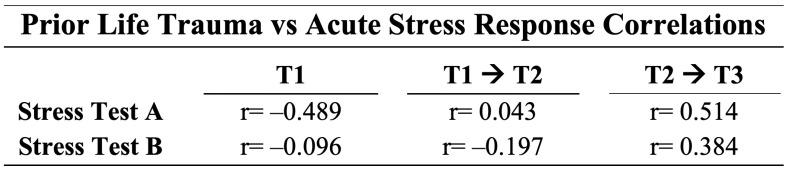
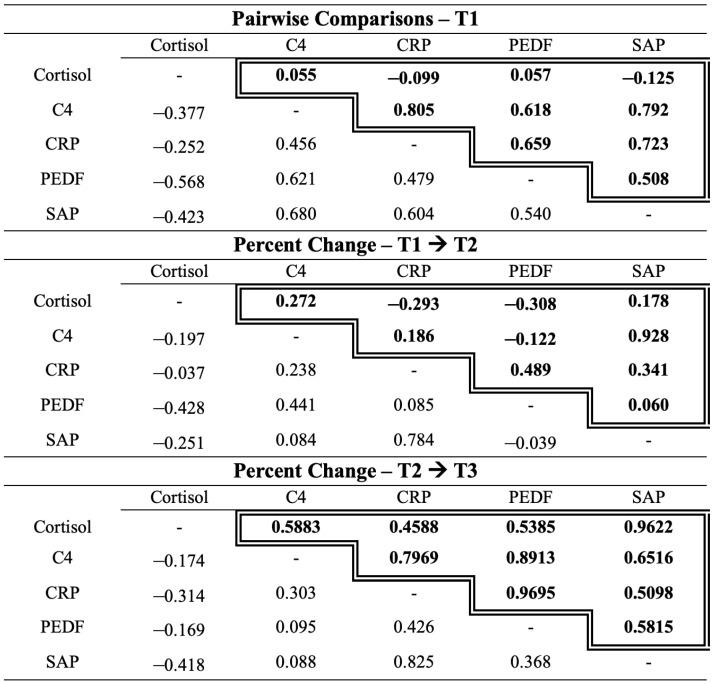
Chronic psychological stress is known to influence immune function and contribute to development of autoimmune disorders through dysregulated inflammatory responses. This study investigates relationships between acute stress, life trauma, and autoimmune salivary biomarkers in firefighter recruits during psychophysical stress training. Salivary samples were collected from firefighter recruits during two stress tests to evaluate responses to acute stress. Samples were obtained at three time points-pre-stress, post-stress, and recovery-across both tests. Cortisol was measured to characterize acute stress response (ASR) profiles, while immune function was assessed through the analyzing C-reactive Protein (CRP), Complement C4 (C4), Pigment Epithelium Derived Factor (PEDF), and Serum Amyloid P (SAP). Results showed significant changes in CRP, C4, and PEDF after stress inoculation. Higher previous life trauma was associated with lower baseline cortisol (r = -0.489) and delay in cortisol recovery (r = 0.514), suggesting a learned biological response, potentially protective against stress-induced dysregulation. Cluster analysis revealed four distinct cortisol ASR profiles which were found to have significantly different past life trauma ( = 0.031). These findings suggest that trauma history influences stress biomarker dynamics, potentially reflecting individualized adaptive or maladaptive responses. The insights gained may inform strategies to enhance stress resilience and mitigate autoimmune risk among high-stress populations.
已知慢性心理压力会影响免疫功能,并通过炎症反应失调导致自身免疫性疾病的发展。本研究调查了消防员新兵在心理生理压力训练期间急性应激、生活创伤与自身免疫性唾液生物标志物之间的关系。在两次压力测试期间从消防员新兵中收集唾液样本,以评估对急性应激的反应。在两次测试的三个时间点(应激前、应激后和恢复)采集样本。测量皮质醇以表征急性应激反应(ASR)概况,同时通过分析C反应蛋白(CRP)、补体C4(C4)、色素上皮衍生因子(PEDF)和血清淀粉样蛋白P(SAP)来评估免疫功能。结果显示,应激接种后CRP、C4和PEDF有显著变化。既往生活创伤较高与较低的基线皮质醇(r = -0.489)和皮质醇恢复延迟(r = 0.514)相关,表明这是一种习得的生物学反应,可能对压力诱导的失调具有保护作用。聚类分析揭示了四种不同的皮质醇ASR概况,发现它们的既往生活创伤有显著差异(P = 0.031)。这些发现表明,创伤史会影响应激生物标志物的动态变化,可能反映出个体的适应性或适应不良反应。所获得的见解可能为增强高压力人群的应激恢复力和降低自身免疫风险的策略提供信息。


 Zotero 插件