
桑椹异戊烯基黄酮桑根酮D/库瓦诺酮G对α-葡萄糖苷酶的抑制机制及通过GLUT4途径对葡萄糖的调节作用
Inhibition Mechanism of Mulberry Prenylated Flavonoids Sanggenone D/Kuwanon G Against α-Glucosidase and the Regulation of Glucose via GLUT4 Pathway.
作者信息
Wu Erwen, Zhu Yanqing, Wei Qingyi, Lu Huijie, Zou Yuxiao, Liu Fan, Li Qian
机构信息
Key Laboratory of Functional Foods, Ministry of Agriculture and Rural Affairs, Guangdong Key Laboratory of Agricultural Products Processing; Sericultural & Agri-Food Research Institute, Guangdong Academy of Agricultural Sciences, Guangzhou 510610, China.
School of Food Science and Engineering, South China University of Technology, Guangzhou 510640, China.
出版信息
Nutrients. 2025 Apr 30;17(9):1539. doi: 10.3390/nu17091539.
BACKGROUND
Inhibition of α-glucosidase activity is recognized as an effective strategy for managing type 2 diabetes.
METHODS
The inhibitory mechanisms of two kinds of mulberry flavonoids, namely sanggenone D and kuwanon G, on α-glucosidase were investigated and the hypoglycemic pathways were explored in the current study.
RESULTS
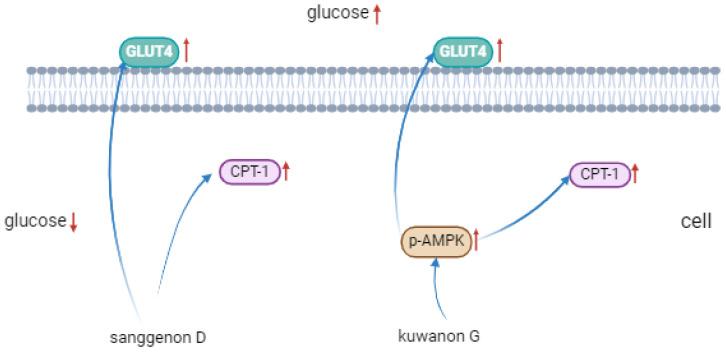
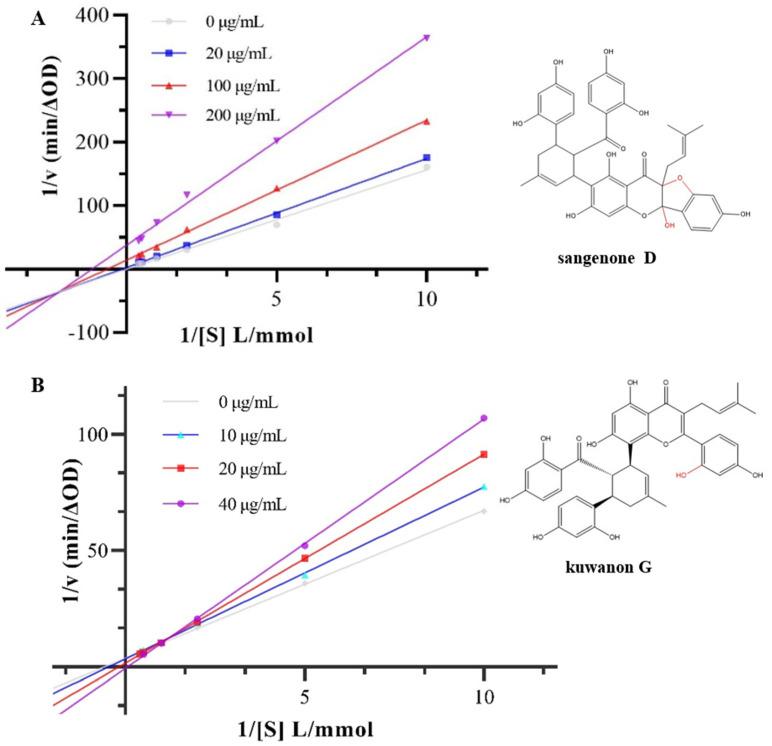
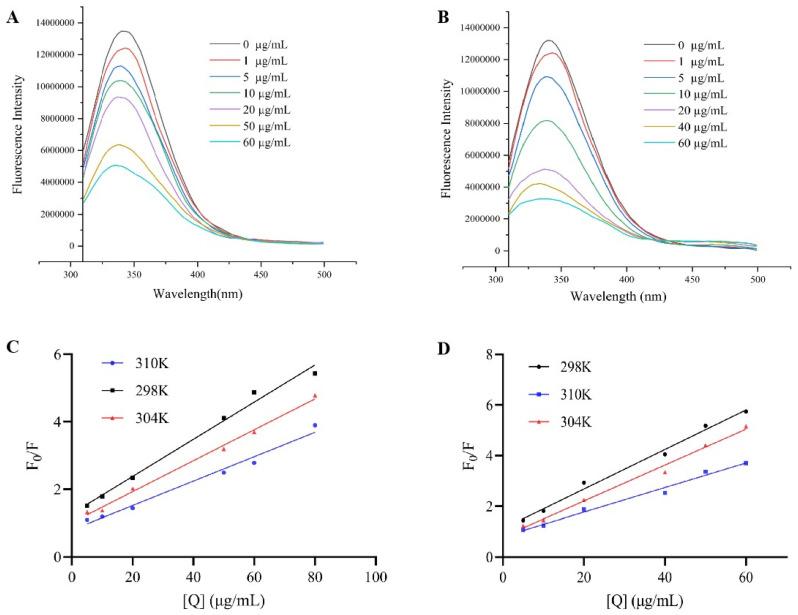
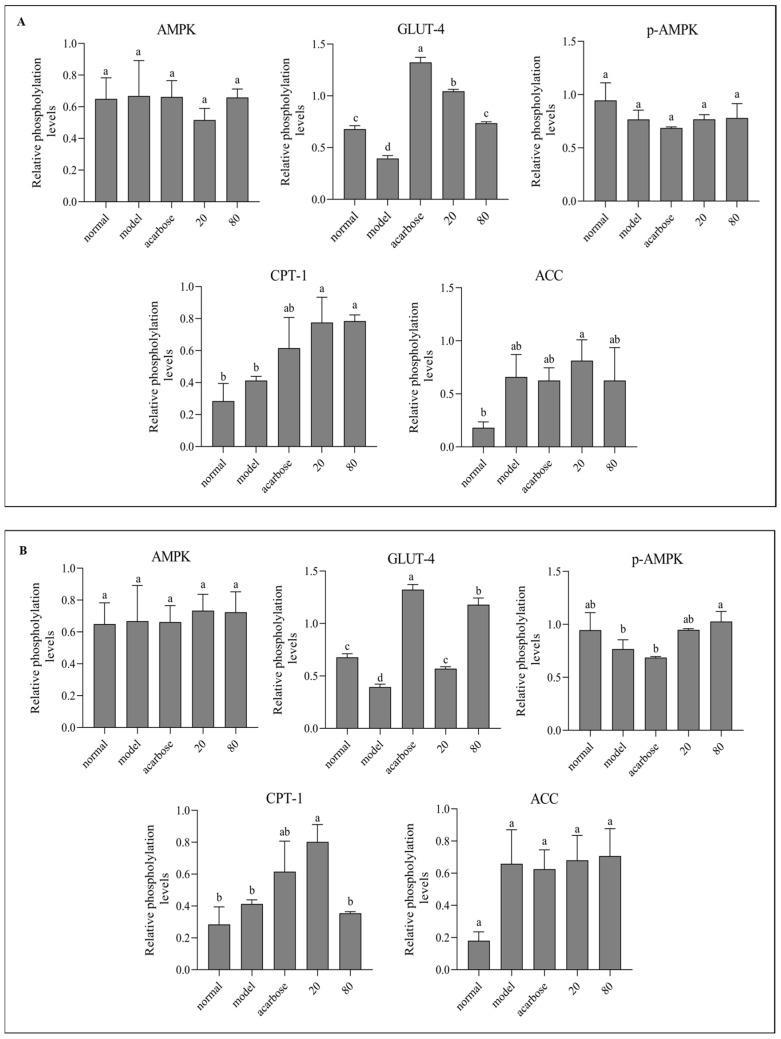
The outcomes indicate that sanggenone D (IC: 4.51 × 10 mol/L) and kuwanon G (IC: 3.83 × 10 mol/L) inhibited α-glucosidase activity by non-competition/anti-competition mixed inhibition and competitive inhibition, respectively. Moreover, the secondary structure of α-glucosidase was altered by static quenching and exhibited a decrease in α-helix and β-antiparallel content, and an increase in β-sheet content. Furthermore, the interaction forces between sanggenone D/kuwanon G and α-glucosidase were hydrophobic interactions and hydrogen bonds, as evidenced by molecular docking. The binding affinity, stability, and binding energy aligned with the results of IC. Notably, the cyclization in sanggenone D structure resulted in a decrease in the number of phenolic hydroxyl groups and thus a reduction in the formation of hydrogen bonds, which ultimately diminished the binding affinity of sanggenone D to α-glucosidase. In addition, Western blot analysis further indicated that sanggenone D and kuwanon G regulated glucose metabolism by activating the GLUT4 pathway.
CONCLUSIONS
The results provided useful reference for the application of sanggenone D and kuwanon G in hypoglycemic functional components.
背景
抑制α-葡萄糖苷酶活性被认为是治疗2型糖尿病的有效策略。
方法
本研究考察了桑根酮D和桑皮呋喃G这两种桑黄酮对α-葡萄糖苷酶的抑制机制,并探索了其降血糖途径。
结果
结果表明,桑根酮D(IC:4.51×10 mol/L)和桑皮呋喃G(IC:3.83×10 mol/L)分别通过非竞争性/反竞争性混合抑制和竞争性抑制来抑制α-葡萄糖苷酶活性。此外,α-葡萄糖苷酶的二级结构通过静态猝灭发生改变,α-螺旋和β-反平行含量降低,β-折叠含量增加。此外,分子对接表明,桑根酮D/桑皮呋喃G与α-葡萄糖苷酶之间的相互作用力为疏水相互作用和氢键。结合亲和力、稳定性和结合能与IC结果一致。值得注意的是,桑根酮D结构中的环化导致酚羟基数量减少,从而减少了氢键的形成,最终降低了桑根酮D与α-葡萄糖苷酶的结合亲和力。此外,蛋白质免疫印迹分析进一步表明,桑根酮D和桑皮呋喃G通过激活GLUT4途径调节葡萄糖代谢。
结论
该结果为桑根酮D和桑皮呋喃G在降血糖功能成分中的应用提供了有益参考。




 Zotero 插件