
昼夜节律紊乱、褪黑素与神经退行性疾病之间的分子联系:最新综述
Molecular Links Between Circadian Rhythm Disruption, Melatonin, and Neurodegenerative Diseases: An Updated Review.
作者信息
Baser Kemal Hüsnü Can, Haskologlu Ismail Celil, Erdag Emine
机构信息
Department of Pharmacognosy, Faculty of Pharmacy, Near East University, 99138 Nicosia, Cyprus.
Department of Pharmacology, Faculty of Pharmacy, Near East University, 99138 Nicosia, Cyprus.
出版信息
Molecules. 2025 Apr 23;30(9):1888. doi: 10.3390/molecules30091888.
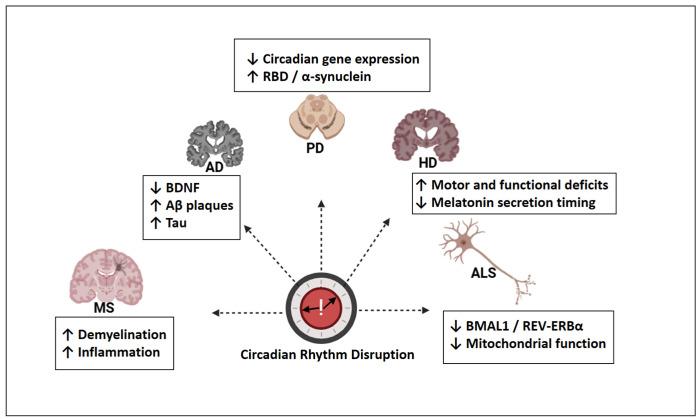
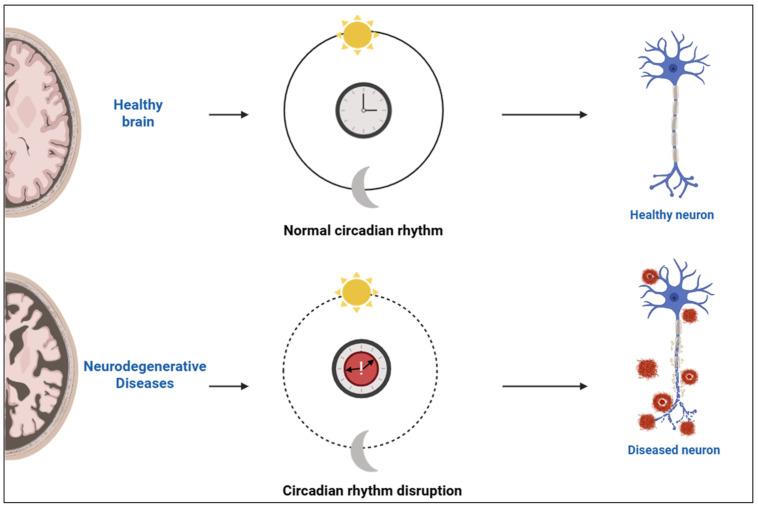
Circadian rhythms are molecular oscillations governed by transcriptional-translational feedback loops (TTFLs) operating in nearly all cell types and are fundamental to physiological homeostasis. Key circadian regulators, such as circadian locomotor output cycles kaput (CLOCK), brain and muscle ARNT-like 1 (), period (), and cryptochrome () gene families, regulate intracellular metabolism, oxidative balance, mitochondrial function, and synaptic plasticity. Circadian disruption is known as a central contributor to the molecular pathophysiology of neurodegenerative disorders. Disease-specific disruptions in clock gene expression and melatoninergic signaling are known as potential early-stage molecular biomarkers. Melatonin, a neurohormone secreted by the pineal gland, modulates clock gene expression, mitochondrial stability, and inflammatory responses. It also regulates epigenetic and metabolic processes through nuclear receptors and metabolic regulators involved in circadian and cellular stress pathways, thereby exerting neuroprotective effects and maintaining neuronal integrity. This review provides recent findings from the past five years, highlighting how circadian dysregulation mediates key molecular and cellular disturbances and the translational potential of circadian-based therapies in neurodegenerative diseases.
昼夜节律是由几乎在所有细胞类型中运行的转录-翻译反馈环(TTFLs)控制的分子振荡,对生理稳态至关重要。关键的昼夜节律调节因子,如昼夜节律运动输出周期失效蛋白(CLOCK)、脑和肌肉芳香烃受体核转位蛋白样蛋白1(BMAL1)、周期蛋白(PER)和隐花色素(CRY)基因家族,调节细胞内代谢、氧化平衡、线粒体功能和突触可塑性。昼夜节律紊乱是神经退行性疾病分子病理生理学的主要促成因素。时钟基因表达和褪黑素能信号通路中特定疾病的紊乱被认为是潜在的早期分子生物标志物。褪黑素是一种由松果体分泌的神经激素,可调节时钟基因表达、线粒体稳定性和炎症反应。它还通过参与昼夜节律和细胞应激途径的核受体和代谢调节因子调节表观遗传和代谢过程,从而发挥神经保护作用并维持神经元完整性。本综述提供了过去五年的最新研究结果,强调了昼夜节律失调如何介导关键的分子和细胞紊乱,以及基于昼夜节律的疗法在神经退行性疾病中的转化潜力。


 Zotero 插件