
钙信号传导控制着……早期生物膜的形成与扩散。 (原句中“in”后面缺少具体内容)
Calcium signaling controls early stage biofilm formation and dispersal in .
作者信息
Esin Jeremy J, Visick Karen L, Kroken Abby R
机构信息
Department of Microbiology and Immunology, Loyola University Chicago, Maywood, Illinois, USA.
出版信息
J Bacteriol. 2025 Jun 24;207(6):e0007725. doi: 10.1128/jb.00077-25. Epub 2025 May 14.
UNLABELLED
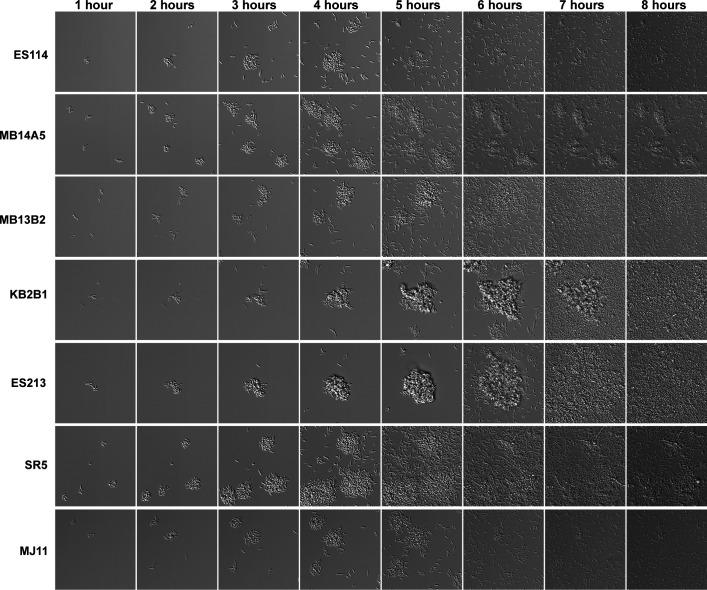
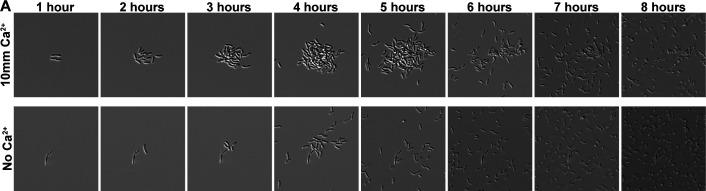
Bacterial dispersal from a biofilm is presently the least-studied step of the biofilm life cycle. The symbiotic bacterial species is a model organism for studying biofilms relevant to a eukaryotic host; however, methodology is lacking to readily study the dispersal of this microbe from biofilms formed in the lab. Here, we adapted a time-lapse assay to visualize biofilm dispersal by . We observed biofilm formation and dispersal for multiple isolates, which displayed a variety of biofilm architecture phenotypes and dispersal dynamics. We then investigated strain ES114 using genetic tools and mutants available for this strain. ES114 exhibited calcium-dependent biofilm formation followed by a rapid (less than 10 min) coordinated dispersal event that occurred approximately 5 h from the experimental start. Biofilm dispersal was largely independent of the dispersal-promoting protease encoded by . Although we found no role under our conditions for either biofilm formation or dispersal for several other factors including polysaccharides and autoinducers, we determined that biofilm formation was enhanced, and dispersal was delayed, with increased concentrations of calcium. Furthermore, biofilm formation depended on the calcium-responsive diguanylate cyclase (DGC) CasA, and dispersal could be modulated by overexpressing CasA. Our work has thus developed a new tool for the field and uncovered a key role for calcium signaling and c-di-GMP in early biofilm formation and dispersal in .
IMPORTANCE
Biofilm formation and dispersal are critical steps in both symbiotic and pathogenic colonization. Relative to biofilm formation, the process of dispersal in the model symbiont , and other bacteria, is understudied. Here, we adapted an imaging assay to study early biofilm formation and the dispersal process in . We demonstrated that our assay can quantify biofilm formation and dispersal over time, can reveal phenotypic differences in diverse natural wild-type isolates, and is sensitive enough to investigate the impact of environmental factors. Our data confirm that calcium is a potent biofilm formation signal and identify the diguanylate cyclase CasA as a key regulator. This work leads the way for more in-depth research about unknown mechanisms of biofilm dispersal.
未标记
目前,细菌从生物膜中的扩散是生物膜生命周期中研究最少的步骤。共生细菌物种是研究与真核宿主相关生物膜的模式生物;然而,缺乏现成的方法来研究这种微生物从实验室形成的生物膜中的扩散。在这里,我们采用了延时检测法来可视化生物膜的扩散。我们观察了多个分离株的生物膜形成和扩散情况,这些分离株表现出多种生物膜结构表型和扩散动态。然后,我们使用该菌株可用的遗传工具和突变体对ES114菌株进行了研究。ES114表现出钙依赖性生物膜形成,随后在实验开始约5小时后发生快速(不到10分钟)的协同扩散事件。生物膜扩散在很大程度上独立于由[具体基因]编码的促进扩散的蛋白酶。尽管我们发现在我们的条件下,包括多糖和自诱导物在内的其他几个因素对生物膜形成或扩散均无作用,但我们确定,随着钙浓度的增加,生物膜形成增强,扩散延迟。此外,生物膜形成依赖于钙响应双鸟苷酸环化酶(DGC)CasA,并且通过过表达CasA可以调节扩散。因此,我们的工作为[该领域]开发了一种新工具,并揭示了钙信号传导和环二鸟苷酸在[该生物中]早期生物膜形成和扩散中的关键作用。
重要性
生物膜的形成和扩散是共生和致病定殖中的关键步骤。相对于生物膜形成,在模式共生体[该生物]以及其他细菌中的扩散过程研究较少。在这里,我们采用成像检测法来研究[该生物]中的早期生物膜形成和扩散过程。我们证明,我们的检测方法可以量化生物膜随时间的形成和扩散,能够揭示不同天然野生型分离株的表型差异,并且灵敏度足以研究环境因素的影响。我们的数据证实钙是一种强大的生物膜形成信号,并确定双鸟苷酸环化酶CasA是关键调节因子。这项工作为更深入研究生物膜扩散的未知机制开辟了道路。





 Zotero 插件