
室内野火细颗粒物暴露及缓解成本的全球差异
Global disparities in indoor wildfire-PM exposure and mitigation costs.
作者信息
Han Dongjia, Guo Yongxuan, Wang Jianghao, Zhao Bin
机构信息
Department of Building Science, School of Architecture, Tsinghua University, Beijing 100084, China.
Beijing Key Laboratory of Indoor Air Quality Evaluation and Control, Tsinghua University, Beijing 100084, China.
出版信息
Sci Adv. 2025 May 16;11(20):eads4360. doi: 10.1126/sciadv.ads4360. Epub 2025 May 14.
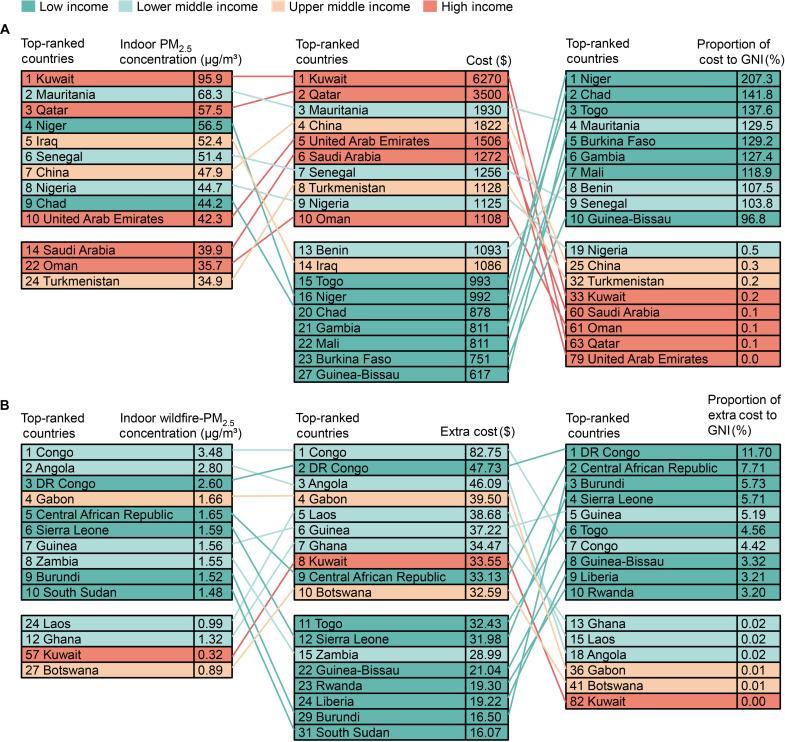
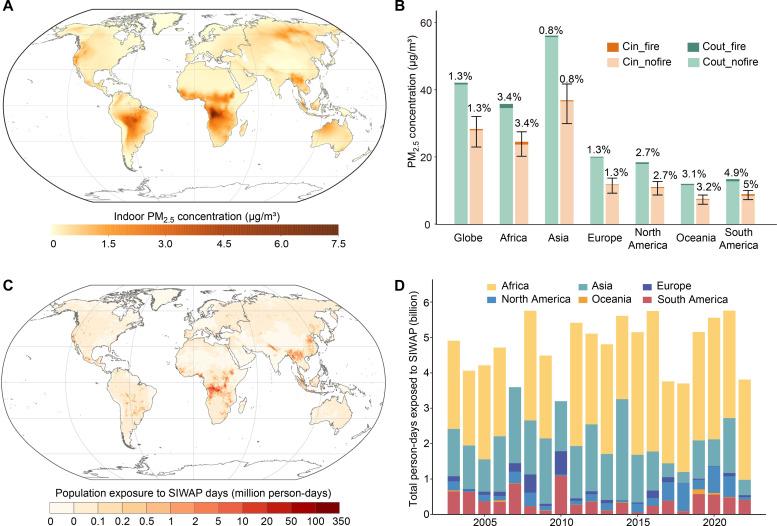
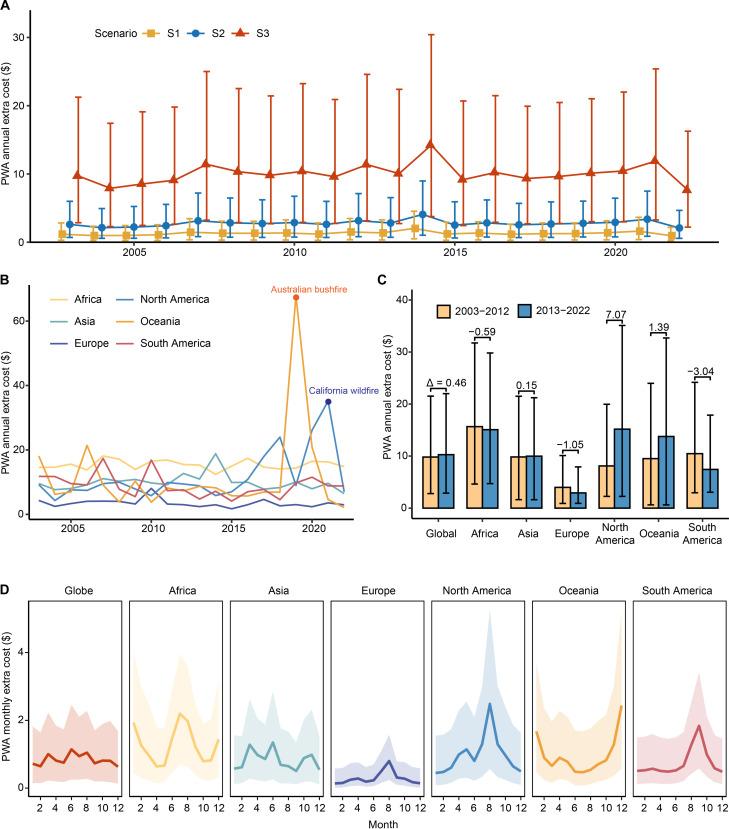
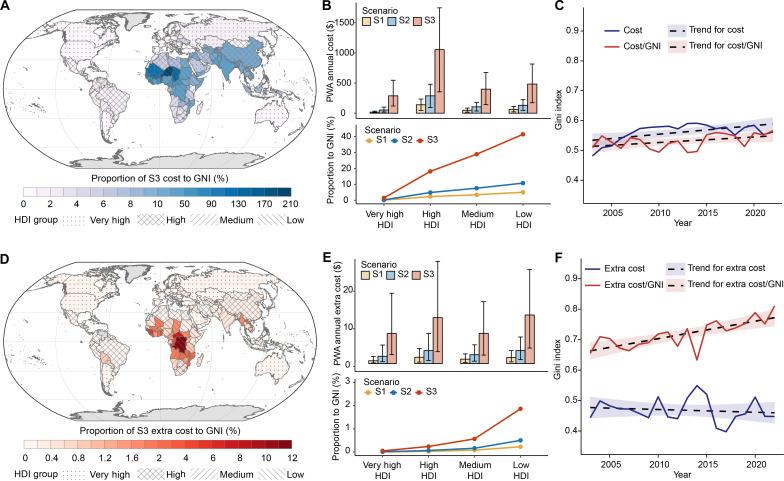
Wildfires have become more frequent and severe, and evidence showed that exposure to wildfire-caused PM (fire-PM) is associated with adverse health effects. Fire-PM exposure occurs mainly indoors, where people spend most of their time. As an effective and timely approach of mitigating indoor PM pollution, air purifiers incur notable associated costs. However, the long-term global population exposure to indoor fire-PM and the economic burden of using air purifiers remain unknown. Here, we estimated the indoor fire-PM concentration and the cost of reducing indoor PM exposure, along with the extra cost incurred because of fire-PM, at a resolution of 0.5° by 0.5° globally during 2003 to 2022. Our findings revealed 1009 million individuals exposed to at least one substantial indoor wildfire-air pollution day per year. We identified pronounced socioeconomic disparities in the costs of mitigating indoor PM exposure, with low-income countries bearing a disproportionately higher economic burden, emphasizing the critical need for addressing these disparities.
野火变得更加频繁和严重,有证据表明,暴露于野火产生的细颗粒物(火致细颗粒物)与不良健康影响有关。火致细颗粒物暴露主要发生在室内,而人们大部分时间都待在室内。作为减轻室内细颗粒物污染的一种有效且及时的方法,空气净化器会产生显著的相关成本。然而,全球长期人口暴露于室内火致细颗粒物的情况以及使用空气净化器的经济负担仍然未知。在此,我们在全球范围内以0.5°×0.5°的分辨率估算了2003年至2022年期间室内火致细颗粒物浓度、降低室内细颗粒物暴露的成本以及因火致细颗粒物产生的额外成本。我们的研究结果显示,每年有10.09亿人至少经历一天严重的室内野火空气污染。我们发现,在减轻室内细颗粒物暴露的成本方面存在明显的社会经济差异,低收入国家承受着 disproportionately 更高的经济负担,这凸显了解决这些差异的迫切需求。 (注:disproportionately 原词拼写有误,可能是disproportionately,意为“不成比例地”)

 Zotero 插件