
草原革蜱中肠基因的功能注释与分析
Functional annotation and analysis of the hard tick Dermacentor nuttalli midgut genes.
作者信息
Ma Hejia, Jia Lijun, Feng Jian, Li Tianshuai, Li Chao, Li Jixu, Xuan Xuenan, Sun Yali
机构信息
College of Agriculture and Animal Husbandry, Qinghai University, Xining, 810016, China.
State Key Laboratory of Plateau Ecology and Agriculture, Qinghai University, Xining, 810016, China.
出版信息
Parasitol Res. 2025 May 15;124(5):52. doi: 10.1007/s00436-025-08480-6.
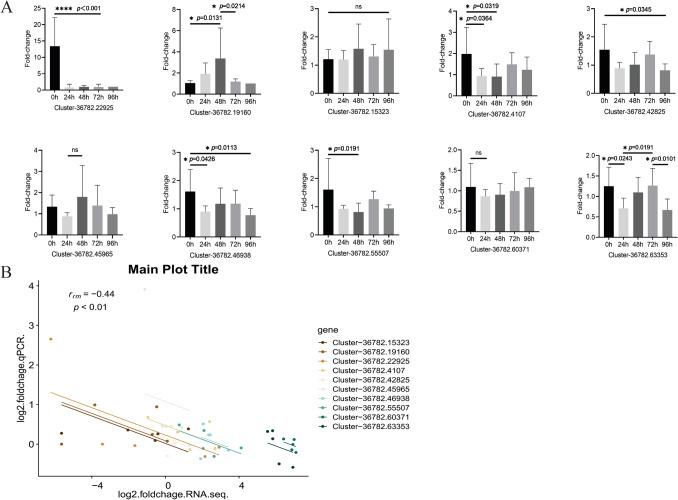
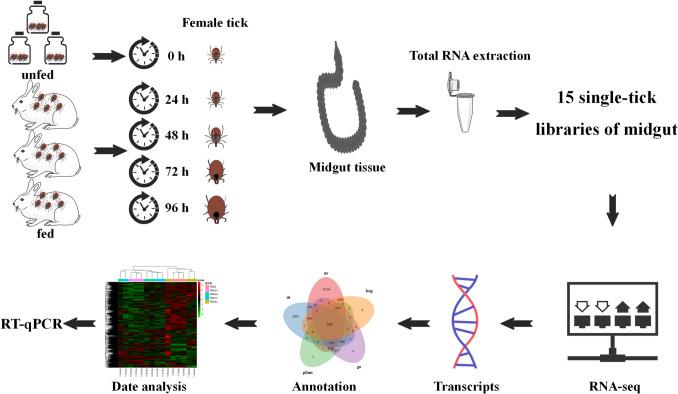
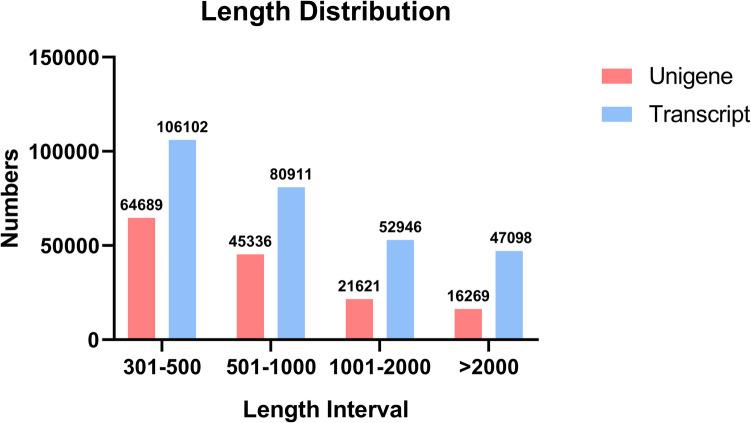
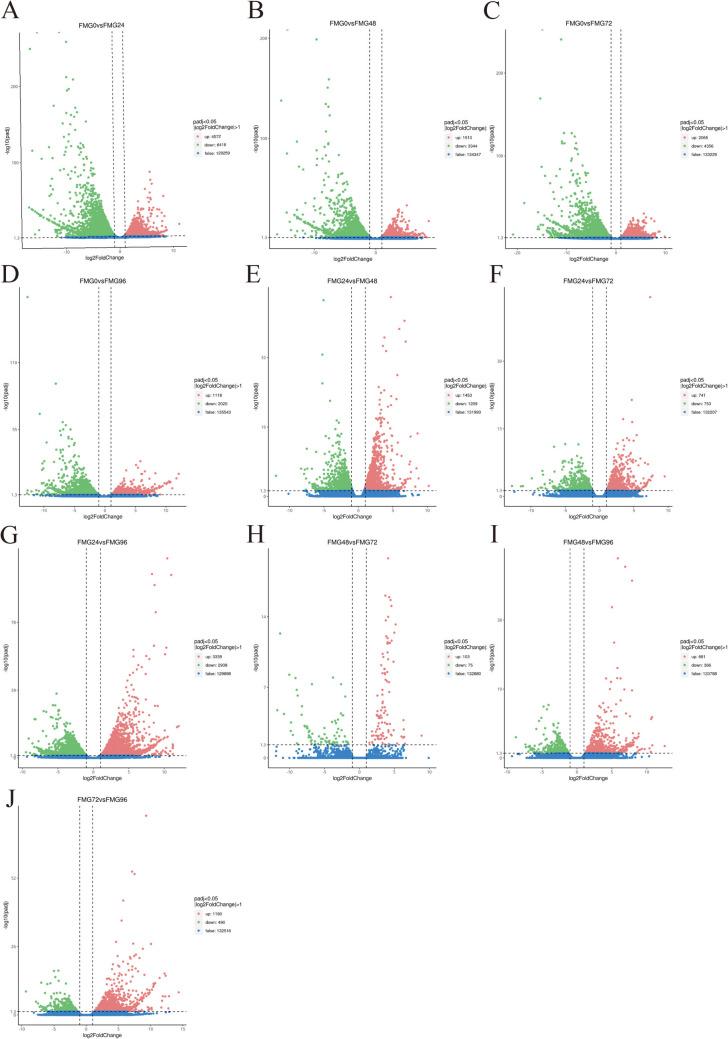
Ticks are hematophagous vectors that transmit a variety of pathogens, posing significant threats to the health of both humans and animals. Tick midgut proteins play essential roles in blood digestion, feeding, toxic waste processing, and pathogen transmission. Dermacentor nuttalli is the primary vector of tick-borne pathogens, including rickettsioses in the Qinghai-Tibet Plateau. However, there is a lack of genomic, transcriptomic, and proteomic information regarding the biology of D. nuttalli. In this study, we assembled and compared the midgut transcriptomes of female D. nuttalli ticks at 0, 24, 48, 72, and 96 h during blood feeding, identifying the genes with differentially regulated expression following feeding. The obtained data were compiled and annotated in multiple databases including Nr, NT, PFAM, KOG, KEGG, and GO. The high-quality clean readings of midgut tissue at the different blood-feeding times were recorded as 22,524,912, 23,752,325, 20,377,718, 21,300,710, and 20,378,658, respectively. The transcripts were classified into eight large categories, including immunogenic proteases (8.37%), protease inhibitors (0.85%), transporters (3.96%), ligand binding proteins (1.98%), ribosomal function proteins (0.94%), heat shock proteins (0.30%), other proteases and miscellaneous proteins (57.61%), and unknown proteins (26.00%). Significant differences were observed in the genes obtained at 0, 24, 48, 72, and 96 h during blood feeding. The differentially expressed genes include catalytic proteins that play an important role in accelerating biochemical reactions, binding activity proteins which are involved in various molecular interactions, and proteins that actively participate in multiple metabolic pathways and cellular processes. Notably, the gene expression in the midgut of D. nuttalli shows dynamic changes every 24 h throughout the blood-feeding process. This change may represent an equivalent strategy of antigenic variation for ticks, designed to protect their essential feeding function against the host's immune system. The tick antigens identified in this study may serve as promising candidates for the development of effective vaccines or as drug targets for acaricides.
蜱是吸血性媒介,可传播多种病原体,对人类和动物的健康构成重大威胁。蜱的中肠蛋白在血液消化、进食、处理有毒废物和病原体传播中发挥着重要作用。青海血蜱是蜱传病原体的主要媒介,包括青藏高原的立克次氏体病。然而,关于青海血蜱生物学的基因组、转录组和蛋白质组信息却十分匮乏。在本研究中,我们组装并比较了雌性青海血蜱在吸血0、24、48、72和96小时时的中肠转录组,确定了吸血后表达差异调节的基因。所获得的数据在包括Nr、NT、PFAM、KOG、KEGG和GO在内的多个数据库中进行了汇编和注释。不同吸血时间的中肠组织高质量纯净读数分别记录为22,524,912、23,752,325、20,377,718、21,300,710和20,378,658。转录本分为八大类,包括免疫原性蛋白酶(8.37%)、蛋白酶抑制剂(0.85%)、转运蛋白(3.96%)、配体结合蛋白(1.98%)、核糖体功能蛋白(0.94%)、热休克蛋白(0.30%)、其他蛋白酶和杂项蛋白(57.61%)以及未知蛋白(26.00%)。在吸血过程中0、24、48、72和96小时获得的基因存在显著差异。差异表达基因包括在加速生化反应中起重要作用的催化蛋白、参与各种分子相互作用的结合活性蛋白以及积极参与多种代谢途径和细胞过程的蛋白。值得注意的是,青海血蜱中肠的基因表达在整个吸血过程中每24小时呈现动态变化。这种变化可能代表了蜱的一种抗原变异等效策略,旨在保护其基本的进食功能免受宿主免疫系统的影响。本研究中鉴定出的蜱抗原可能是开发有效疫苗的有希望的候选物,或作为杀螨剂的药物靶点。
 Zotero 插件