
200个光固化机尖端受损或受污染的影响。
Effect of damage or contamination to the tips of 200 light-curing units.
作者信息
Balhaddad Abdulrahman A, Al-Zain Afnan O, Alyami Hassan A, Almakrami Husain A, Alsulaiman Osama A, Ismail Eman H, Price Richard B, Alsulaiman Ahmed A
机构信息
Department of Restorative Dental Sciences, College of Dentistry, Imam Abdulrahman Bin Faisal University, P.O.Box 1982, Dammam, 31441, Saudi Arabia.
Department of Restorative Dentistry, Faculty of Dentistry, King Abdulaziz University, Jeddah, Saudi Arabia.
出版信息
BMC Oral Health. 2025 May 14;25(1):718. doi: 10.1186/s12903-025-06126-8.
OBJECTIVE
The light-curing unit (LCU) has become a vital piece of dental equipment that must be correctly maintained. This study investigated the impact of contamination and physical damage to the light tip on the power and radiant emittance values from old and new LCUs.
MATERIALS AND METHODS
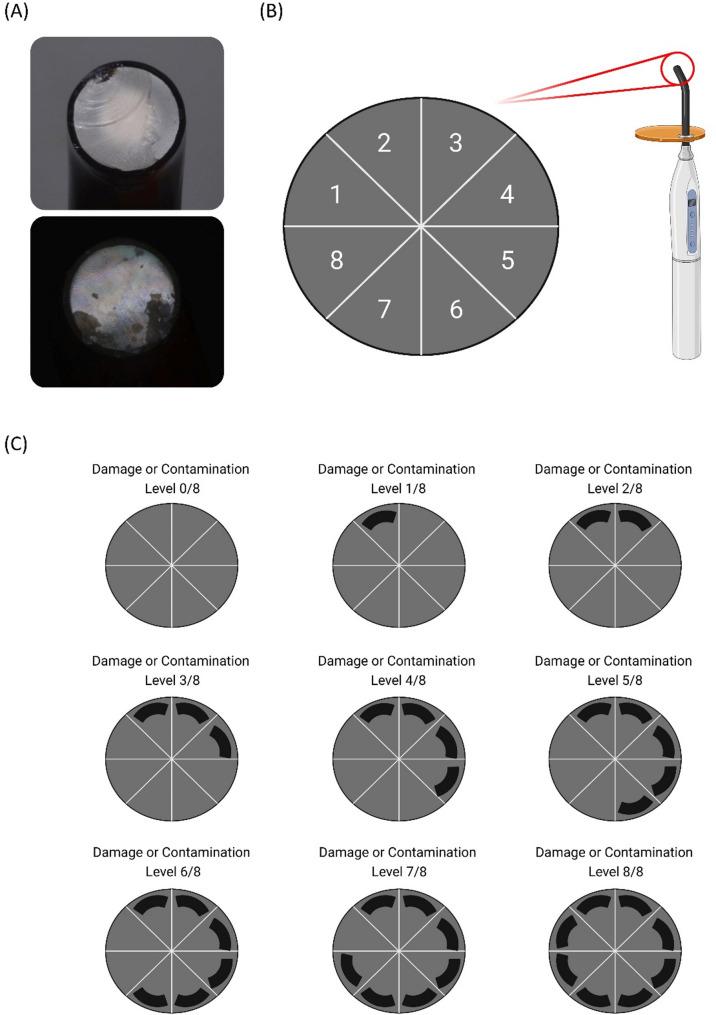
Two investigators assessed 200 LCUs in dental clinics. The extent of contamination and physical damage to the light-curing unit (LCU) tips was recorded using a scale ranging from 0 to 8, where 0 indicates the absence of damage or contamination, and 8 represents severe damage or contamination. Then, the radiant emittance and power values of the LCU tip were measured using a digital radiometer (Bluephase meter II; Ivoclar, Schaan, Liechtenstein). LCUs that were more than five years old were classified as old. Spearman correlation coefficient was used to determine the relationship between the condition of the LCU and radiant emittance/power (p = 0.05).
RESULTS
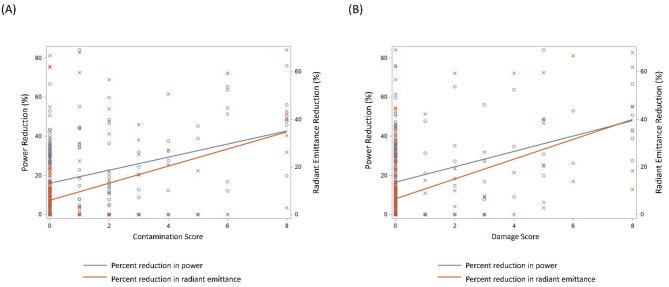
There were no significant differences in the percent reduction of the power and radiant emittance from the values reported by the manufacturers, as well as the presence of contamination or physical damage scores between old and relatively new light-curing tips (p > 0.05). The mean ± standard deviation percentage reductions in power and radiant emittance from the manufacturer's stated values were 19.2 ± 17.63% and 3.9 ± 16.49%, respectively. Contamination and physical damage had significant positive correlations with the reduction in the power (r = 0.22070, p = 0.0017 and r = 0.27422, p < 0.0001, respectively) and the reduction in the radiant emittance (r = 0.28626, p < 0.0001 and r = 0.36650, p < 0.0001). Increased contamination and physical damage scores corresponded to greater percent reductions in the power and radiant emittance (p < 0.05).
CONCLUSIONS
Contamination and physical damage to the LCU can negatively impact the light output from LCUs.
CLINICAL RELEVANCE
To ensure optimal performance, dentists should regularly monitor the output of their LCUs and examine the devices for any signs of physical damage or contamination.
目的
光固化机(LCU)已成为牙科设备中至关重要的一部分,必须正确维护。本研究调查了光固化头的污染和物理损坏对新旧光固化机的功率和辐射发射率值的影响。
材料与方法
两名研究人员对牙科诊所的200台光固化机进行了评估。使用0至8的量表记录光固化机(LCU)头的污染程度和物理损坏情况,其中0表示无损坏或污染,8表示严重损坏或污染。然后,使用数字辐射计(Bluephase meter II;义获嘉,沙恩,列支敦士登)测量LCU头的辐射发射率和功率值。使用超过五年的LCU被归类为旧设备。采用Spearman相关系数确定LCU状况与辐射发射率/功率之间的关系(p = 0.05)。
结果
旧的和相对较新的光固化头在功率和辐射发射率相对于制造商报告值的降低百分比,以及污染或物理损坏评分方面均无显著差异(p > 0.05)。功率和辐射发射率相对于制造商规定值的平均±标准差降低百分比分别为19.2±17.63%和3.9±16.49%。污染和物理损坏与功率降低(r = 0.22070,p = 0.0017和r = 0.27422,p < 0.0001)以及辐射发射率降低(r = 0.28626,p < 0.0001和r = 0.36650,p < 0.0001)均呈显著正相关。污染和物理损坏评分增加对应着功率和辐射发射率降低百分比的增加(p < 0.05)。
结论
LCU的污染和物理损坏会对其光输出产生负面影响。
临床意义
为确保最佳性能,牙医应定期监测其LCU的输出,并检查设备是否有任何物理损坏或污染迹象。
 Zotero 插件