
对PDIA1进行药物靶向作用可抑制NLRP3炎性小体的组装和激活。
Pharmacologic Targeting of PDIA1 Inhibits NLRP3 Inflammasome Assembly and Activation.
作者信息
Rosarda Jessica D, Stanton Caroline R, Chen Emily B, Bollong Michael J, Wiseman R Luke
机构信息
Department of Molecular and Cellular Biology, Scripps Research, La Jolla, CA 92037.
Department of Chemistry, Scripps Research, La Jolla, CA 92037.
出版信息
Isr J Chem. 2024 Dec;64(12). doi: 10.1002/ijch.202300125. Epub 2023 Nov 8.
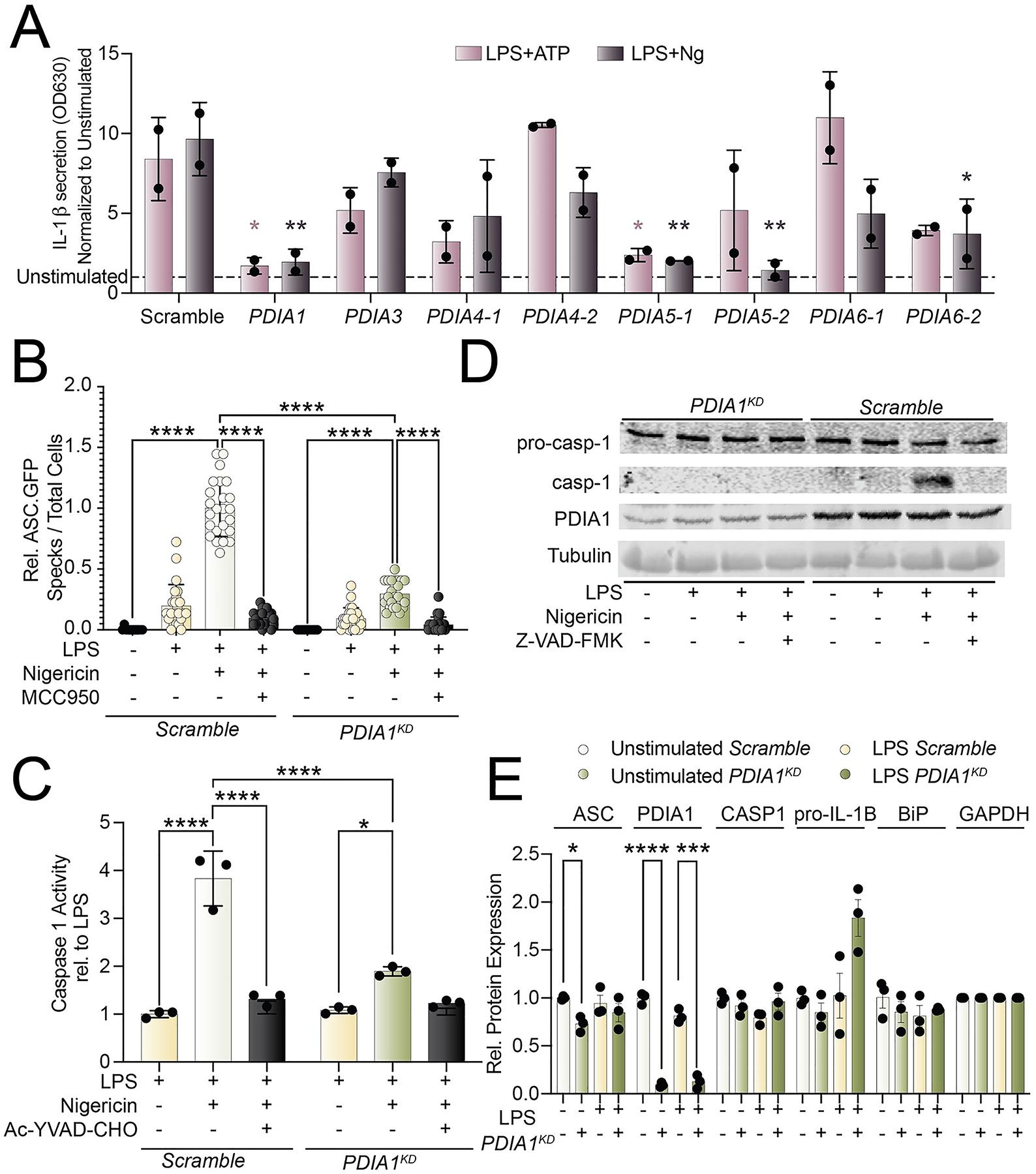
The NLRP3 inflammasome is a cytosolic protein complex that regulates innate immune signaling in response to diverse pathogenic insults through the proteolytic processing and secretion of pro-inflammatory cytokines such as IL-1β. Hyperactivation of NLRP3 inflammasome signaling is implicated in the onset and pathogenesis of numerous diseases, motivating the discovery of new strategies to suppress NLRP3 inflammasome activity. We sought to define the potential for the proteostasis regulator AA147 to inhibit the assembly and activation of the NLRP3 inflammasome. AA147 is a pro-drug that is metabolically converted to a reactive metabolite at the endoplasmic reticulum (ER) membrane to covalently modify ER-localized proteins such as protein disulfide isomerases (PDIs). We show that AA147 inhibits NLRP3 inflammasome activity in monocytes and monocyte-derived macrophages through a mechanism involving impaired assembly of the active inflammasome complex. This inhibition is mediated through AA147-dependent covalent modification of PDIA1. Genetic depletion or treatment with other highly selective PDIA1 inhibitors similarly blocks NLRP3 inflammasome assembly and activation. Our results identify PDIA1 as a potential therapeutic target to mitigate NLRP3 inflammasome-mediated pro-inflammatory signaling implicated in etiologically diverse diseases.
NLRP3炎性小体是一种胞质蛋白复合物,通过蛋白水解加工和分泌促炎细胞因子(如IL-1β)来调节针对多种病原体攻击的固有免疫信号传导。NLRP3炎性小体信号的过度激活与多种疾病的发生和发病机制有关,这促使人们去发现抑制NLRP3炎性小体活性的新策略。我们试图确定蛋白质稳态调节剂AA147抑制NLRP3炎性小体组装和激活的潜力。AA147是一种前药,在内质网(ER)膜上代谢转化为活性代谢物,以共价修饰ER定位的蛋白质,如蛋白质二硫键异构酶(PDI)。我们发现,AA147通过一种涉及活性炎性小体复合物组装受损的机制来抑制单核细胞和单核细胞衍生巨噬细胞中的NLRP3炎性小体活性。这种抑制作用是通过AA147对PDIA1的依赖性共价修饰介导的。基因敲除或用其他高度选择性的PDIA1抑制剂处理同样会阻断NLRP3炎性小体的组装和激活。我们的研究结果确定PDIA1是一个潜在的治疗靶点,可减轻NLRP3炎性小体介导的促炎信号传导,该信号传导与病因多样的疾病有关。


 Zotero 插件