
泰国2型糖尿病门诊患者肌肉减少症筛查方法的比较分析
A comparative analysis of sarcopenia screening methods in Thai people with type 2 diabetes mellitus in an outpatient setting.
作者信息
Laohajaroensombat Ornpicha, Limpaarayakul Thanapat, Sathavarodom Nattapol, Boonyavarakul Apussanee, Samakkarnthai Parinya
机构信息
Division of Endocrinology, Department of Medicine, Phramongkutklao HospitalPhramongkutklao Hospital and College of Medicine, Bangkok, 10400, Thailand.
出版信息
BMC Geriatr. 2025 May 16;25(1):346. doi: 10.1186/s12877-025-06020-6.
BACKGROUND
Type 2 Diabetes Mellitus (T2DM) is closely linked with sarcopenia. The lack of validated, easy, and effective sarcopenia screening tools for people with T2DM may result in underdiagnosis, delayed interventions, and worsening outcomes. This study evaluated and compared the diagnostic accuracy of various sarcopenia screening tools in T2DM outpatients.
METHODOLOGY
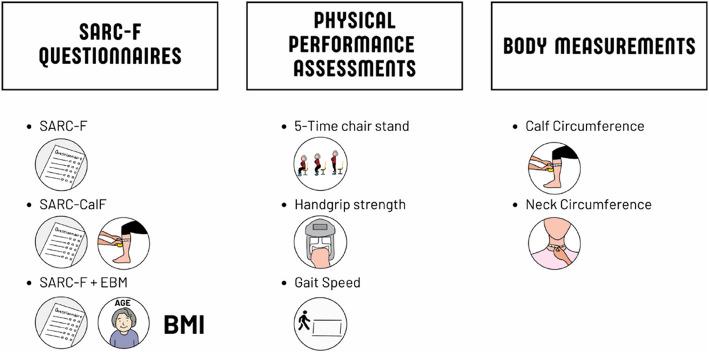
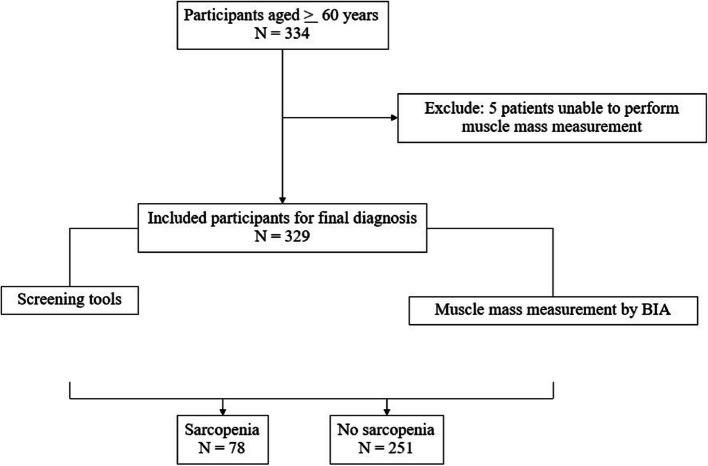
A cross-sectional study was conducted on 329 people with T2DM at Phramongkutklao Hospital, Thailand, between December 2023 and November 2024. This study compared eight sarcopenia screening tools. The Asian Working Group for Sarcopenia 2019 (AWGS 2019) criteria served as the reference standard. Sensitivity, Specificity, and diagnostic accuracy were evaluated using receiver operating characteristic (ROC) curve analysis. The optimal cutoffs were identified with the Youden index.
RESULTS
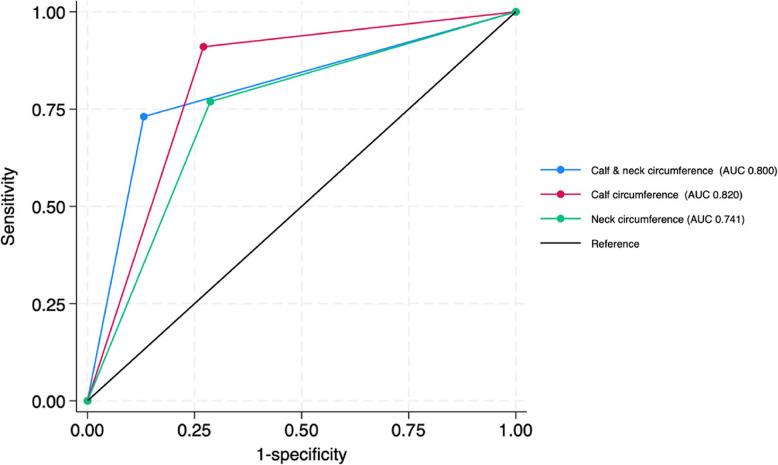
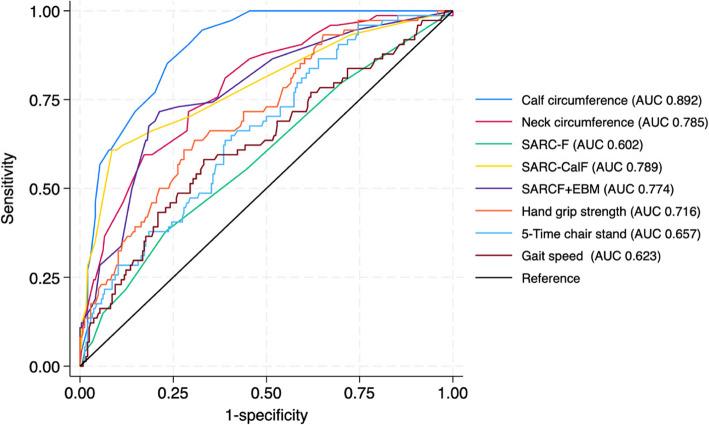
The prevalence of sarcopenia was 23.7%. Calf circumference showed the highest diagnostic accuracy at standard cutoff (AUC: 0.892), with optimised cutoff points of < 37.0 cm for males and < 36.0 cm for females, and achieved high sensitivity (90.1% for males, 91.1% for females) with acceptable specificity (77.2% for males, 67.8% for females). Neck circumference demonstrated diagnostic utility (AUC: 0.741) with proposed thresholds of < 39.5 cm (males) and < 36.5 cm (females), yielding moderate sensitivity (69.7% for males, 82.2% for females) and acceptable specificity (78.9% for males, 62.6% for females). Questionnaire-based tools showed limited diagnostic accuracy with SARC-CalF performing the best (AUC: 0.789, sensitivity: 48.7%, specificity: 93.2%). Among physical performance tests, handgrip strength was the most accurate (AUC: 0.716), although these tests generally exhibited high sensitivity, but lower specificity.
CONCLUSION
Calf circumference was the most effective screening tool for sarcopenia in people with T2DM. Neck circumference emerged as a promising alternative at optimal cutoff values, offering a simple, novel and practice screening tool option. These findings support the implementation of anthropometric measures for sarcopenia screening in clinical settings, particularly in outpatient care.
背景
2型糖尿病(T2DM)与肌肉减少症密切相关。缺乏适用于T2DM患者的经过验证的、简便有效的肌肉减少症筛查工具可能会导致诊断不足、干预延迟和预后恶化。本研究评估并比较了各种肌肉减少症筛查工具在T2DM门诊患者中的诊断准确性。
方法
2023年12月至2024年11月期间,在泰国诗里蒙空拉吉医院对329例T2DM患者进行了一项横断面研究。本研究比较了八种肌肉减少症筛查工具。以2019年亚洲肌肉减少症工作组(AWGS 2019)标准作为参考标准。使用受试者工作特征(ROC)曲线分析评估敏感性、特异性和诊断准确性。用约登指数确定最佳临界值。
结果
肌肉减少症的患病率为23.7%。小腿围在标准临界值时显示出最高的诊断准确性(AUC:0.892),男性优化临界值<37.0 cm,女性<36.0 cm,具有较高的敏感性(男性为90.1%,女性为91.1%)和可接受的特异性(男性为77.2%,女性为67.8%)。颈围显示出诊断效用(AUC:0.741),建议的临界值为男性<39.5 cm,女性<36.5 cm,敏感性中等(男性为69.7%,女性为82.2%),特异性可接受(男性为78.9%,女性为62.6%)。基于问卷的工具显示诊断准确性有限,其中SARC-CalF表现最佳(AUC:0.789,敏感性:48.7%,特异性:93.2%)。在身体性能测试中,握力最准确(AUC:0.716),尽管这些测试通常具有较高的敏感性,但特异性较低。
结论
小腿围是T2DM患者肌肉减少症最有效的筛查工具。颈围在最佳临界值时是一种有前景的替代方法,提供了一种简单、新颖且实用的筛查工具选择。这些发现支持在临床环境中,特别是门诊护理中实施人体测量措施进行肌肉减少症筛查。
 Zotero 插件